The CCP-infiltrated Democrat Party that recently overcame a rightful counter-revolutionary coup is now looking to move the country towards reintegration in the de facto CCP empire. The regime is now changing the name for North Korean defectors who later resettled in the South to “promote social integration.”
The current name, “talbukmin,” which means “people who escaped from the North,” has understandably negative connotations. The regime hopes to create a new term after a commissioned study is completed by the end of this year. The move is seen by intelligence analysts as another strong signs the current regime is preparing the South for reintegration with the North, but under favorable terms for China.
South Korea wants people to stop using term ‘defectors’ for those who flee North Korean regime – The Independent Source Link Excerpt:
South Korea’s Ministry of Unification, a government body responsible for inter-Korean relations, has commissioned a study to review the names and change them to a new name by the end of this year.
The South Korean name for defectors, “talbukmin”, which literally means “people who escaped from the North”, would be changed to an alternative term to “promote social integration”, Yonhap reported, citing ministry officials.
The Gen Z movement that started off as a reaction to Nepal’s draconian social media ban and ended with the government being upended is making China’s regime nervous that something similar in their country might be brewing. Signs of Gen Z disenfranchisement with the CCP are everywhere. One anonymous social media post pointed out “The protests are no longer simply a fight for internet freedom, but a deeper generational awakening. Young people are not satisfied with merely restoring social media, but are demanding transparency, accountability, and real political reform.”
For the most part, Beijing’s response has been seemingly intentionally tone-deaf, with Chinese Foreign Ministry spokesperson Lin Jian responding to the overthrow said that his government “expressed hope that all parties in Nepal can properly address domestic issues, and restore social order and national stability as soon as possible.”
China Reacts to Nepal Protest Movement– chinadigitaltimes.net Source Link Excerpt:
The “Gen Z” protest movement that toppled Nepal’s government last week has sent shockwaves around the region. Fueled by longstanding grievances over government corruption and social inequality, Nepalese youth took to the streets on Monday, September 8 to protest a government ban on 26 social media apps (including WhatsApp, Signal, Instagram, Facebook, YouTube, X, LinkedIn, Reddit, WeChat, and others). Amid escalating clashes, security forces shot and killed 19 protesters. Mass outrage ensued. By Tuesday, numerous government buildings had been set ablaze and the prime minister and four other ministers had resigned.
On Chinese social media, prominent nationalist accounts argued that the U.S. was behind the protests, while others pushed back against these claims. One WeChat article, later censored, described the source of youth discontent: “The protests are no longer simply a fight for ‘internet freedom,’ but a deeper generational awakening. Young people are not satisfied with merely restoring social media, but are demanding transparency, accountability, and real political reform.” Another article, published by “Global Citizen Jin Jianguo” on Baidu’s Baijiahao platform, dismissed claims that the unrest was a “color revolution” incited by foreign forces. The author argued instead that resistance is instinctive and a natural product of social injustice:
Conversely, if we subscribe to the “color revolution” narrative, history becomes untenable. [It implies that] the Wuchang Uprising, the Xinhai Revolution, the May Fourth Movement, and even the national independence movement that swept the globe after World War II were nothing more than upheavals fomented by “foreign forces.” No longer is world history a story of war, politics, economics, or culture, but a litany of incitement.
An overview of mass movements, both in China and abroad, reveals that all have their own internal logic. While sometimes influenced by external ideas and forces, all spring from an accumulation of discontent and damaged interests. This is true in the U.K., Poland, the Arab world, and even Nepal.
In other words, you can’t just chalk up mass movements in Asian countries to incitement, while claiming that similar movements in Western countries represent “the People’s choice.” Are all Asians puppets, while only Westerners are considered intelligent citizens?
Admit it: people will always be willing to fight for their own interests. It’s basic human instinct, and doesn’t require anyone to “incite” them—unless of course, they don’t consider themselves human. [Chinese]
Following the playbook of the DNC-CCP and its affiliate partner, Lula’s Brazil, Romania hopes to use lawfare to neutralize its anti-globalist opposition. The government has announced coup charges for the frontrunner of the cancelled Presidential election, Călin Georgescu. He could face up to 20 years in prison if found guilty. Georgescu is pro-Russian in addition to being anti-globalist, a fact that features as the main focus of the attacks against him.
Romania charges ex-presidential candidate Călin Georgescu over coup attempt– www.euronews.com Source Link Excerpt:
Romanian prosecutors charged ultranationalist politician and the frontrunner in last year’s cancelled presidential election Călin Georgescu on Tuesday with attempting to stage a coup.
According to the charges, Georgescu and 21 other people were planning to endanger national security and the country’s constitutional order after the pro-Russian candidate’s first round election victory in November was ruled invalid.
In an interview with Euronews Romania, Romania’s former Prosecutor General Augustin Lazăr said Georgescu could face up to 20 years in prison if found guilty.
One of the other suspects is Horațiu Potra, a mercenary who organised a paramilitary group following a meeting with Georgescu on 7 December, according to prosecutors.
Prime Minister Kier Starmer is relying on the old rules of engagement when dealing with resistance to his anti-British planvasion plans. This time, in response to a half a million plus rally in support of the British nation and national identity, Starmer chose to spread misinformation and lies about the rally.
He declared, “People have a right to peaceful protest. It is core to our country’s values. But we will not stand for assaults on police officers doing their job or for people feeling intimidated on our streets because of their background or the color of their skin. Britain is a nation proudly built on tolerance, diversity and respect. Our flag represents our diverse country and we will never surrender it to those that use it as a symbol of violence, fear and division.”
Starmer says UK won’t tolerate racial intimidation after far-right rally– japantoday.com Source Link Excerpt:
Prime Minister Keir Starmer said Sunday Britain would not tolerate people feeling intimidated “because of their background or the colour of their skin” after a large far-right protest was marked by battles with police.
In his first comments on Saturday’s rally organized by far-right activist Tommy Robinson and attended by up to 150,000 people, according to police, Starmer also condemned attacks on police on officers.
The clashes left 26 officers injured, four seriously, and led to 24 arrests. London police have pledged to make more arrests in coming days.
“People have a right to peaceful protest. It is core to our country’s values,” Starmer said on X, the day after the protesters massed near his Downing Street office amid a sea of English and British flags.
“But we will not stand for assaults on police officers doing their job or for people feeling intimidated on our streets because of their background or the color of their skin.”
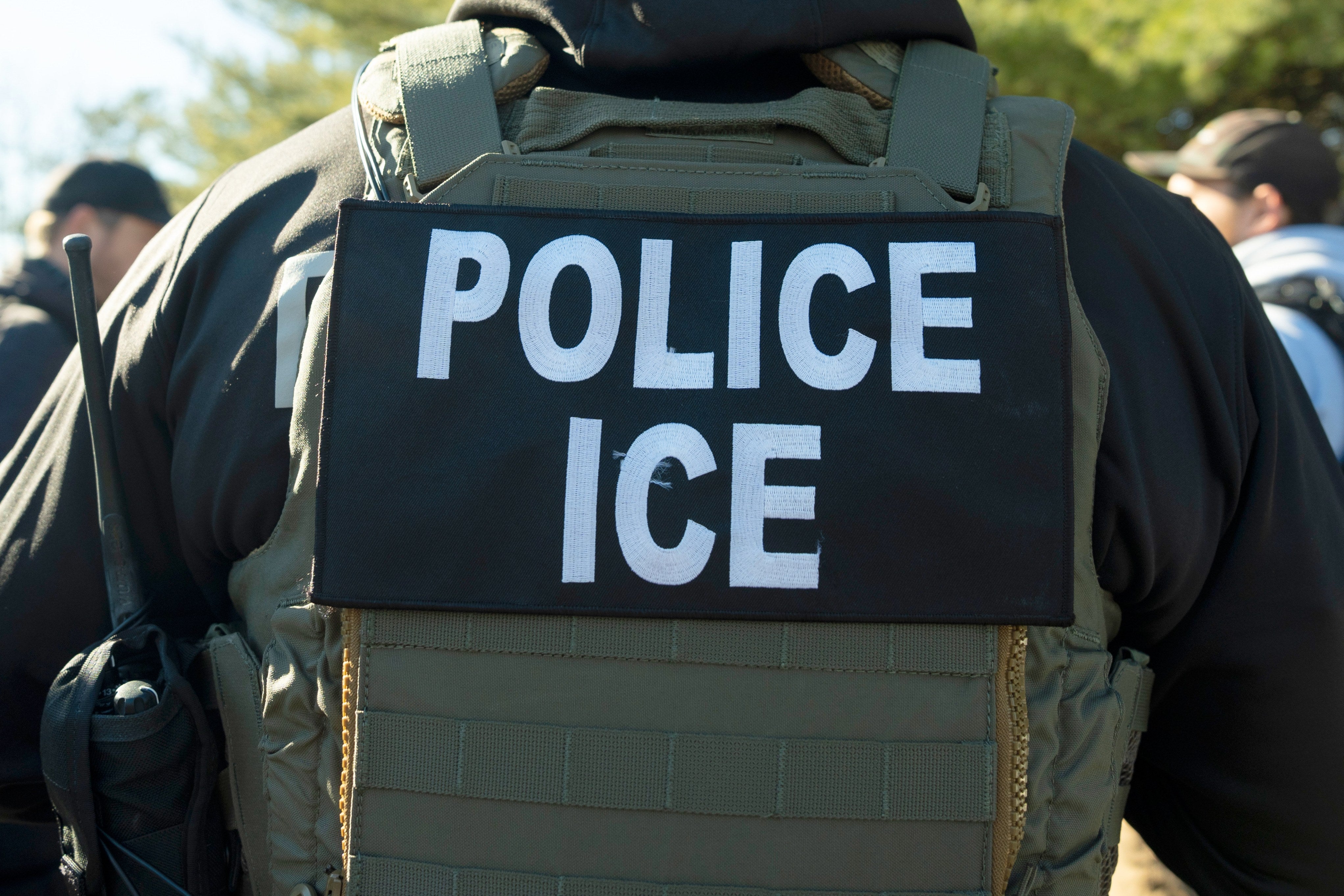
The Democrat Party of South Korea, the new Ruling Party, has signaled its move away from the U.S. once again with an effort to use “human rights” allegations to fuel the American left resistance to ICE deportations. The country is alleging Trump “may have” violated the rights of its citizens after raiding a Hyundai plant and detaining more than 300 South Korean illegal aliens.
A spokesperson for South Korean President Lee Jae Myung stated, “I understand that the government is conducting a more thorough review with the companies to determine whether any human rights violations occurred. The foreign ministry is looking at whether our demands were properly addressed, and the companies are also conducting their own reviews, to check whether any measures were insufficient on either the Korean side or U.S. side.”
South Korea reviewing human rights abuses in Hyundai raid– www.washingtonexaminer.com Source Link Excerpt:
South Korea said on Monday it is reviewing possible human rights abuses that may have taken place while its citizens were detained by the United States following a large-scale immigration raid at a Hyundai plant in Georgia earlier this month.
Seoul’s announcement of the investigation comes days after the Trump administration agreed to let more than 300 detained South Korean nationals return to their home country…
Close ties between the two allies have been strained ever since immigration officers raided the electric vehicle manufacturing facility on Sept. 4 and detained at least 316 Koreans who either lived and worked in the U.S. illegally or overstayed their visas. In total, 475 people were apprehended.
The Democrat Party, with its ties to the CCP and North Korean friendly policies, is looking to cement its new power in South Korea through charges of insurrection. The party demanded the Supreme Court create an Insurrection Trial Division.
Han Jeong-ae, Chairperson of the Democratic Party’s Policy Committee, said at a press briefing that day, “We are not seeking to establish a separate court; we are proposing to set up a rebellion-dedicated division within the Criminal Division of the Seoul Central District Court. I don’t understand what the issue is. If the Supreme Court had established the rebellion-dedicated trial division according to its internal guidelines, there would be no problem. As the legislative branch, we regret the judiciary’s attitude. If the judiciary makes no move, won’t we ultimately have to proceed legislatively?”
Democratic Party pressures Supreme Court to establish insurrection trial division – 조선일보 Source Link Excerpt:
The Democratic Party on the 14th pressured the Supreme Court to establish a ‘rebellion-dedicated trial division.’ Han Jeong-ae, Chairperson of the Democratic Party’s Policy Committee, said at a press briefing that day, “We are not seeking to establish a separate court; we are proposing to set up a rebellion-dedicated division within the Criminal Division of the Seoul Central District Court. I don’t understand what the issue is.”
Chairperson Han added, “If the Supreme Court had established the rebellion-dedicated trial division according to its internal guidelines, there would be no problem. As the legislative branch, we regret the judiciary’s attitude,” and asked, “If the judiciary makes no move, won’t we ultimately have to proceed legislatively?” This was interpreted as a warning that if the Supreme Court does not comply, the party will enforce the establishment of the rebellion trial division through legislation.
The rebellion-dedicated trial division is a proposal initiated by the ruling party following the ‘special rebellion trial division.’ Unlike the special rebellion trial division, which is to be established separately from the current court system, this plan would have the Chief Justice form a dedicated trial division within the court. Legislation related to the special rebellion trial division has already been proposed.
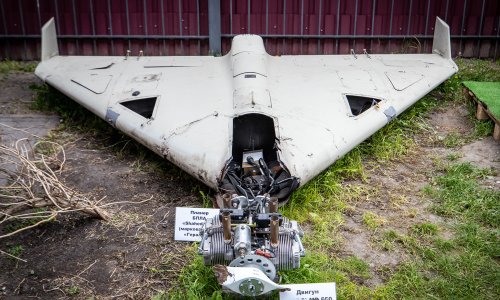
Poland is accusing Russia of launching a drone strike that largely comprised “dummy drones” in what appears to be a probe of Polish air defenses. Following the alleged attack, Poland has invoked Article four of the NATO agreement, meaning we are now one step away from a call by Poland to defend it from Russia. President Trump has expressed skepticism that article five will be invoked, and, if invoked, adhered to.
Poland downs Russian drones as ‘huge number’ violate airspace, prime minister says – ABC News– news.google.com Source Link Excerpt:
Polish airspace was violated by at least 19 Russian drones overnight, the country’s prime minister said, in a torrent of activity that triggered a response from the NATO country’s air force, which scrambled and downed several of the drones.
“Those drones that posed a direct threat were shot down,” Prime Minister Donald Tusk said early on Wednesday on social media. “I am in constant communication with the Secretary-General of NATO and our allies.”
Two Polish F-16s and two Dutch F-35s were deployed to “help ensure safety in Polish skies,” the military said. The operations ended early on Wednesday, Warsaw said, adding that the search continued for downed drones and potential impact sites.
The country’s military command described the violations as “unprecedented,” saying they amounted to “an act of aggression that posed a real threat to the safety of our citizens.”
A social media ban on the youth has triggered massive protests across Nepal that has led to the resignation of their Prime Minister, KP Sharma Oli. One student in the protest, 23-year old Yujan Rajbhandari, claimed “Nearly 20 people were murdered by the state — that shows the scale of police brutality. The government… have to take responsibility for the lives that were lost.”
So far, about 200 people are believed to be injured in addition to those killed, which is 22 so far.. Amidst the unrest, 13,000 prisoners are believed to have escaped. 5 juvenile prisoners have been reportedly killed.
Nepal protests over repealed social media ban rage, sparking prime minister’s sudden resignation– www.cbsnews.com Source Link Excerpt:
Kathmandu — Nepal’s Prime Minister KP Sharma Oli announced Tuesday that he would step down as the country was rocked by a second day of unrest amid protests over a since-repealed ban on many major social media platforms. Clashes between young demonstrators and police on Monday turned violent, with police reportedly killing 19 people.
Protesters in Nepal’s capital defied a curfew on Tuesday to continue venting their rage at the government a day after the deadly crackdown.
The protests, which began on Monday with demands that the government lift a ban on social media and tackle corruption, reignited despite the apps being allowed to go back online.
Kathmandu police spokesman Shekhar Khanal said several groups had refused to obey a curfew on Tuesday, telling AFP there were protesters in the streets in many areas including “cases of fire and attacks.”
Nepal’s deadly Gen Z protests are about more than just a social media ban – National– globalnews.ca Source Link Excerpt:
Nepal’s government responded to escalating violent protests over a ban on popular social media platforms with deadly force.
The public outrage over the ban and the deaths of 19 protesters on Monday led to the resignation of the prime minister and exposed deep discontent over corruption.
Prime Minister K.P. Sharma Oli also rolled backed the short-lived ban after protesters turned their anger on politicians by setting fire to homes of some of the country’s top leaders.
Led by mostly teenagers and young adults, the protests revealed a broader resentment in Nepal, where many people have increasingly become angry with the government over a range of issues, mostly to do with corruption and frustration over nepotism in the country’s politics.
“Protests over the social media ban were just a catalyst. Frustrations over how the country is being run have long been simmering under the surface. People are very angry and Nepal finds itself in a very precarious situation,” said Prateek Pradhan, editor of Baahrakhari, a Nepalese independent news website.
Why GenZ has taken over the streets in Nepal– www.bbc.com Source Link Excerpt:
Nepal’s Prime Minister KP Sharma Oli has resigned in the wake of public outrage over the killing of 22 people in police clashes with anti-corruption protesters.
His office said he had stepped down to pave the way for a constitutional solution to the massive youth-led protests over widespread allegations of corruption and sparked by a social media ban, which has since been withdrawn.
The protests turned violent as thousands – many identifying themselves as Gen Z on placards and banners – took to the streets of Kathmandu on Monday.
Almost 200 people are believed to have been injured in clashes with police, who used tear gas, water cannons and live bullets as protesters scaled the walls of the parliament and other official buildings.
The protests continued on Tuesday, with demonstrators setting fire to the parliament building, the headquarters of the Nepali Congress Party and the home of former prime minister Sher Bahadur Deuba. The homes of several other politicians have also been vandalised.
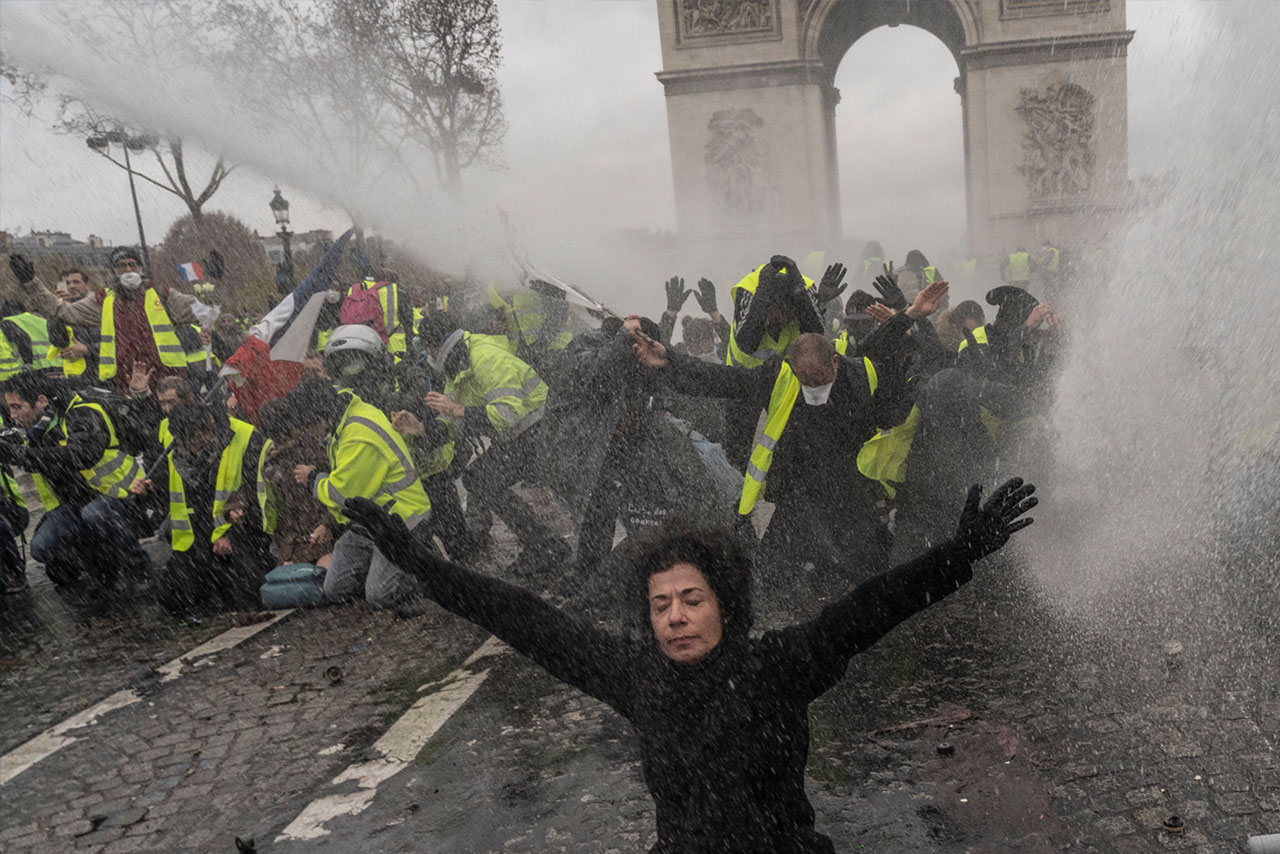
Protestors have begun operation “Block Everything,” a movement designed to shut the government down. They are protesting President Macron’s “austerity policies,’ which are policies that generally take social programs and worker “rights” away from its citizens. This is a leftist, pro-socialist movement.
As protests grow, the parliament has moved to remove short-lived Prime Minister François Bayrou from office. Sebastien Lecornu replaced him two days later. The likely favorite to win a general election to replace Macron, Marine Le Pen, is set to undergo a retrial to overthrow the only thing keeping her from winning the next Presidential election, an election ban from Macron’s government.
Protests in Paris and across France seek to “block everything,” leading to nearly 200 arrests– www.cbsnews.com Source Link Excerpt:
Protesters blocked roads, set blazes and were met with volleys of police tear gas Wednesday in Paris and elsewhere in France, seeking to heap pressure on President Emmanuel Macron by attempting to give his new prime minister a baptism of fire.
The interior minister announced nearly 200 arrests in the first hours of the planned day of nationwide protests.
Although falling short of its self-declared intention to “Block Everything,” the protest movement that started online and gathered steam over the summer caused widespread disruptions, defying an exceptional deployment of 80,000 police who broke up barricades and swiftly made arrests.
Interior Minister Bruno Retailleau said a bus was set on fire in the western city of Rennes and that damage to a power line blocked trains on a line in the southwest. He alleged that protesters were attempting to create “a climate of insurrection.”
French Government Collapses – Geller Report– gellerreport.com Source Link Excerpt:
Well deserved.
“Those who bless the Jews will be blessed and those who curse them will be cursed.”
French lawmakers voted to oust Prime Minister François Bayrou Monday, plunging the country into a new political crisis and leaving it without a government at a time of increasing economic strain and geopolitical tensions.
BREAKING – The French government collapses.
And now they are now demanding impeachment or resignation of Macron.
The entire country will be brought to a standstill in 2 days time as the people take to the streets to demand change.
France faces disruption as new PM starts job– www.yahoo.com Source Link Excerpt:
France’s new Prime Minister Sebastien Lecornu was to take office on Wednesday facing a day of protests disrupting transport, education and other services in a show of grassroots anger against President Emmanuel Macron.
The protests, led by a loose left-wing collective called “Block Everything”, are a baptism of fire for Lecornu, 39, a close ally of Macron who has served the last three years as defence minister.
Demonstrators gathered across the country from the early hours, with 80,000 police deployed to keep the peace.
Groups of demonstrators, many masked, built barricades with dumpsters and pelted police with rubbish on the outskirts of Paris, according to AFP journalists.
In the southeastern city of Lyon, protesters blocked a highway running through the city and set bins on fire, while in the western city of Nantes police used teargas to disperse protesters.
In the military sphere, there is a great deal of ribbing and catcalling, both between different services of a nation’s armed forces, but also between the forces of different countries. For the most part, this ribbing is good-natured fun, especially when it is based on actual reality.
However, there has been a highly toxic level of mocking applied to the armed forces of France, a situation that has been getting worse over the last forty years.
The jokes abound – the beret being designed to facilitate surrender by not getting in the way of raising one’s hands; the notion of French tanks having more reverse gears than forward one; the idea that French genes could not be improved after World War 1 because American troops widely used prophylactics; and the idea that French rifles are excellent as surplus…because they were “only dropped once“…something applied to the Army of South Vietnam, as well.
It’s one thing, to make these jokes in actual jest. It is another thing entirely, when they become statements. Then, it’s no longer funny, but suicidally insulting.
In fact, the French military has maintained a track record of success on the battlefield for centuries. The source of these juvenile statements of inability only date from the Franco-Prussian War, and its catastrophic cost to the country. The military’s troubles in World War 1 came from holding the Imperial German Army at bay for three years, at a cost of 1.4 million casualties.
While the disaster of the openingof World War 2 led to France’s conquest by Nazi Germany, France’s military plan was not a bad plan, just a plan poorly executed…and the British did not do very well, then, either. The collapse of France’s colonial empire after World War 2 did come from overly ambitious military plans formed by not understanding that colonial warfare had changed…something the United States also failed to grasp, in the exact same place as Dien Bien Phu, a decade prior.
The fact is that, for all of it’s messy problems in the last century, the French military remains one of the most capable armed forces on the planet – if their leaders allow their generals to do their jobs.
The French Army’s reputation for military professionalism, despite its dramatic fluctuations over the past two centuries, has created a complex narrative that defies simple description. From the revolutionary fervor of the Napoleonic era to the post-WW2 colonial campaigns and modern peacekeeping operations, France’s military has continually demonstrated both exceptional competence and notable – but recoverable – failures that continue to shape perceptions today.
The Napoleonic Foundation
The modern French Army’s professional identity was forged in the crucible of the Revolutionary and Napoleonic Wars (1792-1815). Napoleon’s Grande Armée established standards of tactical innovation, logistical organization, and battlefield leadership that influenced military thinking across Europe, down to today. The army’s meritocratic promotion system, revolutionary at the time, created a professional officer corps based on ability rather than aristocratic birth. This period saw the development of combined arms tactics, the corps system, and sophisticated staff work that demonstrated clear military professionalism.
Vive l’Empereur! Charge of the 4th Hussars at the battle of Friedland, 14 June 1807. 1891 painting by Édouard Detaille. Art Gallery of New South Wales. Public Domain.
However, even during this golden age, the French military exhibited characteristics that would later prove problematic. The cult of offensive action (offensive à outrance) and the emphasis on élan over methodical planning became deeply embedded in French military culture, later contributing to both spectacular victories and catastrophic defeats.
19th Century Trials and Adaptations
The Franco-Prussian War of 1870-71 exposed serious deficiencies in post-Napoleonic French military professionalism. Poor intelligence, inadequate logistics, and outdated tactical thinking led to decisive defeat and the collapse of the Second Empire. The subsequent creation of the Third Republic saw significant military reforms, including the establishment of improved staff colleges and the modernization of equipment and tactics.
The colonial period (1830s-1960s) presents a particularly complex chapter in French military professionalism. The conquest of Algeria, the expansion into West and Equatorial Africa, and campaigns in Indochina demonstrated considerable tactical adaptability and logistical capability over vast distances. French colonial forces also developed expertise in irregular warfare, cultural adaptation, and civil-military cooperation that proved valuable in diverse environments, although these advantages rarely translated into warfare on the European continent, which was common to all the major European powers.
Yet this same period saw the development of what critics term “colonial habits” – reliance on superior firepower against less-equipped opponents, acceptance of harsh methods, and a certain detachment from metropolitan oversight that would later create problems in conventional conflicts.
World War I: Staying Power
The Great War stretched French military professionalism to its limits. Initial disasters, including the failure of Plan XVII and massive casualties from adherence to offensive doctrine, gave way to remarkable adaptation under pressure. The French Army demonstrated institutional learning capacity, rapidly developing new tactics for trench warfare, integrating new technologies, and maintaining cohesion through four years of unprecedented carnage.
French infantry pushing through enemy barbed wire, 1915. Agence de presse Meurisse. Public Domain.
The performance of French commanders like Ferdinand Foch and Philippe Pétain, along with the army’s ability to absorb and integrate lessons from the battlefield, demonstrated core professional competencies. However, the trauma of the war also reinforced defensive thinking that would prove problematic in the next conflict.
1940: Collapse and Recovery
The defeat of 1940 represents perhaps the most significant challenge to claims of French military professionalism. Despite having numerically superior and often technically advanced equipment, the French Army was comprehensively outmaneuvered by German forces employing innovative combined arms tactics. Analysis reveals multiple professional failures: inadequate intelligence, poor communications, inflexible command structures, and outdated operational concepts.
Yet the same period saw examples of French military professionalism in different contexts. The Free French forces under Charles de Gaulle, though small, maintained military traditions and eventually contributed significantly to the liberation of France. The French Resistance, while not strictly military, demonstrated tactical innovation and operational security that impressed Allied observers.
Colonial Wars and Professional Dilemmas
The post-war colonial defeats in Indochina (1946-1954) and Algeria (1954-1962) present perhaps the most controversial chapters in assessing French military professionalism. In Indochina, French forces demonstrated remarkable tactical competence in difficult conditions, developing techniques counterinsurgency and showing considerable adaptability. However, strategic failures and political constraints ultimately led to defeat at Dien Bien Phu.
The Algerian War proved even more problematic. While French forces achieved significant tactical successes against the FLN, the conflict saw disturbing breakdowns in professional conduct, including widespread use of torture and involvement in attempted coups against the civilian government. The Battle of Algiers (1956-1957) exemplified this tension between tactical effectiveness and questionable methods.
Since 1962, the French Army has undergone a significant revamping of its professional nature. The end of conscription in 1996 created an all-volunteer force with higher educational standards and improved training. French forces have demonstrated competence in various international operations, from peacekeeping in the Balkans to counterterrorism operations in the Sahel region of Africa.
Operations like Serval (2013) and Barkhane (2014-2022) in Mali showcased French capabilities in rapid deployment, intelligence gathering, and coordination with international partners. These operations demonstrated institutional learning from previous colonial experiences while maintaining focus on legitimate military objectives.
And it is here, that a more detailed look at Operation Serval is instructive on just how adaptable French forces can be.
Strategic Challenges of Operation Serval (2013)
Operation Serval presented the French military with a complex array of strategic challenges that tested every aspect of modern expeditionary warfare capabilities. The intervention in the war in Mali, launched on January 11, 2013, required France to project power across 4,000 kilometers into the heart of the Sahel region under severe time constraints and with limited initial international support.
Geographical and Logistical Complexity
Mali’s vast territory — larger than France and Germany combined — posed immediate strategic challenges. The northern regions under jihadist control encompassed over 800,000 square kilometers of desert and semi-arid terrain with minimal infrastructure. French forces faced the fundamental problem of securing lines of communication across this enormous space while maintaining operational tempo against a mobile enemy well-adapted to the local environment.
The logistical challenge proved particularly acute given Mali’s landlocked position and limited transportation infrastructure. France had to establish supply chains through multiple African partners, primarily using bases in Ivory Coast, Chad, and Niger. The single major airfield at Bamako created a critical vulnerability, while the absence of reliable road networks forced heavy reliance on air transport for sustained operations. This logistical complexity demanded unprecedented coordination between French forces, African partners, and international allies.
Map of the conflict in Northern Mali, c.2013, by WikiUser Orionist. CCA/3.0.
Time Sensitivity and Strategic Surprise
Perhaps the most critical challenge was the compressed timeline. Intelligence indicated that jihadist forces were preparing to advance south toward Bamako, Mali’s capital, potentially within days of the French decision to intervene. This left no time for the deliberate planning and force buildup typical of major military operations. French planners had to balance the immediate need to halt jihadist momentum with the longer-term requirement to establish sustainable operations across northern Mali.
The rapid deployment requirement meant accepting significant strategic risks. Initial French forces numbered fewer than 1,000 troops — inadequate for controlling territory, but sufficient to provide a rapid response capability. This created a dangerous window where French forces operated with minimal reserves while still building combat power in theater.
Coalition Building Under Pressure
France faced the delicate challenge of building international legitimacy while maintaining operational flexibility. The African Union had authorized the African-led International Support Mission to Mali (AFISMA), but this force remained months from deployment. France needed to demonstrate that Serval was not another unilateral European intervention in Africa, while simultaneously retaining command authority essential for rapid operations.
The diplomatic challenge extended to securing overflight rights, basing agreements, and logistics support from multiple African and European partners. Each agreement required careful negotiation to balance French operational needs with partner nation sensitivities about sovereignty and post-colonial relationships.
French officer making contact with the population in southern Mali. 2016 photo by WikiUser TM1972. CCA/4.0 Int’l.
Enemy Adaptation and Asymmetric Threats
The jihadist coalition in northern Mali presented a sophisticated opponent that combined conventional capabilities with insurgent tactics. Groups like AQIM (Al-Qaeda in the Islamic Maghreb) had years to prepare defensive positions and supply caches across the region. They possessed advanced weaponry captured from Libyan stockpiles, including anti-aircraft systems that threatened French air operations.
More challenging was the enemy’s ability to blend into local populations and exploit grievances against the Malian government. French forces had to distinguish between ideological jihadists and local groups with legitimate political grievances, while avoiding civilian casualties that could undermine popular support for the intervention.
Strategic Success Despite Constraints
Despite these formidable challenges, Operation Serval achieved its strategic objectives within weeks. French forces halted jihadist advances, secured major population centers, and degraded enemy capabilities sufficiently to allow AFISMA deployment. The operation demonstrated sophisticated understanding of modern warfare’s political dimensions—achieving military objectives while building conditions for successful transition to international peacekeeping forces.
The strategic challenges of Serval illustrate the complexity of contemporary expeditionary operations and highlight the French military’s capacity for rapid, effective intervention in challenging operational environments. This success provides compelling evidence of institutional competence that deserves recognition in serious strategic analysis.
Contemporary Assessment
Today’s French Army exhibits many characteristics of a professional military force: clear command structures, standardized training, integration with NATO allies, and adherence to international laws of war. However, debates continue about the persistence of certain cultural traits from earlier periods, particularly regarding operations in former colonial territories.
The French military’s professional reputation ultimately rests on its demonstrated capacity for adaptation, institutional learning, and technical competence across diverse operational environments. While historical controversies remain, the modern force has largely addressed the systemic issues that plagued earlier generations, creating a military organization that generally meets contemporary standards of professionalism.
Conclusion
The French military faces challenges, to be sure. But other, larger forces – usually with highly inflated perceptions of their own ability – face whose same challenges, as all armed forces try to navigate the swirling tempest of the emerging “One-N-Twenty“.
Don’t write off an army because of some bumps over the course of several centuries: You make mistakes, too.
The Freedomist — Keeping Watch, So You Don’t Have To
Back FREEDOM for only $4.95/month and help the Freedomist to fight the ongoing war on liberty and defeat the establishment's SHILL press!!
Are you enjoying our content? Help support our mission to reach every American with a message of freedom through virtue, liberty, and independence! Support our team of dedicated freedom builders for as little as $4.95/month! Back the Freedomist now! Click here