February 17, 2026

Middle East

World In Flames – The Guns of May Edition


It’s been a busy week. That is not a good thing.


Opening Round 1 – Iran


The President of Iran, Ebrahim Raisi, as well as Iran’s Foreign Minister, Hossein Amirabdollahian,  was killed in a very “sketchy” sounding helicopter crash in the far northwest of the country, in mountainous terrain near Iran’s border with Azerbaijan, in bad weather on May 19th.

The death of Raisi, a dedicated revolutionary hard-line cleric – responsible for the 1988 massacre of Iranian political prisoners, resulting in his nickname of “The Butcher of Tehran” – potentially opens the way for the Islamic Revolutionary Guard Corps (IRGC) to gain dominant power within the country, as they wield significant influence in choosing Raisi’s successor. The reason for this opening is that under the Iranian Constitution, a committee whose appointments are largely approved by the IRGC is responsible for confirming the eligibility of candidates for the Presidency, but is also responsible for selecting the country’s next “Supreme Leader” – the position originally taken by the Ayatollah Ruhollah Musavi Khomeini in the late 1970’s – which is now a critical juncture, as the current Supreme Leader, Seyyed Ali Hosseini Khamenei, is known to be in ill health, and could either die or retire at any time.

This is important, because the IRGC is now viewed as the main driver of the direct Iranian drone assault against Israel on April 13, in retaliation for Israel’s strike on the Iranian embassy in Damascus, Syria, on April 1st, which killed several senior IRGC officers.

Needless to say, the IRGC is also the driving force behind arming the Houthis in Yemen with advanced weapons, which that group has been using to both attack Israel, as well as sink, damage or pirate commercial shipping in the Red Sea, resulting in widespread disruption of the world’s vital shipping traffic, actions that directly impact you, the Reader.


Opening Round 2 – The DRC


Next up – Africa…but not the part of Africa you’re thinking.

Also on May 19th, there was an attempted coup d’état in the Democratic Republic of the Congo, which is neither “democratic” nor a “republic”. The coup was led by former DRC Army Captain Christian Malanga, who had been imprisoned for his opposition to the heavily disputed 2011 national elections; after his release, Malanga fled to the United States, and formed the “New Zaire Government in Exile” in 2017; it is unclear what course that movement will take, now that its leader is dead.

Also arrested in the coup’s aftermath were Malanga’s son, Marcel, and his friend, Benjamin Reuben Zalman-Polun, described as a “business associate”.

While this would-be comic opera revolution – which it would have been, had no one been killed or seriously injured – bears a striking resemblance to the attempted coup/kidnap “operation” Venezuela in 2020. More importantly, this marks an escalation in the ongoing instability in the DRC. The reason that this is important?

The computers and electronic devices you rely on in your daily life depend on a variety of “rare earth minerals”, many of which are only (barely) “commercially recoverable” in the DRC’s eastern regions. These metals, along with diamonds (both for industrial use, as well as in jewelry) are the source of both the continent’s wealth, but also one of the major drivers of war throughout Sub-Saharan Africa, which is also one of the driving factors of the region’s many recent coups d’état.

As a result, Western “developed” nations are as bound to the internal economics and politics of the region as the locals are, and neither has any reasonable option to counter the problems that have plagued Africa for over one hundred and fifty years.


Opening Round Three – West Taiwan Goes Full Patagonia


Rounding off the week – as of Friday the 24th – Communist China (a.k.a., “West Taiwan”) has upped its ante in saber rattling against the actual legitimate government of the ancient country, by staging a massive series of “punishment drills” around the island. In doing so, the Communist regime in Beijing has revealed both its “intentional arrogance” in dealing with the United States, but has also revealed its desperation.

Chinese Communist Party strongman Xi Jingpin – a person who makes Vladimir Putin look positively saintly in comparison – is increasingly becoming desperate. His regime is deeply unpopular in general, but especially because of the communists state’s flagging economy, seemingly unsolvable demographic crisis, and the fact that the world is quietly laughing at their comic-opera military. This is a dangerous combination.

In 1982, Leopoldo Galtieri, then the leader of the military junta ruling Argentina, was in a very similar position as Xi is now, and for many of the same reasons. With his nation’s economy falling apart – because military officers are not usually economic geniuses – Galtieri was desperate for an event that could distract his increasingly angry populace, and hopefully swing popular opinion in his junta’s favor…and what better way to do that, than to start a war that should be popular at home?

Right?

The result was the Falkland’s War, a war well worthy of study for every person reading this article, in which the armed forces of Great Britain showed that the British Lion still had some real fight left in it, smashed and humiliated the Argentinean military on a scale equivalent to what the US-led coalition would do to the Iraqi armed forces of Saddam Hussein some eight years later.

Now? It appears increasingly possible that Xi may be channeling Galtieri’s ghost, as the “battle calculus” in his head may be leading him to a decision that attacking – or at least trying to force a showdown with the “recalcitrant” province – Taiwan might be a good way to “kill multiple birds” with one stone.

As Freedomist/MIA has pointed out before, this would be tantamount to slaying the world’s economic goose, taking the Communist state with it.


What Is Happening?


There are many reasons behind why these scenarios are playing out the way they are at this moment in time, but the core reason is the same in all cases: the crippling weakness, on open display, of the United States under the regime around Joe Biden.

Now, I know that we tend to harp on this subject a lot, but it is absolutely true: nations and peoples around the world do not have to like us, but it is vital to the survival of the United States as a nation for those states to respect, if not fear us…and for more than thirty years, with the single four-year interregnum of Donald Trump’s administration, the world’s view of the United States as a powerful, even dominant, leading force in the world has steadily eroded. The reasons for this erosion are many, of course, but can be summed up as an increasingly incompetent and unreliable – if not incoherent – series of poor policy decisions has left the international reputation, image and impression of the United States in the gutter, far moreso than at any point between 1946 and 1990.

Xi feels free to threaten Taiwan at will, because of the induced weakness of the United States armed forces, who are so critically undermanned, it is becoming difficult to effectively crew sufficient warships (the ones that work, anyway), where the US Army had to admit defeat and reduce its official strength by some 24,000 troops, because it was consistently failing to meet its recruiting targets. Likewise, in both the Middle East and Africa, state actors increasingly recognize the United States as a non-consequential factor.

That is something you should very much be worried about, come November.


The Freedomist — Keeping Watch, So You Don’t Have To
Mercenaries, Spies & Private Eyes, Part 3 – The State of the Industry for 2024


Mercenaries have existed for most of human history, likely dating from before the first established settlements, and we have certainly covered them here, in the past. While many find the practice unsavory – and it certainly can be – the fact is that it is rarely an overly dangerous occupation; if mercenaries get slammed, it is almost always because they badly failed to understand the situation they were walking into.

However, since the bizarre incident in August of 2023, where Yevgeny Prigozhin, the leader of the Russian Private Military Company (PMC) then known as the “Wagner Group”, apparently tried to stage a coup d’état against the government of Russian strongman Vladimir Putin, the popular news media has seemingly gone “radio silent” on any talk of PMC’s that are not Russian in origin.

Beginning in the early 1990’s, with the rise of the South African company Executive Outcomes, the traditional model of mercenary endeavors, characterized by word of mouth recruiting in “ex-soldier bars” and paid for with briefcases of cash in shady deals in meeting rooms entered via the building’s back door, began to give way to a much more regularized and businesslike system, complete with formal and legally-drawn contracts, much like the old “condottieri” practices of Renaissance Italy.


Moument to the Condottiero Bartolomeo Colleoni, Venice, Italy, c.1870’s. Photo by Carlo Naya (1816–1882). Public Domain.


Executive Outcomes conducted full-scale military operations, deploying combat troops, armored vehicles, aircraft and ships against various hostile groups throughout Africa. Unfortunately for the company, they were too efficient and effective, regularly making a mockery of United Nation’s “peacekeeping” operations. Political and economic pressure against South Africa brought an end to that phase of the company – much to the cost of the people of Sierra Leone.

But Executive Outcomes was not alone, by any means. Many “pseudo” mercenary companies rose during the 1990’s, amid the fallout from the collapse of the Soviet Union and the Warsaw Pact. Military Professional Resources, Inc. (MPRI) supplied teams of instructors to various non-Serbian states that arose from the breakup of Yugoslavia, and helped train the Croatian Army for the decisive “Operation Storm” in August if 1995, later moving on to providing higher-level staff and command training to the armies of many small nations around the world.

At this point, it should be pointed out that MPRI was founded in 1987, and was headed almost exclusively by retired United States senior officers, including Carl Vuono, a former Chief of Staff of the US Army. In effect, MPRI was a “deniable cutout” for the US government…

…In much the same way as Blackwater – now Constellis, following its corporate merger with the Triple Canopy PMC in 2014 – was essentially a deniable extension of the US government.

While most of the 90’s-era PMC’s restricted themselves to training and providing support functions to militaries around the world, such as DynCorp, which focused mainly on aviation and vehicle maintenance, and Vinnell, which focused on creating logistics and supply systems (things many world armies have only a very sketchy knowledge of), many companies – most operating out of Great Britain – offer a much wider array of services. Companies like KBR provide everything from base construction to food services support.

However, all of these companies engage in both training and providing actual “shooter teams” to their clients. In fact, Vinnell supervised at least part of the training of the Saudi Arabian National Guard during the 1970’s, and was initially given the contract to rebuild the Iraqi Army in the aftermath of the 2003 invasion of that country…although the US government was apparently highly displeased with their efforts.

But to return to the present day, there are far more PMC’s operating openly throughout the world than the “popular press” seems to be aware of, such as the tiny Dyck Advisory Group from South Africa, that fought in support of the nation of Mozambique’s military forces in the Battle of Palma in 2021.

While the Wagner Group has apparently rebranded itself (in the face of competition) into the “Africa Corps” (really, the jokes write themselves, at this point), the rebranding – inspired, undoubtedly, by Wagner veterans’ very recent experiences in savage, all-out urban warfare in Ukraine – has resulted in a mature organization, offering (the support from the Russian government, obviously) a wide range of services to the nations of Africa’s “coup belt” , perhaps permanently breaking the back of France’s ancien regime in Africa once and for all. The reason for this is very simple: African’s in the former French colonies of the continent are so sick of French interference in their nations’ affairs, which has been happening since the 1950’s. The Russians may not be the “nice guys”, but they get the job done, and don’t moralize about ‘civilizing’ their “Little Brown Brothers”.


African countries that have had coups between 2020 and 2023. By WikiMedia User Discombobulates. CCA/4.0


But recently, a new play has “entered the chat”: The People’s Republic of China.

Communist China, as part of its world-spanning “Belt & Road Initiative”, has been quietly creating a wide group of companies focused in both the private military, as well as the private security (PSC) spheres. This allows Beijing all the normal advantages of deniability internationally, but also offers a little-referenced advantage domestically.

Generally speaking, national populations tend to be very touchy about the use of their military forces – staffed, usually, by their own literal sons and daughters – in both domestic security, as well as in “foreign adventures”. At the same time, few if any, of the same populations care over-much if “mercenaries” (even mercenaries from their own nation) end up as casualties in some foreign land, because – unlike the regular armed forces – mercenaries are placing themselves in harm’s way for mere money, not the immediate defense of the nation.

Beijing saw these advantages as it remodeled its economy in the 1990s, then carefully watched both the Western and Russian experiences. As a result, it has been quietly moving PMC’s and PSC’s into countries throughout the world, giving it a pseudo-military presence in all of these nations. It remains unclear how many of those states realize the implications of Chinese PMC’s and PSC’s.

As we move into the middle part of 2024, PMC’s from around the world are very much alive, and doing very well, albeit more or less out of the view of the popular press.

Which is exactly how they like it.


ADDITIONAL RESOURCES


  1. Corporate Warriors: The Rise of the Privatized Military Industry, by P. W. Singer
  2. Mercenaries: Putting the World to Rights with Hired Guns, by Al J. Venter
  3. War Dog: Fighting Other People’s Wars, by Al J. Venter
  4. Gunship Ace: The Wars of Neall Ellis, Helicopter Pilot and Mercenary, by Al J. Venter
  5. Shooting Blanks: War Making that Doesn’t Work, by James F. Dunnigan and Albert A. Nofi
  6. How to Make War (Fourth Edition): A Comprehensive Guide to Modern Warfare in the Twenty-first Century, by James F. Dunnigan


The Freedomist — Keeping Watch, So You Don’t Have To
Well…That Escalated Quickly


Obviously, anyone reading this is aware – or should be – that Israel and Iran are now trading missile volleys. This is a situation that rightfully scares anyone with the capacity to think, as it widens the scope of Israel’s response to the war that Hamas started with their massacre of October 7, 2023.

Beginning on April 1, 2024, Israel launched an airstrike on the Iranian embassy in Damascus, Syria. This attack demolished an annex (a stand-alone building within the embassy compound), wherein a major meeting was taking place. This meeting included at least eight high-rank officers of the Iranian Revolutionary Guard Corps (IRGC) (including two general officers), members of Lebanese Hezbollah, and the Front for the Liberation of the Golan (FLG) (a puppet force organized and trained by Hezbollah in 2017), although further casualties have not been identified as of April 19. While the “usual suspects” instantly made hysterical condemnations against Israel over this attack (as well as Iran’s repost on the 13th), it should be pointed out that officers of Hezbollah – a group openly acknowledged as being under the control of the Iranian state – was assembled inside the Iranian embassy, and were clearly a primary target of the Israeli raid.


Iranian missiles passing over w:Al-Aqsa after IRGC hit Israel with multiple airstrikes. Mehr News photo. CCA/4.0


The legal issue with this first exchange is a complete non-starter. While embassies are considered to be inviolate to military action, there is a significant caveat: when those embassies are used as military planning and coordinating locations, they are no longer “civilian structures” under the Laws of War, but become legitimate military targets, in exactly the same manner that religious churches and temples are considered inviolate – until they are deliberately used by one combatant for military purposes. The inviolability of an embassy remains intact, technically, if that nation’s intelligence agencies run spying operations out of it, but not if the embassy is aiding in the planning and conduct of military operations against another power.

Both Hezbollah and the FLG have been engaging in active terror attacks on Israeli citizens and in military strikes against Israeli troops for years. Their personnel and commanders meeting with Iranian military officers, on Iranian soil (all national embassies are considered to be the sovereign territory of the nation they represent), means that Iran has openly admitted that its military forces are coordinating with force actively engaging in combat against Israel. This made the Iranian embassy to Syria a legitimate military target, whether Israel chooses to explain its actions or not. The public record speaks for itself.

Following the Israeli raid, Iran vowed to retaliate. It did so some twelve days later, firing a hail of drones and ballistic missiles into Israeli airspace, in coordination with the Houthi terror group in Yemen, and an Iraqi state-sponsored group, the Popular Mobilization Forces – both groups being sponsored by Iran, as well as the Shiite government of Iraq.

The vast majority – between 87 and 99%, depending on the source – of the missiles were successfully intercepted by Israel, with assistance from United States, British, French and Jordanian forces. Damage within Israel was reportedly minimal, with no reported deaths and few injuries.

Then, in the early morning hours of April 19 (local time), Israel responded, attacking targets near the Iranian cities of Isfahan and Natanz – both cities being noted for their association to Iran’s nuclear weapons program – as well as SEAD strikes against Syrian and reportedly Iraqi bases, to knock out early warning radar sites.


An F-4G Phantom II wild weasel 1991. These aicraft conducted SEAD missions during the conflict. USAF photo. Public Domain.


The Israeli attacks were very limited and restrictive in nature. The speculation, as of April 19, is that Israel was sending a clear message to Iran, that they (Israel) were clearly capable of striking targets deep inside Iran at will. Much more interesting, however, is the current Iranian response.

Despite the posturing of Hossein Amirabdollahian, the Iranian Foreign Minister, in vowing an “immediate and severe” response to any Israeli attack on Iran, Iran seems to be backing down. Unless Iran attempts to launch another raid in the near future, this may represent a de-escalation on their part.

If true, this raises a very disturbing question:


Is the Iranian government losing control of its IRGC “Praetorian Guard”?


At this stage, de-escalation by Iran is a tacit admission of defeat, as it demonstrates that the Iranian chest beating over their military prowess does not intimidate Israel. This is certainly not something the religious leadership of Iran can afford, as the appearance of weakness places their regime – highly unpopular at home – on even shakier ground than it already is.

Iranian military losses over the last decade have been limited to the IRGC. It was IRCG troops from the Quds Force who entered Iraq to shore up the beleaguered Iraqi government and military in the early days of the Sunni Islamic State forces’ drive on Baghdad in 2014. Its senior commander, Qasem Soleimani, was targeted by the United States government in a drone strike in 2020, while he was inside Iraq, coordinating the organization of Shiite militias. Additionally, the force has been described as “an industrial empire with political clout”, in addition to the command casualties it suffered in the Israeli attack on the Damascus embassy…In many ways, it very much resembles the Waffen SS of Nazi Germany.

In a very real way, a perceived defeat against Israel will seriously undermine the IRCG, far more than the Iranian government and its regular armed forces. The problem, here, is that dismantling a Praetorian Guard is never easy, and is always violent. If this stewing situation turns out to be real, versus speculation, there is a very serious chance that it could result in a catastrophic collapse within Iran, one mimicking the swift collapse of the Shah’s regime in 1978. If either side continues shooting at the other, the regional expansion of the conflict will be guaranteed.

And this is something to be feared.


The Freedomist — Keeping Watch, So You Don’t Have To
To The Shores Of Tripoli…


The United States Marine Corps has a world-renowned reputation as one of the most capable, and most elite, fighting forces on the planet. Many people are equally familiar with the lyrics of the Marine Corps Hymn. Frequently, however, little thought is given to the meaning behind those lyrics. This week, we’re going to talk about one of those lines, and how it relates to the present day.

After the United States gained its independence from England in 1783, the new nation suddenly found itself on its own in the wider world. While this did not too present much of a problem in most places, it quickly became a very serious problem along the coast of North Africa, past which, American-flagged merchantmen were carrying cargoes into Mediterranean ports, as they had done for decades.

The problem now, though, was that the ships were American – not British. Great Britain in the 18th Century had, like many of the countries of Western Europe, come to an agreement with the Muslim pirates of the so-called “Tripolitanian Coast” where the Europeans would pay the Barbary Pirates what their leader, Pasha Yusuf Karamanli grandiosely termed “tribute” – the Europeans termed it “bribes” – to not attack those nation’s vessels. Ever since the payments began, American-based ships had been able to sail freely, as they flew the British flag, and carried British papers. After 1783, however, that all changed.

The Barbary Pirates – a group of coastal city-states including Algiers, Tripoli and Tunis – under the nominal control of the Sultan of the Ottoman Empire, had been the naval scourge of the Mediterranean for nearly six hundred years. Their raids to capture Christian European vessels, and enslave their crews, were exceeded only their slave raids along European coasts – ranging as far north as Iceland – raids that were so frequent, a significant portion of the population actually fled coastal areas, moving father inland to get away from the raiders.

European states, embroiled in constant wars with each other, were unable to continuously focus their otherwise-considerable military power against the corsairs. In a time-honored tradition, those countries resorted to simply paying the pirates to leave their ships and coasts alone. In reply, the pirates toned down their raids, only attacking (mostly) when payments were delayed for some reason. When the United States became independent, it had no standing agreement with the Barbary pirates, making its ships and merchants vulnerable.

In response to this sudden turn of events, US President George Washington convinced the US Congress to pass the Naval Act of 1794, authorizing the creation of the US Navy and Marine Corps – both of which had been disestablished at the end the War of Independence – for the specific purpose of cruising against “Algerian corsairs”.


“An Act to Provide a Naval Armament”, 1794. US Congress. Public Domain.


Although it took a few years, the new ships of the US Navy were eventually launched, and their crew – including the newly restored US Marines – headed out to deal with the Barbary pirates.

It got off to a rocky start – pun intended.

Although scoring some early victories against the pirates, the frigate USS Philadelphia ran aground outside the harbor of Tripoli on October 31 of 1803, and was captured. Her crew was imprisoned, the ship was re-floated, and towed into the harbor.

As a certain YouTuber has said multiple times, “Don’t touch America’s boats! We do not like that!

Then-25 year old US Navy Lieutenant Stephen Decatur led a party of 80 volunteers (mostly US Marines) in a covert night raid on the port of Tripoli, approaching on a captured Tripolitanian craft, crewed by Sicilian volunteers who spoke Arabic. Sailing up the hulk of the Philadelphia, Decatur then led the Marines in a surprise boarding action that retook the ship in a wild sword-and-pistol fight in the tight quarters of the ship. Finding that the Philadelphia was too damaged to cruise as a ship again, Decatur and his party set fire to the ship and escaped, leaving the vessel to burn within the view of Pasha Yusuf’s palace.


Stephen Decatur, by Charles Bird King (1785–1862), 1815-1825. Oil on canvas. Public Domain.


Determined to put a stop to the Barbary pirates once and for all, US Army Captain and US Consul to Tunis, William Eaton traveled to the ancient city of Alexandria, Egypt late in 1804. Under the orders of Commodore James Barron, Eaton was commissioned as a lieutenant in the US Navy, and went to Alexandria to find Hamet Karamanli – the brother of Yusuf, Pasha of Tripoli, who had ousted Hamet (the rightful heir), to entice him into leading a revolt against his brother.

Encouraging Hamet was not a difficult task, only requiring enough money to purchase weapons and supplies. Hamet had about 500 supporters willing to follow him; Eaton (who Hamet had made a “General”) was able to hire about fifty Greek mercenaries from Alexandria’s waterfront district. The task of maintaining some semblance of order in the fractious little army fell to US Marine Lieutenant Presley O’Bannon, and his seven US Marines.


Battle of Derna: Route of William Eaton’s army from Alexandria to Derna, 8 March to 25 April 1805. Map created in 1944, as a US Government document. Public Domain.


The plan was to take Hamet’s force and march them along the coast to the Tripoli-controlled town of Derna. The army would capture it, and send out word for more loyalists to gather to Hamet’s banner. For the United States, the mission was rather different: the idea was to frighten Yusuf into negotiation under threat of being replaced at gunpoint.

If this is starting to sound like a familiar story, pat yourself on the back.

After a terrible march through the North African desert – as the Italians, Germans and British would discover some 130 years later – the force finally reached Derna on April 26th. Although outnumbered by an enemy entrenched behind castle walls, the force attacked suddenly in the afternoon of the 27th. Hamet and his loyalists quickly captured that part of the town containing the palace and government offices.

The main attack, however, was by O’Bannon, his Marines and the Greek mercenaries. They fired one shot from their field gun (borrowed from USS Argus, that was supporting the attack with naval gunfire) then charged the walls, overrunning the defenses and either killing, capturing or driving off the defenders. O’Bannon raised the US flag over the fort, marking the first time US forces had captured a fortress outside the Western Hemisphere.

The victory was short-lived, however. US State Department diplomat Tobias Lear managed to negotiate an end to the First Barbary War and the release of the crew of the USS Philadelphia and other Americans being held in Tripoli. Figuratively and literally “hung out to dry”, Eaton and O’Bannon had no choice but to withdraw from Derna, taking Hamet Karmanli and the Greek mercenaries with them as they left; Hamet’s Muslim supporters were left on the beach…literally.

Hamet returned to Alexandria, and eventually settled in Sicily. He gifted a Mameluke Sword to O’Bannon for his bravery and leadership; this lives on today as the model for the officer’s sword of the Marine Corps, adopted in 1825.

Presley O’Bannon resigned from the Marine Corps in 1807, and settled in Logan County, Kentucky, where he went on to serve in the Kentucky legislature, dying in 1850. The US Navy would name a few ships for the Marine officer, including the Fletcher-class destroyer USS O’Bannon (DD-450)…which became the most decorated US Navy warship of World War 2, that also captured a Japanese submarine…with potatoes.

William Eaton was left embittered over how the Derna affair ended, and left government service in the aftermath. He became involved in the treason trial of former Vice President Aaron Burr in 1807, presenting evidence that the former Vice president had attempted to recruit him for an attempt to overthrow the US Government. Eaton retired to his hometown of Brimfield, MA, where he passed away in 1811.

…So, while the above historical look is interesting (hopefully), how does it relate today?

As of mid-February of 2024, there is a new pirate menace in the general vicinity of the long-ago conflict outlined above…in fact, there have been a number of “pirate menaces” in the last couple of decades. The specific details might be different, but the ancient rule still holds true: Nihil Novi Sub Sole


There’s nothing new under the Sun.


The Freedomist — Keeping Watch, So You Don’t Have To
The Forgotten War


There are wars, and rumors of wars, all over the world as 2024 dawns. Russia and Ukraine continue to bludgeon each other relentlessly. Israel’s war against Hamas grinds on, threatening to expand into the southern territory of Lebanon under the control of the Iranian-backed Hezbollah terror group. To the south and east, the Houthis in Yemen are waging a “pin-prick war” that has diverted some 12% of the world’s commercial shipping, forcing extensive delays and threatening to log-jam global trade on a scale that rivals the dislocations of the COVID pandemic, as their backers in Iran rattle their own sabers and threaten the oil export structure of the Persian Gulf.

Across the Red Sea from Yemen, wars rage in Sudan and Ethiopia, while Ethiopia’s own actions threaten wars with Eritrea and Somalia. To the north, Egypt and Jordan – for different reasons – are on the verge of internal collapse. Throughout the rest of Africa, nations struggle with internal, interminable and seemingly unsolvable issues, with many states facing continued attacks from radical jihadist militias. In Myanmar, the military government is clinging to power by its proverbial fingernails. In South America, Venezuela continues to threaten the annexation of Guyana, while Bolivia and Ecuador are the new battlegrounds in the war of the drug cartels.

Naturally, with all of these long-running – or suddenly appearing – conflicts, most of them remote, obscure and obtuse to outsiders, there are other conflicts that get lost in the shuffle…but those conflicts are no less important; in fact, many of them are not petty in any way, with the victims not simply being on the short end of the stick, but who were actively abandoned to the whims of ‘realpolitik’.

The war in Kurdistan is just that kind of conflict.

The wars and depredations inflicted on the Kurdish people for over one hundred years have largely been caused by the West, primarily Britain and France…but the United States hasn’t helped. And that war continues, not only against Syria and Turkey, but against Iran.

While the Kurdish nation has been noted as a separate and distinct people since the 11th Century, when the term “Kurdistan” was noted by the Seljuk Empire, it was only after World War 1, and the last, vile gasp of debased European imperialism – the Sykes-Picot Agreement – that the real agony began.

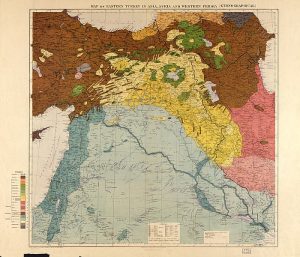
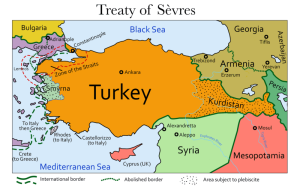
Neither Kurdistan nor its people were given more than lip service by Britain and France. Bolshevik (Communist) Russia repudiated any Russian claims associated with the agreement after the revolution that unseated the Tsar, as they had far more pressing problems. The signatories, channeling previous agreements covering African and Asia, cavalierly split what they, themselves, knew to be ethnically Kurdish areas between themselves to rule. While subsequent, limp-wristed treaties “graciously” allowed for the possibility of a Kurdish state (despite several Kurdish states being organized from 1918 to 1930), the European powers threw up their hands in 1923, and washed their hands of the Kurdish areas, for the most part, with the Treaty of Lausanne, which made no mention of the region at all, condemning the Kurdish people to be split between what is now Turkey, Syria, Iraq and Iran. The Kurd’s only ally of significance was Winston Churchill, who argued for a separate Kurdish state, but his political influence in the 1920’s was very limited, compared to what it would become in later decades.


Lt Col Francis R. Maunsell’s map, Pre-World War I British Ethnographical Map of eastern Turkey in Asia, Syria and western Persia, 1910. Kurdish regions are in yellow. Library of Congress.


The 1920 Treaty of Sèvres was a draft treaty between the Ottoman Empire and the Principal Allied Powers. It was ultimately shelved because of Turkish non-ratification and was replaced by the Treaty of Lausanne. Map by User:Zero0000 CCA/4.0


But the Kurds wouldn’t give up.

The Kurds sent a delegation to the San Francisco Peace Conference of 1945, which would form the United Nations, to argue for an independent state; they were, of course, refused. But, armed Kurdish groups continually waged low-level guerrilla wars against the states they had been relegated to; the wars’ ferocity depended on how intense the ruling government’s programs to suppress Kurdish culture were at the time.

However, this would occasionally swing into full-on war crime territory, as happened in the Halabja Massacre of 1988, when the Kurdish village was attacked with lethal “war agent” chemicals weapons, primarily mustard gas, but also with a mix of nerve and blood agents. It is generally assumed that Saddam Hussein’s government was responsible for the attack, although allegations have long been made against Iran.

When the 1991 Persian Gulf War ended, US President George H. W. Bush made casual, off-hand remarks, that left many in Iraq – including the Kurds – believing that if they rose up to overthrow Saddam Hussein, they would get at least some help from the United States. Unfortunately for them, the Kurds in the north and Shi’a Iraqis in the south read far too much into the first Bush’s words, and were left stunned (assuming they lived) then they rose up…and the United States barely lifted a finger, seemingly completely surprised that the subject peoples of a brutal dictatorship might actually have the gall to rise up in armed revolt against said brutal government.

The absolute cheek of little people.

Shamed into doing something, though, the Bush administration launched “Operation Provide Comfort” to protect Kurdish refugees fleeing the Iraqi Army units not destroyed fighting the United States and its allies in Kuwait.

Quite unintentionally, this would be the first real break for Kurdish autonomy since 1918. The strict limiting of Iraqi military abilities against the Kurds left the northern people able to organize in safety, and begin building a formal military organization, the Peshmerga, from scattered guerrilla forces. While remaining in “recognition limbo” – without formal recognition as a sovereign state – the Kurdish authorities could not legally purchase military weapons on the open world market, forcing them to develop a “cottage industry” for making weapons, alongside reusing weapons captured from Iraqi forces when the government in Baghdad drags its feet on providing any, buying weapons on the black market and the occasional under-the-table crumbs offered by a scattering of Western states.

With the overthrow of Saddam in 2003, and the resulting upheaval in the aftermath, this organization became much more formalized and professional, at least compared to where it had been. It still has serious internal issues, a reflection of thirty-odd years of disordered and fragmented political organization, leading to a fragmented command and operational structure.

Kurdistan deserves better, not least because they have carried the United States water in the region with little return for their money. Kurdistan, from 2003 onwards, made themselves into a safe area for the US and its allies, doing what it could against Al Qaeda-aligned jihadist groups, for very little return.

Kurdistan remains split between four nations, with no prospect of real help from anyone else. Syria, still embroiled in its decade-and-a-half long civil war, has no intention of allowing its Kurdish regions to leave the country; the autonomous region known as “Rojava” formalized in 2018 is nothing more than a convenience for Bashar al-Assad’s government in Damascus.

The United States is unlikely to attempt to rein in the extreme excesses of Turkey’s operations in its own Kurdish areas, nor the northern parts of Syria and Iraq. This is because Turkey, as a member of NATO, is vital to European security…even as the Turkish state keeps expanding its influence throughout the world.

Likewise, Iraq is not about to allow its own Kurdish areas to actually leave, as that would remove a large oil-producing area from the country, fundamentally weakening the shaky government in Baghdad.

And then – there is Iran.

The mullahs in control of Iran view its Kurdish population as a useful foil that allows them to accuse any number of nations of trying to undermine them, while occasionally killing people wholesale to intimidate all of its ethnic minorities.

Now, however, with wider wars exploding throughout the region, as well as the rest of the world, the faint glimmer exists that the Kurds may soon have a chance to finally establish themselves as an organized state. The chances are remote, and it will be neither easy nor bloodless, but the chance is there.

The question is: Can the Kurd’s leadership come together to capitalize on the opportunity?

If they can, the United States should help make it happen – that’s not “imperialism”. That’s helping your actual friends, who have sacrificed to help you in the past, with no prompting.


The Freedomist — Keeping Watch, So You Don’t Have To
The Lion Stirs – The Murky War Upsetting World Commerce


In the week before Christmas of 2023, there are several large-scale wars going on, with several more potential wars in the making: Russia-Ukraine; Israel-Hamas/Hezbollah; the ongoing offensive of pro-democracy rebels closing in on the fascist junta in Myanmar/Burma; the never-ending battles across the African Sahel region, and the potential Venezuelan invasion of Guyana.


But, lurking in the background is another potential conflict, one that may be impacting and aiding the neo-con agenda: Ethiopia vs. Eritrea.


Ethiopia is unique in history, as the only African state that was never colonized by any European power. Although conquered and occupied by Italy in the years immediately preceding World War 2, that occupation was short-lived, as the country was fully liberated from Italian rule by 1943.


A truly ancient state, Ethiopia maintained its status as an imperial monarchy until 1974, with the Communist revolution that placed a brutal Marxist-Leninist government in charge of the country. This government would, in turn, be deposed in another revolution in 1989, as part of the wave of Communist states around the world that collapsed as the Soviet Union and the Warsaw Pact imploded, leaving Communist “economies” to wither on the vine.


In the aftermath of the Derg’s collapse, Ethiopia was left unable to stop a popular referendum in one of its most critical provinces – Eritrea – that resulted in that state becoming independent in 1993. While this may seem like a random “factoid”, it is actually of enormous significance.


Eritrea – long part of Ethiopia – occupies the coast of the Red Sea, and as such, was Ethiopia’s only access to world commerce…and after a series of wars in the 1990’s and early-2000’s, Eritrea has effectively blocked Ethiopia from using its Red Sea ports. With a population of over one hundred and seven million, Ethiopia ranks 13th in the top fifteen nations in the world by population – and is the only one of those states that is completely landlocked.


This translates to Ethiopia being forced to pay exorbitant, even “extortionate”, fees to export its goods to market through its only access to the Red Sea, via the Port of Djibouti, which handles an estimated 95% of Ethiopia’s foreign commerce.


Ethiopia’s Prime Minister, Abiy Ahmed, takes this issue seriously…seriously enough, that he made statements on the 13th of October of 2023, that explicitly underlined Ethiopia’s ‘right to access’ to the Red Sea. Understandably, this rattled every other nation in the “Horn of Africa”, all of whom are vastly outnumbered in both population and military capacity by Ethiopia.


These remarks came less than two weeks after the Hamas terror attacks on Israel that commenced on October 7th. As a result, the wider world – obviously – paid little the comments little attention. But then, the Iran-backed Houthi rebels in Yemen chose to insert themselves into that conflict on the side of Hamas, on October 19th…clearly a coincidence, surely.


And then, on January 1st, Ahmed dropped another bombshell, announcing that Ethiopia had inked a deal with the breakaway Somali province of Somaliland to use their port of Berbera to access the Gulf of Aden – well outside the current shooting gallery – reputedly in exchange of recognition of the breakaway state. This has obviously infuriated Somalia, which has never relinquished its claim to the province, despite the region being de facto independent since 1991 and the region’s independence being ratified in a referendum in 2001.


Now, in the first week of 2024, the Houthi missile attacks and piracy have attracted the attention of major powers around the world, many of whom have joined “Operation Prosperity Guardian”, in an attempt to guarantee safe passage through the Bab-el-Mandeb Strait…albeit too late for world shipping giant Maersk, who announced on January 5th that they were ordering all of their vessels not already in the Red Sea to divert around southern Africa’s Cape of Good Hope, to avoid the fighting. While this, alone, will cause serious disruptions to global trade, many more cargo carrier lines are virtually certain to not take the risk and divert their vessels, for the same reason as Maersk. This could easily lead to a reprise of the shipping disruptions that happened at the height of the COVID pandemic.


As a result, there are increasingly serious calls within Washington circles to attack Iran directly, as they are the Houthi’s major source of money and weapons. This would be a Godsend to neo-con chickenhawks desperate to finally get the United States into their long-desired war with Iran…


…Which brings us back to Ethiopia’s moves on its future access to the Red Sea.


Ethiopia has three options: they can a) maintain the status quo, with limited access to world shipping solely through Djibouti’s port; b) conclude their deal to access breakaway Somaliland’s ports; or – c) invade at least part of Eritrea, to capture at least that nation’s port of Assab.


Obviously, the status quo is not working for Ethiopia; if it were, there would have been no need for the deal with Somaliland. Djibouti’s port is increasingly limited in capacity, and has little physical room to expand operations, which will soon severely stunt Ethiopia’s economic output…Conversely, the deal with Somaliland risks war with Somalia, as recognition of Somaliland’s independence would almost certainly gut Somalia’s hopes at stabilizing their nation, which was only reunified in 2012. Somalia would have to launch a military campaign to invade the territory to bring it to heel, presenting Ethiopia with the option of going to war with Somalia in support of a breakaway province, something Ethiopia would be loath to encourage, considering recent history.


As well, invading Eritrea to capture Assab carries significant risks on its own, because – all other things being equal in the absence of the current conflict in the Bab-el-Mandeb – Ethiopia could well face a UN-led coalition of military powers “riding to the rescue” of what has been described as the “North Korea of Africa”.


None of these seem like viable solutions, on their own…Unless the world is focused on a different series of conflicts that would combine to divert attention away from Ethiopia “readjusting” the local map, and allowing Addis Ababa to present the world with a fait accompli in the aftermath of the Houthi’s inevitable neutralization, as well as the likelihood of a massive US-Iran war…


…While the foregoing may sound like the implication of a dastardly plot on Ethiopia’s part, it is not…well, mostly “not.” But, the timeline of Ethiopia’s rhetoric regarding its right-to-access to the Red Sea is certainly suspicious, and indicates some level of foreknowledge of events beginning ion October of 2023, and having active plans and options ready to go.


There are plenty of players in this global chess tournament, and too many “leaders” in the West – and elsewhere – are arrogantly blind to the knives in the dark, thinking that “bit players” cannot harm them.


…Rather like Britain, France and the United States from the 1950’s to the 1980’s.


Word to the wise.


The Freedomist — Keeping Watch, So You Don’t Have To
Iran Escalates Red Sea Tensions


The Islamic state of Iran has significantly escalated tensions in the Red Sea, by deploying the warship Alborz to the crucial Bab el-Mandeb Strait a day after US Navy helicopters drove off Iranian-backed Houthi pirates of Yemen following their attempted seizure of the Singapore-registered container ship Maersk Hangzhou, sinking several Houthi boats and killing an estimated ten pirates, on December 30, according to CENTCOM.

This also comes some 10 days after the Liberian-flagged tanker MV Chem Pluto was struck by a suspected Iranian drone while at sea, en-route from Saudi Arabia to India on December 23rd.

The Alborz, an Alvand-class frigate, was originally bought by the Imperial Iranian Navy in 1971.

The move by Iran raises the distinct possibility of hostile action between the Iranian vessel and the various, dozen-or-so warships of Operation Prosperity Guardian, assembled in late-December to counter repeated missile and boarding attacks on international shipping, claiming to be countering the Israeli response to the unprovoked attack on its civilians that began on October 7 by the Hamas terrorists operating in the Gaza Strip.

The Freedomist will continue to monitor the situation as it develops.


  • Updated at 5:50pm CST, with information and links to the attack on MV Chem Pluto.


The Freedomist — Keeping Watch, So You Don’t Have To
Norwegian Tanker ‘Strinda’ Struck By Houthi Missile

RED SEA, 12.12.2023, 1100hrs CST – The Japanese-owned, Norwegian-flagged general oil and chemical tanker MK STRINDA was struck by a missile fired by Houthi rebels in Yemen, while transiting the Bab el Mandeb strait, late on the 11th. the ship reported damage and a fire, but reported no casualties.

The Arleigh Burke-class destroyer USS Mason responded to the tanker’s distress call, and is rendering assistance as of press time. The Mason, along with other US Navy warships, have engaged Houthi missiles and drones fire at Israel as part of the Houthi’s

This is the latest in the escalating piratical activities of the Iran-backed terror group in recent weeks, including their helicopter assault to seize of the M/V Galaxy Leader and their attempted seizure of the M/V Central Park.

The Houthi group is a religious sect that is the main party in a civil war that has raged since 2014. Although the hard-line Shi’a Muslim group is reported to be receiving assistance from many corners, no state has recognized them as a legitimate state. They were, and remain, a group of bandits, pirates and terrorists.

The Freedomist will continue to monitor the situation.


The Freedomist — Keeping Watch, So You Don’t Have To
Be Careful Of Your Sources


In the last week or so, many people have been sharing images of what they feel are alarming amounts of military air traffic culled from various online tracking websites, purporting to show a “highly unusual” increase in air traffic throughout the Middle East and the eastern Mediterranean (a.k.a., “The Levant”).

For those who are exploring a new landscape on the internet, such as aircraft and ship tracking websites, these images can, in fact, look incredible. Most of the online maps are indeed very cluttered, to such an extent that many computers have a hard time keeping up with the running updates, unless a user “drills down” to a very narrow region.

And to be fair, given the recent events within the region, with terrorist massacres in Israel, leading to brutal counterattacks by Israel, and the hysterical responses from throughout not just the region, but the threat of this new “Yom Kippur War” expanding to include most of the region – something that the few sane leaders of the world ‘body politic’ is desperate to prevent – is certainly making many people terrified of anything new and strange, that is presented with either incomplete, or flat-out wrong context, deliberately or otherwise.

The short answer to the “unusual increase” in aircraft activity in the Middle East is that it is a giant “nothingburger.” The long answer is far more mundane…but not so the reason behind it.

The fact is that Israel has severely neglected its defenses, both internal and external, for at least twenty years. Externally, Israel fell into the complacency trap of “Victory Disease” (the laziness and complacency resulting from too many victories), in that it felt that its “Iron Dome” missile defense system was mostly unbeatable, while its more conventional forces could easily handle anything that “Iron Dome” could not.

Internally, this dangerous complacency was compounded by Israel’s disastrous moves, beginning in 2012, to restrict the ability of Israeli citizens not on military or police duty, to owning or possessing military style firearms.

And on October 7, 2023, Israel and its citizens were given a stark wake up call as to why you should never beat your swords into plowshares before the right time.

As a result, Israel suddenly found itself in a desperate, grueling and bloody war against an implacable and bloodthirsty enemy at one end of its country, while facing another potential – and much more dangerous – foe to their north. While this is certainly not an unusual circumstance for Israel, Israel the state, as well as Israeli citizens, now finds itself being rudely forced to reorient its mental perspective on reality.

All-out war, as should be clear to anyone who has read an article on the Russo-Ukrainian War in the last almost two years, consumes people, ammunition, vehicles and supplies at a ferocious rate. While the scale and pace of the war in Israel may not currently be at the same overall scale as what is happening in Ukraine, when adjusted for scale, Israel is not much better off than Ukrainians.

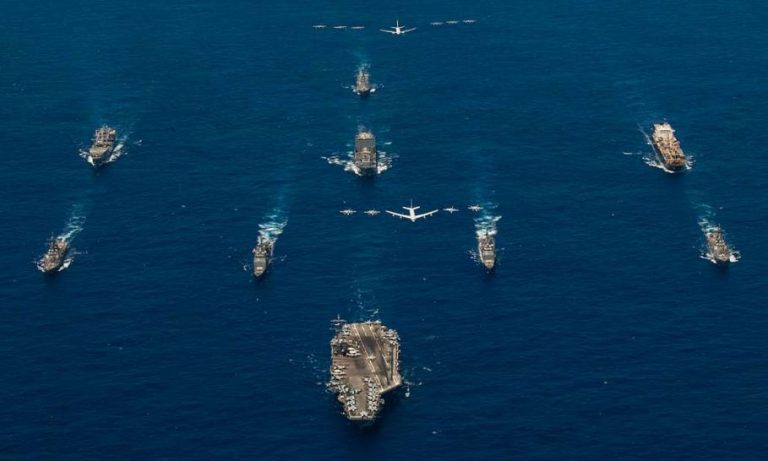
In answer, the United States – long Israel’s only truly reliable ally – has doubled down on US support to Israel in the current conflict, complete with sending two complete carrier battle groups to the region, potentially committing US forces to direct combat in the conflict.

And fears of a widening of the conflict have already been realized, as the USS Carney, an Arleigh Burke-class destroyer, has shot down multiple missiles launched by Houthi insurgents from their base areas in Yemen.

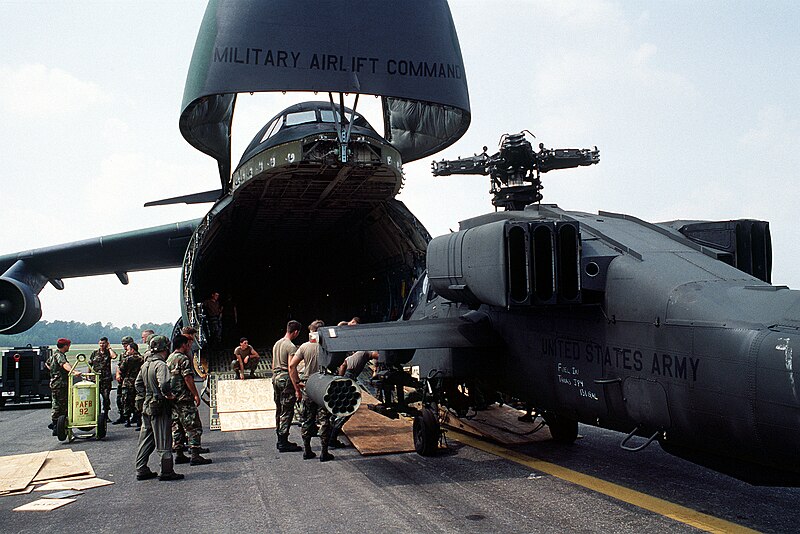
Obviously, no matter the Reader’s feelings – one way or another – about the current conflict, the United States has to supply Israel with weapons, ammunition and much else, exactly as it has for Ukraine. Normally, such supplies are sent by ship, and then by rail or road. The reason is simple: it is vastly more efficient than air transport.

Sometimes, however, speed is essential. Relatively small and light supplies, like ammunition and medical supplies, can be rushed to a conflict zone relatively quickly, as these are always the most critical supplies that would be needed early on in a conflict. In the case of any sudden uptick of military air traffic, however, there is currently another factor:

Volcanoes.

In 2010, a series of volcanic eruptions from the Eyjafjallajökull volcano in Iceland in April of that year completely shut down all air traffic in Europe outside of Spain and a tiny portion of France. That was, obviously, a very annoying situation for many travelers, as it up-ended flights throughout the world.

Now, however, another Icelandic volcano threatens to erupt: the Blue Lagoon thermal spa, long a popular tourist destination, is threatening to erupt.

Military planners, already struggling to juggle the delivery of supplies to multiple active and potential combat areas, now have no choice but add the potential of a natural disaster shutting down European airspace for an unknown period. The only real option is to start drawing supplies from existing bases in the region, and sending those to Israel…by air.

At the same time, however, those supply bases will need to be restocked, and fast, given the potential for regional escalation. This problem can be solved via a surge in sending war materials and equipment to those bases via conventional shipping…that seems to be happening.

The Ready Reserve Force ship MV Cape Orlando is currently underway from Tacoma, WA, crossing the Pacific Ocean. The Cape Orlando, originally berthed in Oakland, was actually boarded by pro-Palestinian protesters on November 4th, delaying its departure for Tacoma. (The protestors were not charged.)

While the MV Orlando is certainly the most public of the ships potentially carrying supplies to the combat area, it is also certainly not the only one.

What is happening is clear: a giant “shell game” is underway, with supplies being shuffled as quickly as possible, to cover as many holes as have been left open by shockingly poor military policies by the West and its allies over the preceding c.30 years…But such circumstances cannot endure forever.


Sun Tzu, Author of Art of War. Photo: Gary Todd, 2008. Public Domain.


Because, as the Chinese general Sun Tzu wrote some 2,500 years ago, if you try to defend every point equally, every point will be weak.


The Freedomist — Keeping Watch, So You Don’t Have To
The New Pulse of the Neo-Con Forever War


What follows is an “estimate of the situation”, concerning what may well become known as the “Guns of October”. This is a strategic assessment of the current situation in the Levant, and what the deeper plan[s] may be. Nothing in this article is based on “classified information” or “anonymous sources”, but sober estimates based on training, experience, intuition and “informed speculation”.

Around the world, October 7th stunned many people. Even after over twenty years of continuous warfare, the scenes of slaughter coming out of Israel were stunning, both in their daring, but even moreso for their brutality and savagery. Inevitably, perhaps, some people have began to promote an idea that the Israeli High Command was operating in full knowledge of what Hamas was going to do, because there was “no way” that the vaunted Israeli intelligence agencies could have missed Hamas’ preparations.

The fact is, people are always people, and people make mistakes – often, those mistakes boggle the imagination with their stupidity. There is no real evidence of anything like an intentional conspiracy on the part of the Israeli High Command’s part happening.

In this case, however, there are parties throughout the world, who have been desperate for a crisis like Yom Kippur 2.0 to restore their flagging efforts. This group has been pushing an endless series of wars since the 1990’s, and while their influence is, indeed great, they are masters of the notion espoused by one-time White House Chief of Staff Rahm Emanuel’s quip, “… you never want a serious crisis to go to waste…

The people in power, or hanging on to the tailings of power, who espouse such ideas, are known as “neo-cons”…But – what is a “neo-con”?

Foreign Policy Magazine accurately describes neo-cons as “liberal imperialists on steroids”. They are firm believers in the notion of a highly totalitarian vision of the so-called “Pax Americana”, a series of policies that have produced a national debt in excess of an eye-watering $33 trillion, as of 10/18/2023. These beliefs – and the people behind them – also led to the roiling disasters in Israel, Lebanon, Iraq, Afghanistan, Libya, and most of the rest of the Middle East.

Another key descriptor of the neo-cons is that they have no political party, beyond that which is most expedient for them at the moment. Zbigniew Brzezinski (1928 – 2017), one-time National Security Advisor to Democrat party President Jimmy Carter, laid out the neo-con strategy and thought in his 1997 book, “The Grand Chessboard”. His criticisms of Republican President George W. Bush’s handling of the post-9/11 wars were not one of actual opposition, but complaining about their mis-handling.

Neo-Con thinking is also at the core of the Russo-Ukrainian War that began in February of 2022. No matter what side of that conflict the Reader may fall on, the fact is that – like Japan attacking Pearl Harbor in 1941 – the West, led by the United States, goaded Russia into its attempt to dismember the Ukrainian state. Why? Because the neo-cons desperately wanted to initiate Cold War 2.0, because Islamic jihadi’s were simply not working as an existential threat to Western society that justified obscenely massive military spending; terrorists are annoying, but they will never seriously threaten the Western social order.

Russia and China, on the other hand…

In early-to-mid 2022, there was a point where the world held its breath, as it seemed that the major powers of the world might actually enter into direct, large-scale combat with each other, something that has not been seen since 1945. While that danger still looms, the important takeaway, is that these situations have sparked increasingly strident calls to revamp western military establishments, to something resembling “the old days”.

But – how does this relate to the “Guns of October”?

In the aftermath of the seeming failure of neo-con ambitions as the “Global War On Terror” sputtered out in the mid-20-teens, despite the flare-up provided by the so-called “Arab Spring”, the neo-con movement became increasingly desperate for something to revive their plans to continue their series of planned wars, the exhaustion and disgust of the people’s of the West – and Russia – over the never-ending series of wars at the dawn of what should have been a “golden century” for humanity.

The clearest example of the desperation of the neo-cons, including their abject hatred of US President Donald Trump, came when Trump rejected their plans to strike three targets in Iran in response to the 2019 downing of an unmanned US drone. Trump canceled the retaliatory attacks when he was informed that the attacks were expected to kill at least 150 Iranians; Trump did not feel that level of retaliation to be a “proportionate” response to shooting down an unmanned drone.

But now, with a reimposition of sanctions against Russia in April of 2021, leading to a near-war with that state, the neo-cons within Washington DC and allies in several European governments have been awaiting a crisis of an appropriate scale to move the world back into the realm of “forever wars”.

Enter October 7th, of 2023.

With increasing calls in the West to end the open and naked barbarity of Hamas – barbarity that organization happily live-streamed, until it realized how bad the optics were – coupled to the deranged bleatings of the Communist mullahs in control of Iran – handed the neo-cons the golden crisis they have desperately needed to galvanize Western governments into continuing the wars: the United States – even under an “anti-Israel” establishment – cannot oppose Israel in assaulting Gaza, nor in hammering the Iranian-back Hezbollah organization in southern Lebanon, especially in the face of Hamas’ barbarity, without suffering catastrophic political consequences. Similarly, the Western European “street” is fed up with their government’s policies of accommodation and appeasement of “refugees” who spare no expense to tell the world how much they hate their “hosts”, who spared little expense to give them shelter and sanctuary.

Caught in the middle, are the Muslim governments of the region, none of whom want anything to do with this war, but who have enough internal problems that they cannot be seen by their populations to be completely abandoning the Palestinians. But, with more and more US Navy warships being deployed to the region at speed, the possibility of an “incident” occurring that “required” a military response against Iran – one that would make the Iraq war look like a training exercise – is an increasingly likely possibility.

Why is this important? Put simply, the United States does not have the manpower to fight the wars the neo-cons want the West to fight. As has been pointed out previously at the Freedomist, two decades of no-victory wars – as well as policies to insult and demean the US military’s primary recruiting pool – have turned a generation of potential recruits firmly against military service…so much so, that there has been a quietly increasing spate of military officers “speaking truth to power”, pointing out that the current world strategic will eventually force the United States to return to conscription, the dreaded “D-word”, that has been anathema to both the political and military spheres alike, for fifty years, since peacetime conscription was ended in the US by President Richard M. Nixon in 1973.

The neo-cons have painted themselves into a corner: They have relentlessly pursued aggressive policies that have burned off most of any good will built up by the United States over the past four decades, in pursuit of a strategy of continual conflict that requires a level of military recruitment that is a pale memory. At the same time, their actions have severely damaged the US economy, because markets not under a regimen of centralized planning respond poorly to toxic cycles of borrowing money, then borrowing more money to simply pay the interest, all while expanding the pool of currency by running the printing presses at high speed.

Likewise, the manufacture of basic war materials has been so neglected the West is finding it difficult to supply a single large war, much less multiple wars.

With much of the potential military recruit-base firmly rejecting staggering enlistment bonuses of over $50,000, there will come a point where the United States will be forced to attempt to revive the Draft for 18-to-30 year-olds…and there has been legislation language already draft, that was repeatedly submitted for some thirteen years.

By Democrat Party apparatchiks.

Needless to say, a Democrat administration reviving the Draft for 18-to-30 year-olds will be “interesting”, to say the least.

The bottom line?

Be careful what you wish for – especially if you have children.


The Freedomist — Keeping Watch, So You Don’t Have To
Main

Back FREEDOM for only $4.95/month and help the Freedomist to fight the ongoing war on liberty and defeat the establishment's SHILL press!!

Are you enjoying our content? Help support our mission to reach every American with a message of freedom through virtue, liberty, and independence! Support our team of dedicated freedom builders for as little as $4.95/month! Back the Freedomist now! Click here