


April 23, 2026

Parker Davis

Almost 30 Percent of COVID-19 Patients Develop ‘Long COVID’

From www.physiciansweekly.com
2022-05-03 05:51:35

Excerpt:


MONDAY, May 2, 2022 (HealthDay News) — Almost 30 percent of hospitalized patients and high-risk outpatients with COVID-19 develop postacute sequelae of severe acute respiratory syndrome coronavirus 2 (PASC), according to a study published online April 7 in the Journal of General Internal Medicine.

Sun M. Yoo, M.D., M.P.H., from the David Geffen School of Medicine at the University of California in Los Angeles, and colleagues examined the association of demographic and clinical characteristics on development of PASC among hospitalized and high-risk outpatients from April 2020 to February 2021.

The researchers found that 29.8 percent of the 1,038 patients with longitudinal follow-up developed PASC. In hospitalized patients, the most common persistent symptom was fatigue, followed by shortness of breath (31.4 and 15.4 percent, respectively); in outpatients, anosmia was the most common persistent symptom….


Read Full Article

Uyghurs warned against divulging ‘state secrets’ before UN right chief ‘s China visit — Radio Free Asia

From www.rfa.org
2022-05-02 21:46:00

Excerpt:


Chinese officials in Xinjiang are warning Uyghurs not to divulge “state secrets” during a visit by United Nations human rights chief Michelle Bachelet this month, officials in the western region said.

A Chinese government video instructing Uyghurs on 10 things not to do has been shared widely on Douyin, a Chinese version of the TikTok short video app, in Xinjiang, the sources said.

The Chinese Communist Party (CCP) Committee of Yarkand (in Chinese, Shache) county in Kashgar (Kashi) prefecture recently uploaded the video to social media. It features 10 female CCP officials from the county reciting the “10 commandments” and warning Uyghur residents not to disclose so-called state secrets.


Read Full Article

Next Gen Lithium Ion Batteries Could Charge Way Faster

Researchers out of China have developed a way to decrease the charging time of lithium-ion batteries significantly using copper coating and nanowires.

Researchers manage to charge a lithium-ion battery to 60 percent in 5.6 minutes : Futurology

From www.reddit.com
2022-04-30 19:04:14
/u/Sorin61
Excerpt:


 A team of researchers affiliated with multiple institutions in China has successfully managed to increase the speed of charging a lithium-ion battery to a rate of 5.6 minutes for a 60% charge, according to a report by TechXplore published on Thursday. They achieved this impressive feat by adding a copper coating and nanowires to the battery’s anode in order to effectively improve ordering……

One of the major bottlenecks in speeding up charging is the battery’s anode. Most are made of graphite and are constructed in a non-ordered slurry, which the researchers note, is not an efficient means of passing along current.

To overcome this problem, the researchers first ran particle-level theoretical models to optimize the spatial distributions of different sized particles and electrode porosity. They then took what they learned from the models to make changes to a standard graphite anode. They coated it with copper and then added copper nanowires to the slurry and then heated and then cooled the anode, which compressed the slurry into a more ordered material.

They affixed the anode to a standard lithium-ion battery and then measured the amount of time it took to charge. They found they were able to charge the battery to 60% in just 5.6 minutes (as opposed to 40% for a control battery with no alterations) and to 80% in just 11.4 minutes.


Read Full Article

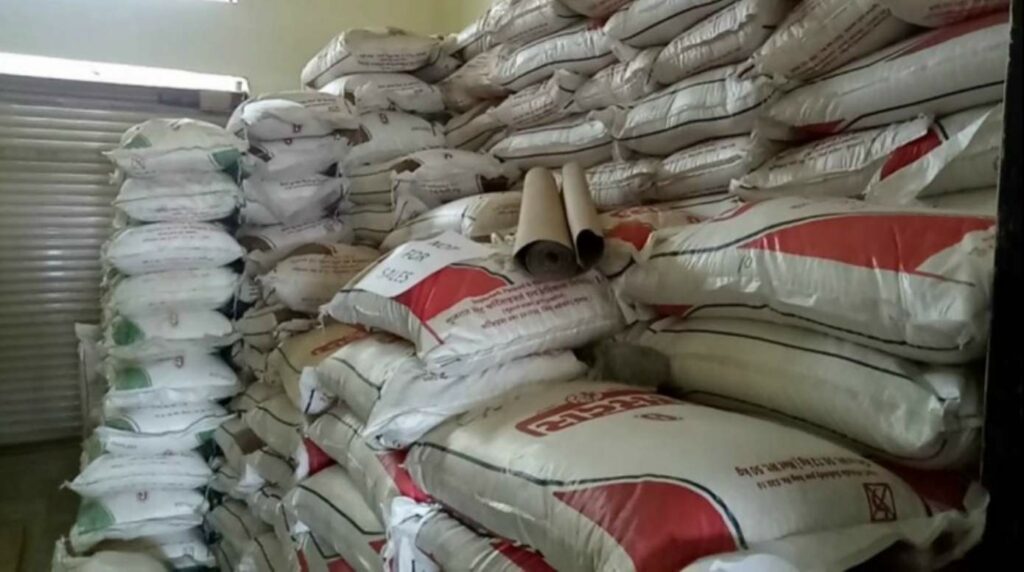
Starting in India, World Wheat Shortage Could Hit 50

After a heat wave destroyed much of India’s wheat crop this past year, world wheat shortages could see supplies reduce by as much as 50 percent.

Wheat supplies may retract 10-50% hinting at an upcoming global food shortage

From finbold.com
2022-05-02 07:40:29

Excerpt:

Even more food shortages may be on the way as a result of the recent heatwaves in India destroying wheat yields. India was supposed to increase its exports to offset the shortfalls caused by Russia’s unprovoked invasion of Ukraine which had already reduced global wheat supplies.

March temperatures in India have reached levels never before seen in India according to records tracking temperatures since 1901, destroying the crop. Estimates range between 10% and 50% yield decrease for the season by local farmers.

Expectations of wheat exports from India were high, with 11-12 million metric tonnes expected to be delivered throughout 2022 and 2023. With such high expectations and unexpected disruption, a global food shortage seems to be coming.


Read Full Article

Fertilizer Shortages Contributing to Looming World Food Shortages

Fertilizer shortages are spreading throughout the world, starting in Ukraine as a result of the Russian invasion, leading to a price spike of 70 percent in less than one year.

Can the world feed itself? Historic fertilizer crunch threatens food security | AP

From denvergazette.com
2022-05-02 09:36:17

Excerpt:


For the first time ever, farmers the world over — all at the same time — are testing the limits of how little chemical fertilizer they can apply without devastating their yields come harvest time. Early predictions are bleak.

In Brazil, the world’s biggest soybean producer, a 20% cut in potash use could bring a 14% drop in yields, according to industry consultancy MB Agro. In Costa Rica, a coffee cooperative representing 1,200 small producers sees output falling as much as 15% next year if the farmers miss even one-third of normal application. In West Africa, falling fertilizer use will shrink this year’s rice and corn harvest by a third, according to the International Fertilizer Development Center, a food security non-profit group.

…..“Fertilizer prices are up an average of 70% from last year,” said Timothy Njagi, a researcher at the Tegemeo Institute of Agricultural Policy and Development in Kenya, referring to prices in the country. “The fertilizer is available locally, but it’s out of reach for the majority of farmers. Worse, many farmers know that they cannot recover these costs.”

Prices have been climbing for more than a year for a host of reasons: runaway pricing for natural gas, the main feedstock for much of the world’s nitrogen fertilizer; sanctions on a major Belarusian potash producer; back-to-back late-summer storms on the U.S. Gulf Coast that temporarily shut-in production in the region; plus Covid-19 restrictions that have disrupted every global supply chain, including chemicals.

That tightening in the physical fertilizer market has galvanized China, the largest phosphate producer, to restrict outgoing shipments in order to build up a stockpile at home, further exacerbating the global shortage. Add Russia’s invasion of Ukraine, which effectively cut off nearly a fifth of the world’s nutrient exports, and the fertilizer industry and its pricing mechanisms are arguably more broken than ever before.


 

Read Full Article

Chemical and 3D Printed Electronics Thin as Atoms

A breakthrough in manufacturing graphene could open the door wide for 3D-printed wearable electronic tech.

Atomically thin electronics built using chemical reactions

From arstechnica.com
2022-04-27 20:24:39

Excerpt:


…..This week saw a somewhat different take on constructing these minuscule devices: chemistry. A research team linked up the two materials used in the earlier study, graphene and molybdenum disulfide, using a single bridging molecule that could react with each of them. The chemistry of the bridging molecule also influenced the behavior of a device made using this approach…..

…..The new work aims to create a single molecule that acts as a bridge between graphene and molybdenum disulfide. At one end of the bridge, there’s a chemical group that reacts with molybdenum disulfide. On the other, there’s a chemical group that interacts with graphene. In between is just a short, unreactive benzene ring.

Starting with some molybdenum disulfide flakes, the researchers ran a reaction that linked the bridge to the flake. Afterward, the flakes were placed in with graphene sheets, where the other end of the bridge molecule reacted with the graphene. The result was a graphene sheet decorated with molybdenum disulfide flakes, with the two connected via the bridge molecule…..


Read Full Article

Top Researcher Who Questioned AI Supremacy Fired by Google

Another Firing Among Google’s A.I. Brain Trust, and More Discord

From www.nytimes.com
2022-05-02 09:00:17
Daisuke Wakabayashi and Cade Metz
Excerpt:


Less than two years after Google dismissed two researchers who criticized the biases built into artificial intelligence systems, the company has fired a researcher who questioned a paper it published on the abilities of a specialized type of artificial intelligence used in making computer chips.

The researcher, Satrajit Chatterjee, led a team of scientists in challenging the celebrated research paper, which appeared last year in the scientific journal Nature and said computers were able to design certain parts of a computer chip faster and better than human beings.

Dr. Chatterjee, 43, was fired in March, shortly after Google told his team that it would not publish a paper that rebutted some of the claims made in Nature, said four people familiar with the situation who were not permitted to speak openly on the matter. Google confirmed in a written statement that Dr. Chatterjee had been “terminated with cause.”

Read Full Article

Researchers at MIT (Massachusetts Institute of Technology) have been working on developing lab-designed and created bacteria that could conquer the bad bacteria that is immune to antibiotic therapies.  The discovery could pave the way for alternative therapies to antibiotics, allowing humans to rely significantly less on antibiotics than they do now.  This would also lead to much slower antibiotic resistance development by these same offending bacteria.

Engineering armour for good gut bacteria against all-conquering antibiotics

From cosmosmagazine.com

Excerpt:

Researchers of synthetic biology based at the Massachusetts Institute of Technology (MIT) in the US have devised a system to protect the gut microbiome from the effects of antibiotics.

The new study, published in Nature Biomedical Engineering, reports on the successful use in mice of a “live biotherapeutic” – a genetically engineered bacterium that produces an enzyme which breaks down antibiotics in the gut.

“This work shows that synthetic biology can be harnessed to create a new class of engineered therapeutics for reducing the adverse effects of antibiotics,” says MIT professor James Collins, the paper’s senior author.

Read Full Article

French Election sees Wokeness Become Central Issue in Campaign

‘Woke culture’ has made its way into the French presidential election – WUNC

From www.wunc.org
2022-04-12 09:14:00

Excerpt:

French President Emmanuel Macron is set to face far-right leader Marine Le Pen in a runoff later this month. That’s the result of a vote over the weekend. The presidential campaign has been dominated in part by a battle against woke culture that’s seen as an import from the United States. Candidates of all stripes have shared a rare consensus in denouncing le wokism. And I asked French journalist, commentator and filmmaker Rokhaya Diallo what that says about race, identity and extremism in France.

Read Full Article

Main

Back FREEDOM for only $4.95/month and help the Freedomist to fight the ongoing war on liberty and defeat the establishment's SHILL press!!

Are you enjoying our content? Help support our mission to reach every American with a message of freedom through virtue, liberty, and independence! Support our team of dedicated freedom builders for as little as $4.95/month! Back the Freedomist now! Click here