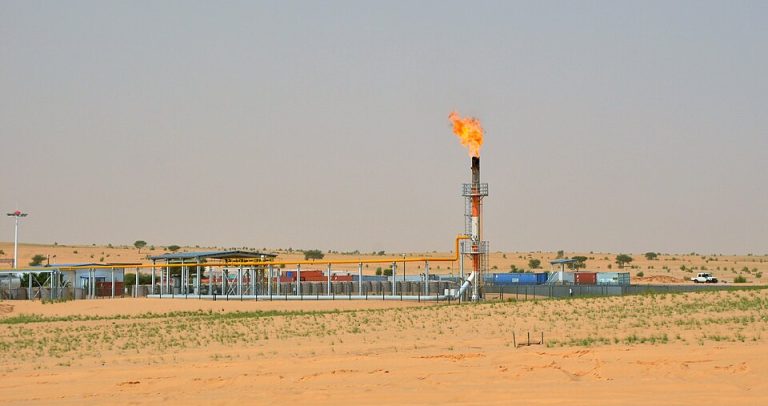

This week, we continue our dig into the problem’s with Pete Hegseth’s “FORTRESS America” program, looking at this stuff no one thinks about: a plastic alternative.
Plastic isn’t exactly an existential resource, but it is useful to point out that you, reading this article, are literally surrounded by items made of plastic. It is in nearly every major manufactured item, like the AK-74 rifles above, where it is what the magazines are made of…but it wasn’t always around.
Before plastic – there was Bakelite.
For Pete Hegseth’s “FORTRESS America”, the plastics problem in a sustainment-under-siege scenario is less obvious than the fuel problem and more insidious. A force without fuel stops immediately and visibly; the problem announces itself the first time an engine refuses to turn over. A force without plastic replacement parts degrades silently, component by component: a connector housing cracks, a terminal block fails, an insulator breaks down under field voltage, a grip or handguard shatters under impact. Modern military electronics, communications systems, vehicle wiring harnesses, and weapon components are not built from metal alone. They are built from metal and polymer, and the polymer is what makes the metal functional.
The United States military’s plastic dependency is not primarily a structural problem. It is an electrical problem.
The Material That Won the War
Consider what held the electrical systems of the Second World War together. The M1 Garand’s trigger housing. The SCR-300 backpack radio. The SCR-536 ‘handie-talkie’. The firing mechanisms of the proximity fuse, which changed artillery forever. All of them depended on the same material for electrical insulation, connector housings, terminal blocks, and component bodies: a phenol-formaldehyde resin — Bakelite, and its near relatives.
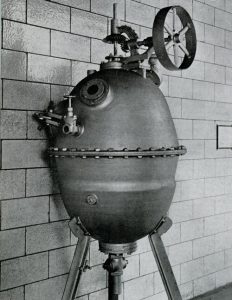
Bakelite was invented in 1907 by Leo Baekeland, a Belgian-American chemist who combined two industrial chemicals — phenol and formaldehyde — under heat and pressure and produced the first fully synthetic plastic. It was rigid, thermally stable, an excellent electrical insulator, and machinable into precise shapes. By 1940 it was the backbone of military electronics manufacturing on every side of the conflict. When the war ended, it was not superseded because it failed. It was superseded because thermoplastics were cheaper and more flexible at industrial scale. The chemistry that won the war was not discarded. It was simply out-competed.
That competition ends when the supply chain does.

The Chemistry and Its Threshold
The batch chemistry of phenol-formaldehyde resin is not demanding by industrial standards. Phenol and formaldehyde react under acid or base catalysis in a heated vessel; the reaction proceeds to a resole or novolac intermediate that can be stored, then cured under heat and pressure in a mold to produce the finished thermoset. The equipment required is a reaction vessel, a condenser, a hydraulic or mechanical press, and steel molds. The process control required is batch temperature management and timing — well within the capability of operators already running the charcoal retort described in Part 2 of this series.
The feedstocks are the constraint, and both of them come out of a retort.
Phenol at industrial scale comes from the cumene process — a petroleum refinery operation unavailable at base level. At base scale, the available phenol source is wood tar: the condensable liquid fraction recovered from the pyrolysis of cellulosic biomass. Wood tar contains cresols, guaiacols, and xylenols alongside phenol itself — a crude phenolic mixture that serves as an adequate feedstock for lower-specification resin production. The same recovery condenser that separates the volatile fractions of a charcoal retort for methanol recovery also captures these heavier tar fractions. A retort already producing charcoal, wood gas, and pyroligneous acid for base operations is already producing a phenolic feedstock stream as a byproduct — that currently, in most operations, is discarded.

Formaldehyde comes from methanol. Methanol — historically called “wood alcohol” for the same reason wood tar is called “wood tar” — is a standard volatile fraction of destructive wood distillation, recovered from the same retort condenser. Its catalytic oxidation to formaldehyde requires a catalyst bed and controlled temperature management, but the catalyst can be fabricated from reclaimed silver contacts or produced as an iron-molybdenum oxide bed from available industrial chemistry. The step from methanol to formaldehyde is significantly less demanding than polymerization chemistry.
Both feedstock production streams are already running in a base that has staged the teapot refinery model. The resin plant is an add-on, not a parallel initiative.
The Front End: Hemp
The biomass input — the front end of this production chain — is where the FORTRESS America sustainment concept acquires an unexpected asset: industrial hemp.
Hemp (Cannabis sativa L., industrial varieties) is a lignocellulosic biomass crop with cellulose content of 70-80% of dry stalk weight, placing it among the highest-yielding cellulosic feedstocks available in temperate agriculture. Its relevance to the charcoal-and-tar production chain is straightforward: cellulosic biomass produces methanol, wood tar phenolics, and charcoal in proportion to its cellulose content. High-cellulose feedstock means higher yields of all three fractions per ton processed.

The yield argument is more striking than the chemistry argument. Industrial hemp produces approximately 4.1 times the dry biomass per acre of a commercial timber stand — and does so in 70 to 120 days rather than a 50-year timber rotation. In a temperate continental climate, two crops per year are achievable on base agricultural land; in warmer zones or with modest greenhouse extension, three to four. The same acre that a timber program cycles once in half a century cycles multiple times per year, feeding the retort continuously rather than waiting on a mature stand.
Hemp also produces food-grade seed oil and high-protein seed meal as co-products, connecting the charcoal and resin production chain directly to the base food production program described in Part 1 of this series. The crop that feeds the retort also feeds the base.

The PFAS Dividend
One concern merits direct address: PFAS contamination. The United States military’s legacy use of aqueous film-forming foam (AFFF) has left detectable PFAS contamination at a significant fraction of domestic military installations. Any base-level agricultural program operates against this contamination background, and the question of whether hemp cultivation adds to, operates neutrally within, or mitigates that contamination deserves an answer.
The answer is favorable, though qualified.
Hemp is a documented phytoremediator. Research following the Chernobyl disaster established that Cannabis sativa accumulates heavy metals and certain organic contaminants from soil into its biomass. More recent work has confirmed PFAS uptake in hemp grown on PFAS-contaminated soils. For food-use hemp, this uptake is a problem. For industrial-use hemp fed directly into a pyrolysis retort, it is a different story.
Pyrolysis at temperatures above 700°C is an established destruction pathway for PFAS compounds. The carbon-fluorine bond, while among the strongest in organic chemistry, is not stable against thermal degradation at sufficient temperature; high-temperature pyrolysis converts the PFAS load into hydrogen fluoride and fluorine-bearing gases manageable in the exhaust treatment system, rather than cycling them back into soil or groundwater. A retort running at or above that threshold on PFAS-accumulating hemp is not a contamination risk. It is — carefully — a phytoremediation-to-destruction pipeline operating on land the base already contaminated with its own operational history.
The qualification is process control: retort temperature must reach and sustain the destruction threshold, and exhaust management must handle hydrogen fluoride output. These are engineering parameters, not prohibitive barriers. The base that stages this correctly is not creating a new problem. It may be slowly closing an old one.
The Iowa Footnote
While Hegseth’s office was drafting FORTRESS America doctrine, the Army was blowing up its own primer supply in Iowa.
On November 20, 2026, the Army detonated approximately five tons of lead azide at the Iowa Army Ammunition Plant in Middletown — sixty-eight barrels of the primary explosive used in detonators, holding five tons of material, stored at the facility for decades, which had shown signs of deterioration. The barrels had been stored for more than twenty years in earthen-covered containers, sitting in a bath of ethanol and water to keep the material stable. During a routine check, some of the water had evaporated, causing the lead azide to crystallize. Officials recommended that some residents in nearby Middletown vacate the area; those who could not leave were advised to stay inside with windows and doors closed.
Lead azide is not a legacy curiosity. It is the primary explosive in the detonator train of nearly every munition in the American inventory. A fortress that cannot manufacture its own primers is a fortress that depends on a supply chain for the first step in every round it fires. The retort that produces the phenolic resin for the electrical insulation can, with modest additional chemistry, close that gap too.
That is a separate article. It is not a separate problem.
The Stack
The industrial logic of this series has followed the same thread across three articles: the pre-petrochemical production stack that the petroleum era made uneconomical did not become unworkable. It became unnecessary. The difference between unnecessary and unworkable matters enormously when the supply chain fails.
The teapot refined fuel in Syria because the fixed refinery was a targeting priority. The charcoal retort produces military-grade phenolic feedstocks on any base with arable land and a pyrolysis unit. The hemp field feeds the retort continuously, remediates the contamination the base inherited from its own operational history, and co-produces food alongside chemistry inputs. The resin press turns the output into the electrical insulation that keeps the communications network alive.
None of this is new technology. All of it was in continuous military-industrial use until sixty years ago. FORTRESS America, if it means what Hegseth says it means, is not a doctrine in search of innovation. It is a doctrine in search of institutional memory.
The memory is in the retort.
Next week, we will conclude this series with the most important hole not being addressed – Power.