June 9, 2026

Iran

Cutlass Rattling – World Powers Face Off Over Commercial Shipping & Grain


Since 2021, there has been a war simmering between the United States and Iran. The US began seizing – via court-based “arrest” orders – ships carrying cargo (mostly oil) –out of Iran, to various nations that the United States has under economic sanction. The nations under US sanctions, such as Venezuela, have no real method to respond to the United States.

Iran, however, is a different matter.

Iran has begun seizing ships in the Persian Gulf by force, and in earnest, in response to the actions by the United States; the number is now up to twenty vessels. Additionally, some firms in the United States have begun to refuse to unload ships seized with Iranian cargo, fearing Iran seizing their vessels in retaliation.

Because of the clear threat presented to the “freedom of the seas”, the United is now responding to Iran by reinforcing its forces in the Persian Gulf with additional destroyers…and a few thousand US Marines.

While the first inclination of many will be to recall that the United States severely damaged the Iranian Navy in 1988’s Operation Praying Mantis – launched in response to an Iranian naval mine severely damaging the USS Samuel B. Roberts (FFG-58) – that was some thirty-five years ago.
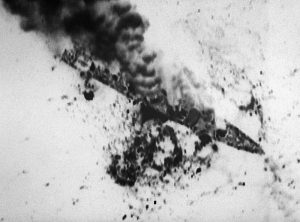
 

Iranian frigate IS Sahand (74) burning on 18 April 1988 after being attacked by aircraft of U.S. Navy Carrier Air Wing 11. US Navy photo. Public Domain.


Iran’s naval capability – while still no match for the US Navy in a direct fight – has significantly improved since their defeat, very likely enough to cause serious damage to United States forces in the process. Such a defeat, were it to happen, would almost certainly spark hysterical screams from within Washington, DC, demanding an all-out invasion.


LtGen Paul K. Van Riper, USMC (retired), c.1995. LtGen Van Riper led the “opposing force” in the “Millennium Challenge 2002” exercise. USMC official photo. Public Domain.


This is certainly not a whimsical or marginal threat. There has been a long-standing resistance within the Washington establishment to any rational negotiations with Iran; indeed, this escalated after then-President Donald Trump called off a disproportionate attack in response to Iran shooting down an unmanned US surveillance drone in 2019. In fact, hysterical calls for war with Iran have been a steady feature of US rhetoric for over a decade.

While the reasons for this hysterical behavior by long-serving chickenhawks in the Washington Swamp are unclear, they are nonetheless real. And with the weak, disconnected and floundering administration currently in place in the Swamp, wallowing in failures both domestic and foreign, highly irrational decisions are a serious possibility.

Iran is not Iraq. An irrational and ill-advised war against the current iteration of Ancient Persia – no matter how technically weak it may appear – would be an absolute disaster for the United States in the immediate sense, but also for the wider world, as the impact on the global trade system would not simply be catastrophic, but could swiftly escalate out of control.

For far too long, the people of the United States have bought into the mythology of “American Invincibility”. While this belief was justifiable until about 2010, it is no longer the case. The US Navy currently fields less than 300 vessels; all of the armed services except the Marine Corps have admitted that they expect to fall short of their recruitment targets by at least 20%, if not more. As the Biden administration openly admitted less than two weeks before this writing, US industry has not been able to step up the production of basic artillery ammunition to meet the needs of the administration’s support to Ukraine.

There is nothing left for the United States’ potential need for combat operations, should that happen.
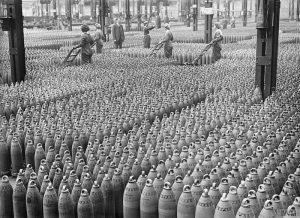
 

Munitions Production on the Home Front, 1914-1918. Imperial War Museums. Public Domain.


And there are painfully few options available, if any still exist at all. Despite some twenty-odd years of near-continuous combat, neither US industry nor the wider population have been mobilized for the possibility of a major war…or wars. In 1941, as the forces of Imperial Japan were attacking Pearl Harbor, the United States had been girding for war for nearly two full years, mobilizing a “command economy” to increase the production of war materiel to support Great Britain in its war against Hitler’s Germany, and instituting the first peacetime military draft in the country’s history, giving all of the armed services of the day time to bring in and train troops in readiness for war.

None of that has been happening in the last 20+ years. And the cold reality is that it is likely not possible, without twenty years, minimum, of corrective measures: Thirty years of globalism’s industrial and business realities have removed the bulk of heavy industrial manufacturing from within the borders of the United States. Likewise, there is virtually no chance of the Draft being reactivated; while it is certainly still on the books as a legal option, the social policies instituted, promoted and encouraged by the Democrat Party in the last fifteen years have poisoned the recruiting well for the military, encouraging the armed service’s core demographics to pointedly not step forward to enlist. Basic training has been eroded to the point where the vast majority of troops with under ten years service are not psychologically prepared for combat at any level.

And yet – the chickenhawks of the Swamp persist, thinking that their actions to please their vote base have had no impact on military readiness – despite facts to the contrary – because they are so disconnected from the real world…

…Now, if the issue were simply Iran and a shortfall for materiel’s shipments to Ukraine, this might not be that large of a problem. A problem, certainly, but not a critical one.

However, as many chickenhawk cheerleaders crow over the recent attack on the Kerch Bridge over the Sea of Azov, Russia’s response was swift and decisive: Russia has abandoned the deal it agreed to previously, which allows the export of Ukrainian grain crops to supply the world’s food needs.
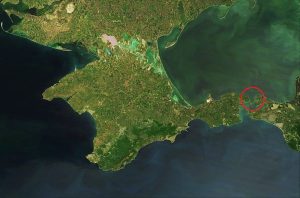
 

Satellite picture of Crimea, 05-16-2015, with location of the Kerch Bridge in red. NASA. Public Domain.


Russia is now actively targeting the port city of Odessa with long-range missile strikes, and is laying naval mines to close off Ukraine’s remaining coastal regions. Moscow has also hinted at the possibility that it will attack commercial vessels attempting to reach Ukraine.

The real danger in this series of moves lies far to the south, where Egypt is critically dependent upon Ukrainian wheat to feed its population. In the face of this loss, Egypt – already struggling with massive unemployment and the irrational and childish dismissal of its concerns over the Grand Ethiopian Renaissance Dame (GERD) project by the government in Addis Ababa.

This is important, because if Egypt lashes out against Ethiopia in desperation – using an air force largely reequipped by the US – it could easily spark a much wider war, a war that could easily result in the closing of the Suez Canal…an act that, as was demonstrated by the grounding of a single container ship in 2021 for less than a week, would up-end the world trade system.

Which loops us back to Iran.

If the United States tilts that windmill, it will destroy the International North–South Transport Corridor, the decade-old project by Russia, China, Turkey, India and Iran to build a trade corridor designed to drastically shorten the transit of commercial cargo, bypassing the Suez Canal entirely.

This is a hair-trigger environment that is capable of sparking World War 3. This is not hyperbole, in any way.

It is solely the construct of the Swamp – a body that imagines itself as completely immune to anyone it deems “lesser”…which term includes you and I.

Let that sink in.


The Freedomist — Keeping Watch, So You Don’t Have To

Russia APEC


The Shocking Source of Iranian Uranium

By Mr Bill Collier- According to a New York Times item posted in November of 2014, the Russians have agreed to greatly expand their role in providing Uranium and technical support to the Iranian nuclear program. In essence, Russia is selling Uranium to Iran.

The world’s largest producer of uranium is Kazakhstan, which produces 46,2 million pounds of uranium to the US’s 4.3 million pounds per year. A total of 139.5 million pounds of uranium are produced annually. According to one estimate, a 50 kilogram bomb (around 110 pounds) would require as much as 2,000 kilograms of uranium (around 4,400 pounds). That uranium is utilized by many buyers, including a once-US-owned and now Russian-owned company called Uranium One, the world’s leading producer of nuclear materials which controls as much as 50% of US uranium production.

According to Wikipedia– Uranium One is a uranium mining company owned by the Russian government with headquarters in Toronto and operations in Australia, Canada, Kazakhstan, South Africa and the United States. It is a Canadian corporation. Rosatom, a Russian State-owned enterprise, through its subsidiary ARMZ Uranium Holding, purchased the balance of a 100% stake in the firm January 2013.

By purchasing the firm, which controls up to 50% of US uranium production, the Russian government not only obtained US uranium, which is then sold on the market to a number of customers, potentially including Iran, but also the expertise of personnel in America and Canada which can be used company-wide to increase mining efficiency and production.

According to the same Wikipedia entry cited above- ARMZ took complete control of Uranium One in January 2013 in a transaction which was reviewed by the Committee on Foreign Investment in the United States.  In December 2013, an internal reorganization of Rosatom extinguished the interest of ARMZ making Uranium One a direct subsidiary of Rosatom.

This committee includes the US Secretary of State.  Hilary Clinton, the current democratic front-runner in the 2016 Presidential Election, wasn’t the Secretary of State at the time.

It is the Russian parent company, ARMZ, that will be tasked with supplying uranium to the Iranians, although the amount being purchased has not been disclosed. What is certain is that Iran has enough uranium to produce dozens of nuclear bombs.

In a related scandal, Hillary Clinton has been accused of taking payments from foreign governments in exchange for currying favor from the State Department.  In this instance, Clinton is accused of taking money from the same Russian-owned company that now controls up to 50% of the Uranium being produced in America.  The company donated $2.35 million to the Clinton Foundation from 2009 to 2013.  The donations were not revealed publicly.    You can read more about that scandal in this NYTimes article.

Whether or not the accusations against Clinton are true, the mere fact that the US State Department allowed this deal to go through, a deal which ultimately gives the Russian government control over up to 50% of American uranium production, has caused no small amount of alarm.

The issue is not just about the uranium being mined, which could potentially become part of an Iranian nuclear weapon, but the acquisition of technical means and know-how that would make the Russian government owned company more efficient at mining operations and at uranium processing in general.

The shocking truth here is that Iran gets its uranium from a Russian-government-owned company that now controls up to 50% of US uranium production.  It is at least possible, either at present or in the very near future, that SOME of the higher quality US uranium now resides in Iranian centrifuges.

The potential exists for American uranium to be used in Iranian nuclear bombs aimed at American allies or, possibly, distributed to agents to attack America itself (with dirty bombs or portable nuclear bombs).  Whether or not this has already come or will come to fruition, the mere fact that such an exchange could occur should give Americans pause.  That the US State Department, partly under Clinton (where the process of this approval began) and partly under Kerry (who gave the final approval for the deal), would approve such a deal with these potential outcomes has many even in the intelligence community scratching their heads.

The degree to which Clinton will be tied to this remains to be seen.

Mr Bill Collier is the editor and publisher of News Scope, a digital news intelligence journal that can be found at News-Scope.com
Flashback- the reset button

The Battle for Yemen Gains Steam

The Sunni Coalition Against Iran

Bill Collier- The rise of a Shia Salafist army in Yemen, funded and supplied by Iran, has raised the ire, and the profile, of an emerging Arab coalition against Iran in the Middle East, with the United States absent from any leadership role  Indeed, as Yemen, once touted as a success story for American policy, has been vacated by the US.  This vacuum appears to have been filled by an Arab coalition led by Saudi Arabia and the UAE.  The coalition is attempting to pick up the broken pieces of what has become a failed state.

For more background on the REAL fault line emerging in the Middle East, see author’s News Intelligence Update on News Scope.

The takeover of Yemen by radical Shia Salafists from the Houthi tribe is not complete. Forces still remaining loyal to President Hadi, a Sunni, have been clawing back some lost ground, namely the international airport at Aiden. The fighting is said to be bitter and bloody with no quarter taken or given by either side.

Saudi Arabia has committed 100 warplanes and “150,000 troops” to the fight.  They are joined by forces from the UAE, Egypt, Jordan, Kuwait, Qatar, Pakistan, Bahrain, Morocco, and Sudan. Whether or not it materializes, this Sunni coalition has made noises that it intends to wage relentless war on the Shia forces in Yemen, and the United States is “absent from the field.”

In short, a major battle is emerging between Iran and her neighbors, with places like Yemen, Iraq, Libya, and Syria being the battleground, although in Iraq and Syria it is more complicated because Iran is fighting the same Sunni Salafists opposed by this emerging Sunni coalition. These powers clearly do not want Iran to advance, and they are not happy about the current negotiations over Iran’s nuclear program. Indeed, current US policy is driving many Arab powers into a closer, if unofficial, level of cooperation with Israel, while driving a wedge between the rest of the Arab world and the leaders who control the Palestinian claimed lands of the West Bank, Gaza, and East Jerusalem.

It should be noted that the bonds between the Arab world and the Palestinian people have not suffered.  What has suffered is the relationships between Hamas and Fatah on one hand and the rest of the Arab world on the other hand.

It is not clear yet how much is being put into this fight.  The Saudi military does not possess a high reputation in battle and is largely controlled by tribal groups- but if, as it appears, these tribes are sincerely opposed to Iranian control over Yemen, one might see a far more aggressive, and capable, Saudi military operation than would be otherwise predicted.. It is certainly true that personnel from Jordan, Egypt, and the UAE would be genuinely opposed to this Iranian proxy Army gaining power on the Arabian Peninsula, but so far it would appear that their forces are limited to air force assets and it is not believed that ANY ground forces have entered Yemen.

Any attack on the ground would likely have to come by air and sea, coming overland from Saudi Arabia would be extremely difficult given the desert terrain which must be crossed in great expanses, except via the Saudi town of Jizanon, which lies just north of the Yemeni town of Al Luhayya on the Yemeni west coast. No reports of ground movement in this area have been reported, beyond beefing up of the border areas as a defensive measure.

Make no mistake, this is a full-on war, and if it proceed in a manner consistent with the stated goals of this Sunni coalition, it is likely to become a major conflagration which spill over into Syria, Iraq, and Libya. For instance, a Sunni-led coalition could conceivably seek to enter Iraq and install a Sunni government while chasing the Iranians out of Iraq. It appears on the ground that the US has ceded Iraq to Iranian hegemony.

None of these developments have taken cognizance of American policy or concerns- indeed the US has maintained a distance from events that is stunning to American allies in the region. The precipitous withdrawal from Yemen by US forces was completely unexpected.  The operations plan called for reinforcements of those forces, not their withdrawal, the Freedomist has learned.

Attacks against the Shia forces have come from many locations, including air attacks by coalition partners in support of ground attacks by President Hadi’s loyalists, who have also been air dropped weapons and munitions. But those forces have managed to hold their ground, even as precision air attacks targeting individual commanders on the road have caused attrition among their leadership. Iranian arms and supplies are very likely not coming through.  Saudi Arabia has essentially declared a Cordon Sanitaire over Yemen and surrounding areas.

It is not known if the US is providing intelligence or any other resource to this coalition of Sunni powers.


Main

Back FREEDOM for only $4.95/month and help the Freedomist to fight the ongoing war on liberty and defeat the establishment's SHILL press!!

Are you enjoying our content? Help support our mission to reach every American with a message of freedom through virtue, liberty, and independence! Support our team of dedicated freedom builders for as little as $4.95/month! Back the Freedomist now! Click here