February 21, 2026

Ralph Benko

The Cost of Gold Standardlessness – Weak Dollar as Damaging as War

Arthur Laffer: “From now on it isn’t going to be as much fun being an American.”

By Ralph Benko, adapted from Newsmax and republished by permission of the author

In 1971, President Nixon held an infamous Camp David meeting where his economic policy advisors engineered the “Nixon Shock.” On August 15th, Nixon then announced that he, among other measures, was “temporarily” closing the “gold window.”

The other measures are gone.  The gold window remains closed.

Nixon promised that this wouldn’t affect prices.  Then the dollar lost 85% of its purchasing power.

Arthur Laffer, then the OMB economist, on the steps of the Old Executive Office Building, thereafter said to journalist Jude Wanniski, as recounted by Wanniski to Robert Merry, who later told me: “From now on it isn’t going to be as much fun being an American.”

Meaning? America’s prestige, prosperity, and attendant privileges would, along with the value of the dollar, soon erode. Prophetic words.

Inflation soon became virulent. Gas at the pump went from around 36 cents to over a dollar.

Now it’s over $4.  Despite appearances (“the energy crisis.” “OPEC.” “Sticker shock.” ) the culprit really wasn’t “rising prices.”

Rising prices are the symptom.  The cause was, and is, the decline in the value of the dollar.

Lyndon Johnson set that in motion by closing the London gold pool. And left office in disgrace.

Nixon formalized it by “closing the gold window.” And left office in disgrace.

Now?

Recall the coda of The Who’s Won’t Get Fooled Again.

Right now, the Kremlin’s cruelty toward Ukraine, an acute geopolitical and humanitarian crisis, commands our attention away from the chronic destructiveness of bad money.

That said, make no mistake. Bad money is as destructive as war.  Only, more insidious.

Nicholas Copernicus, one of the smartest people who ever lived, wrote in his 1526 Essay on Money (of which I had the privilege of serving as lead co-editor of its definitive modern translation) that “debasement of coinage,” is one of the chief causes of national destruction:

“ALTHOUGH THERE ARE COUNTLESS MALADIES that are forever causing the decline of kingdoms, princedoms, and republics, the following four (in my judgment) are the most serious: civil discord, a high death rate, sterility of the soil, and the debasement of coinage. The first three are so obvious that everybody recognizes the damage they cause; but the fourth one, which has to do with money, is noticed by only a few very thoughtful people, since it does not operate all at once and at a single blow, but gradually overthrows governments, and in a hidden, insidious way.”

American-led sanctions on Russia now have put renewed attention on the US dollar. Good. Much—like it being fun to be an American—depends on getting our money right.

Steve Forbes likes to say that the quickest way to repel a couple of bores flanking you on a transatlantic flight is to offer to explain monetary policy. However, money’s interesting.

And, as Copernicus pointed out, consequential. How consequential?

I’ve been hearing apocalyptic predictions by gold bugs about the demise of the dollar, and ensuing hyperinflation, for over forty years, ever since I came to their attention as one of the only two pro-gold of the 23 official witnesses before the Reagan Gold Commission. Hasn’t happened.

No sign of it happening now. Sebastian Mallaby, writing for the Washington Post, recently showed why, despite much prattle to the contrary, the there’s no sign that the dollar is about to lose its status as the world economy’s basic money.

Mallaby writes:

“This dollar defeatism is vastly overblown. … Since 2008, the dollar’s share in the foreign-exchange reserves held by central banks has declined only marginally, from around 65 percent to 60 percent. … Central banks like to use dollars for the same reasons that companies and individuals do. They hold dollars knowing that others will gladly accept them, just as many learn English because others speak it. … Of course, the dollar’s reserve-currency status is not a divine right, and the Fed should step up its determination to fight inflation.”

But Houston? We have a problem.

France’s then-finance minister Valery Giscard d’Estaing, once called the reserve currency status of the dollar an “exorbitant privilege.” It’s also a curse.

History shows that only the classical gold standard, in which the world’s currencies are defined by and legally convertible into gold (not dollars), reliably fosters sustained equitable prosperity.

Forty some years ago, we supply-siders, defying conventional wisdom, prescribed stabilizing the dollar (and, secondarily, cutting marginal tax rates) to cure stagflation. We then proposed using gold.

In practice the stabilization occurred through the hawkish monetary policy of Fed Chairman Paul Volcker with the support of President Reagan. They quelled inflation and fomented sizzling equitable prosperity by tightening the money supply.

Inflation’s now back. Washington presents as clueless to inflation’s cause, and cure, as in the days of Jimmy Carter.

How to fix it? One Congressperson, à la Jack Kemp, to go for the gold.
By Ralph J. Benko

Donald Trump, inadvertently, certainly, and unnoticed, virtually, has put his successor Joe Biden in the hot seat.  How so? 

As Nobel economics laureate Milton Friedman famously declared and later distinguished economists confirmed it takes up to two years before the Fed’s overenthusiastic gunning of the money supply shows up in consumer prices.

Called: “inflation.” Let’s rewind.

But first… inflation is a misnomer. Rising prices are just a symptom of the real problem: a sinking dollar. 

Donald Trump spent a lot of time pounding the table for a weaker dollar going on two years ago:

Trump, a very “in the moment” guy, surely had no idea that a weak dollar would cause inflation later. But … you get the drift. 

Fed chairman Jay Powell discretely accommodated Trump’s incessant demands. Now Trump’s inflation chickens are coming home to roost … in the Biden henhouse.

A president, after a lag, always gets the dollar – weak or strong – he wants. This is an open secret. As I wrote at Forbes back in 2014:

As journalist Steven Solomon wrote in his indispensable exploration of the Fed, The Confidence Game: How Unelected Central Bankers Are Governing the Changed World Economy (Simon & Schuster, 1995):

“Although they strained to portray themselves as nonthreatening, nonpartisan technician-managers of the status quo, central bankers, like proverbial Supreme Court justices reading election returns, used their acute political antennae to intuit how far they could lean against the popular democratic winds.  ‘Chairmen of the Federal Reserve,’ observes ex-Citibank Chairman Walter Wriston, ‘have traditionally been the best politicians in Washington.  The Fed serves a wonderful function.  They get beat up on by the Congress and the administration.  Everyone knows the game and everyone plays it.  But no one wants their responsibility.’”

True news.

Yet old news.

What’s weird and unsettling is that virtually nobody in Washington is pinning the blame where it obviously belongs, on Donald Trump’s weak dollar demands. The Pachyderms, who know better, or should, blame inflation on the big Democratic Party-led spending. 

Balderdash! Yet it’s understandable that Pachyderms would wish to avoid placing blame on their former titular leader, the punitive Trump. Truth be told, the GOP spent at least as drunkenly as the Dems. But it’s plain dopey to pin a monetary disorder, inflation, on fiscal policy.

So, what’s up with the Donks? Instead of sticking their archnemesis Trump with the blame that belongs to him they are making absurd claims that Greedy Big Business is at fault for rising prices. Preposterous.

We have known at least as far back as Adam Smith that businessmen will always conspire to raise prices. Smith, who practically invented capitalism, called out the greed of businessmen explicitly in capitalism’s bible, Wealth of Nations

It’s not munificence or counsels of civic virtue that constrains businesspeople from raising prices. It’s competition.

Big Businesswomen (and men!) are no greedier now than they were before inflation kicked up. Profit maximization is a constant among the merchant class.

So, by blaming Big Business, Biden and the Bidenistas are making a transparently absurd argument. Nobody to the right of Bernie Sanders – meaning, most Americans – buys this lame story.

This is doubly weird because the midterm elections are coming up. These will be a referendum on the government’s pandemic response … and inflation. 

This farce would be funny if the joke weren’t on us. With both the Republicans and Democrats getting the cause of inflation badly wrong we are likely to get continuing inflation… followed by a cure as bad as, or worse: recession.

As the Wall Street Journal recently observed,Historically, the Fed hasn’t been able to push down inflation without a recession.” This, sadly, is true enough. Yet a recession really isn’t required to cure inflation.

H.L. Mencken once wrote thatDemocracy is the theory that the common people know what they want, and deserve to get it good and hard.” So long as the Republicans and the Democrats are engaging exclusively in blame-shifting, rather than restoring the proven-effective supply-side policies of stabilizing the dollar and keeping tax rates reasonably low, we common people are going to get it good and hard.

That said, nobody I know of in power in America is looking at the real, historically proven, Constitutional solution. That would be making the dollar legally convertible into gold at a fixed price, say $2,000/oz.

After a short adjustment period gold convertibility would end inflation while creating a wonderful climate of equitable prosperity and job creation. The gold standard worked extraordinarily well for almost 200 years! 

Gold is out of fashion with the smart set, such as PhD economists who haven’t delivered anything nearly as good. Nothing else has worked nearly as well as gold. 

And so here we are, facing the worst inflation in 40 years. Our politicians giving us a Hobson’s Choice between seeing our savings and salaries shrink in buying power, by inflation, or seeing our neighbors, or even ourselves, thrown out of work by a completely unnecessary recession.

Yikes! Money printer go brrr?

It falls to us—including you, dear reader—to contact our Representatives by their websites, emails, phone calls and even good old-fashioned letters. Guide their footsteps back onto the Paths of Righteousness.  Tell them:

“You shall not press down upon the brow of labor this crown of thorns; you shall not crucify mankind upon a cross of  federal reserve notes!”

Onward to a golden age.

#

© 2022 by Ralph J. Benko, co-author of The Capitalist Manifesto and chairman and co-founder of “The Capitalist League,” is the founder of The Prosperity Caucus and is an original Kemp-era member of the Supply-Side revolution that propelled the Dow from 814 to its current heights, doubled American real per capita GDP, and world GDP from $11T to $94T.


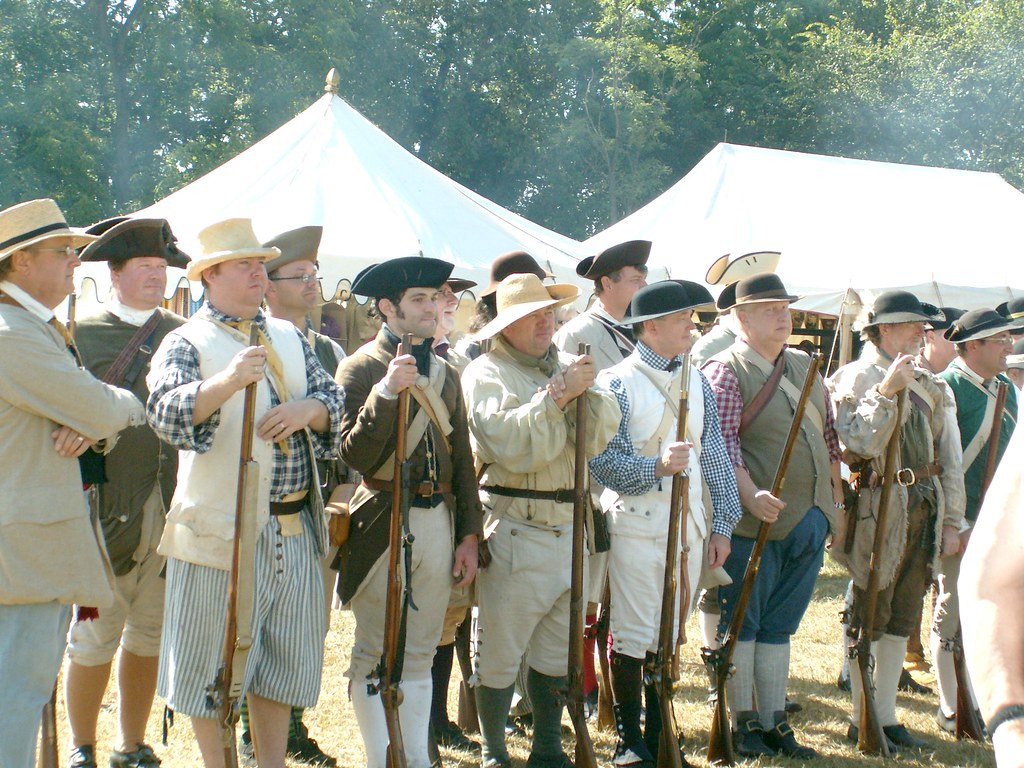
The Important Re-emergence of Well-Regulated Militias Begins

By Ralph Benko and Rachel Alexander

In politics, you are known by the quality of your enemies. Thus, we took it as a great sign when one of the hardest left of the mainstream magazines, Mother Jones, recently devoted its “The Big Feature” to protesting the official recognition of a Virginia well-regulated Militia.

The Board of Supervisors of the Bedford and Campbell County governments and first term Rep. Bob Good (R-VA) gave recognition to the Bedford Militia. This is big. It could represent an important, perhaps even transformational, first step in the restoration of our Constitutional right to well-regulated Militias.  Per Mom:

“Virginia is the only state where local governments are legitimizing their regional militias. In Bedford County and its neighboring Campbell County the local governments are trying to rebrand their militias from extremist paramilitary groups operating on the fringe of society into an official arm of the state—one with a more family-friendly image of protecting neighbors rather than bombing government buildings. ‘It’s sad at this point that the militia is a scary term, because historically it’s not a scary term,’ Jonathan Falls, the commander of the Bedford Militia, told his troops at the muster. ‘Historically it’s a very honorable thing to do in your community, and so part of our mission is to change the definition of the militia back to what its original, historical meaning was.’”

Of course, Mom (who typically sympathizes exclusively with left-wing paramilitary groups such as Seattle’s riotous CHOP, where one of the rioters killed someone) clutches her pearls at the prospect of militias becoming what they Constitutionally were constituted to be (and long and happily were), “an official arm of the state.” And woe is me says she to well-regulated militias regaining their authentic “family-friendly image of protecting neighbors rather than bombing government buildings.”

In the immortal words of America’s greatest yogi, Yogi Berra, “In theory there is no difference between theory and practice but in practice there is.” Thus, we are delighted to help spread the word of the emergence, in practice, of what we recently proposed here in theory, something which the Sentinel’s editor proposed long before we did: a well regulated militia.

In a recent article in the issue of the Bill of Rights Sentinel, “Demand Restoration of the Full Second Amendment,” we took a strong stand that gun rights advocates simply must demand our orphaned Constitutional right to a well-regulated militia together with the right to keep and bear arms.  Of course, devotion to protecting the Second Amendment’s second clause in no way justifies Bill of Rights defenders’ caving on the first. We wrote:

“There’s no justification for how self-styled defenders of the Second Amendment defaulted facing abdication of the guarantee of the right to ‘a well regulated militia, being necessary to the security of a free State…’ A proper defense of the Second Amendment must defend it in full. Not by halves. The first clause of the Second Amendment must be held as sacrosanct as, per the Heller case, the uninfringeable personal right to keep and bear arms, lest the entire bundle of rights to arms be weakened. We must not let leftists pull the rug out from under us by blithely ignoring the Second Amendment’s first clause, thereby setting an insidious precedent.”

We were unaware, when writing this, that much of our position had been anticipated by gun rights thought leader and long-time Sentinel editor-in-chief Alan Korwin in his 2015 Daily Caller column “A Well-Regulated Militia IS NEEDED For the Security of a Free State” wherein he wrote with characteristic trenchancy:

“Because this is a matter of national security, a pure constitutional function, Dept. of Homeland Security dollars can be legitimately allocated to encourage Americans to go to the range, become better marksmen, and be prepared.

“Television alone should have you supremely aware that authorities are excellent at closing the barn door after the horses are out. They show up in overwhelming numbers, beautifully attired for battle, after the battle is over. The ‘news’ crews record them all decked out, never dirty, then show the same few short clips of them standing around aimlessly, doing nothing on a street corner like idle teenagers.”

That said, however, we were not surprised by the anxiety of one good Sentinel reader who wrote to express his fear that our demand for respect for the full Second Amendment “has the potential to play into the hands of the antis.” We, as constitutional originalist lawyers, well understand that those opposed to our civil rights will attempt to reinterpret, in devious and preposterous ways, the plain language of the Bill of Rights to deprive us of such rights. It’s what they do.

Yet as the Heller case shows, their typically flimsy propagandistic arguments will fail when argued in front of a high integrity, constitutional originalist court. That said, anticipating the inevitable effort by the left to pervert the plain language of the Constitution is no justification for ignoring the plain language of the Constitution.

There can be no clearer statement of a right than the first clause of the Second Amendment, “A well regulated Militia, being necessary to the security of a free State….” And we demand it be both honored and not allowed a distorted interpretation. As John Philpot Curran famously said, in 1790 Dublin: “The condition upon which God hath given liberty to man is eternal vigilance.”

As we said in our previous Sentinel article, yet bears repeating:

“The purpose of the Second Amendment was to create a balance of power — a bulwark against a tyrannical federal government. Even the denialist Washington Post, by publishing historian Noah Shusterman, was forced to admit that Alexander Hamilton, writing in the Federalist Papers, called a well-regulated militia ‘the most natural defense of a free country.’ His anti-Federalist critics agreed with the need for a citizens’ militia, writing that ‘a well regulated militia, composed of the Yeomanry of the country, have ever been considered as the bulwark of a free people.’ Conservatives and originalists like us don’t airbrush words out of the Constitution. Ignoring plain constitutional language is a reprehensible but familiar left-wing tactic. The Second Amendment, in its fullness, recognizes that a well-regulated Militia is indeed necessary to the security of a free State.”

And there you have it. The Second Amendment recognizes an unequivocal right to a well regulated Militia. And the Yeomanry of this country, now, starting in Virginia, are successfully gaining official recognition of our orphaned, yet still legitimate, right.

Could be big! Could become a movement.

We encourage the Sentinel’s readers across America to follow the Bedford Militia’s sterling example and seek official recognition from their own counties, states and Members of Congress.

Thank you, Commander Jonathan Falls, both for your visionary leadership and your eloquence in reasserting our right to a well regulated Militia.

Thank you for your potentially history-making leadership to the supervisors of Campbell and Bedford County.

And thank you, Rep. Bob Good, for honorably fulfilling your oath of office to preserve, protect and defend the Constitution of the United States by courageously making it a priority, as all Members of Congress should, to defend the Bill of Rights!

Reprinted by permission of the authors.  Originally published in the December 2021 issue of the JPFO Bill of Rights Sentinel.

Demand Restoration of the Full Second Amendment: “A Well-Regulated Militia”

There’s no justification for how self-styled defenders of the Second Amendment defaulted facing abdication of the guarantee of the right to “a well regulated militia, being necessary to the security of a free State…”

A proper defense of the Second Amendment must defend it in full. Not by halves.

The first clause of the Second Amendment must be held as sacrosanct as, per the Heller case, the uninfringeable personal right to keep and bear arms, lest the entire bundle of rights to arms be weakened. We must not let leftists pull the rug out from under us by blithely ignoring the Second Amendment’s first clause, thereby setting an insidious precedent.

Joining or participating in a well-regulated militia, state-chartered or auxiliary to the National Guard, reporting exclusively to the elected state governor, without age limitation or other arbitrary restrictions, confers honorable status. It will provide a way to issue taxpayer-funded weapons and ammunition to its members, provide training, drilling, discipline, and the legitimate exclusion of violent criminals and those dangerously unstable. As well it should. School systems themselves can and should provide one of the vehicles for ensuring a populace well trained in the military arts and sciences a militia must know.

Restoring the right to a well-regulated militia protects the letter and spirit of the Second Amendment as a bulwark against tyranny. Doing so also will expose the hypocrisy of those who hypocritically claim they are not against gun ownership, merely against so-called “gun violence,” a concocted term designed to belittle the honorable place firearms hold in American history.

Switzerland had universal Army service and a gun culture as great as America’s. Having the equivalent of a well-regulated militia cut their crime rate by 90% compared to ours while it served in good order. The left’s resistance to well-regulated militias would hoist it on its own petard, its hypocrisy—their purpose being not reducing criminal misuse of arms, but eviscerating a major provision of the Bill of Rights—clearly revealed!

We fully support the right of the law-abiding to keep and bear arms for self, family, and home defense. We fully support the right of the law-abiding to keep and bear arms to hunt. That said, neither the ancillary purposes of personal defense nor hunting were why the Second Amendment was put into the U.S. Constitution.

“A well-regulated Militia

is indeed necessary to

the security of a free State.”

The purpose of the Second Amendment was to create a balance of power—a bulwark against a tyrannical federal government. Even the denialist Washington Post, publishing historian Noah Shusterman, is forced to admit that:

“Alexander Hamilton, writing in the Federalist Papers, called a well-regulated militia ‘the most natural defense of a free country.’ His anti-Federalist critics agreed with the need for a citizens’ militia, writing that ‘a well regulated militia, composed of the Yeomanry of the country, have ever been considered as the bulwark of a free people.’

Conservatives and originalists like us don’t airbrush words out of the Constitution. Ignoring plain constitutional language is a reprehensible but familiar left-wing tactic. The Second Amendment, in its fullness, recognizes that a well-regulated Militia is indeed necessary to the security of a free State. We have lost sight of this at our grave peril.

The very dangers that have assaulted us—from Dr. Fausti and his cohorts from the federalized health-care plague commissions—are all the proof one needs to see that, without countervailing force at the state level, federales have retracted our rights to assemble, worship, speak freely, travel and act as we would as free citizens. It is time for that to end, and well-regulated state-based Militias, as contemplated by the Founding Fathers in the critical first half of the Second Amendment, are the obvious solution.

A proper defense of the Second Amendment must defend it in full. Not by halves.

Demand and assemble the constitutional right to a well-regulated militia!


Reprinted with the permission of the authors Originally published in the June 2021 issue of the JPFO Bill of Rights Sentinel.


Ralph Benko is a member of the New York Bar, nationally published columnist and co-founder and chair of The Capitalist League. He was a deputy general counsel for the Reagan White House and worked with two other White Houses and the Congress.


Rachel Alexander is a lawyer, nationally published political commentator and is the editor and founder of Intellectual Conservative. She previously served as an Assistant Attorney General for the State of Arizona and corporate attorney for GoDaddy.


Trump vs. Carter 2024: Let the Inflationists Battle It Out

by Ralph Benko

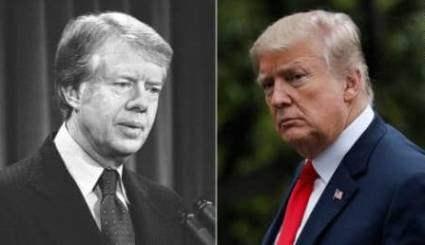
Incoming: 2024. How about Donald Trump vs. Jimmy Carter, a match between the two living one-termers?

Why? Because both pursued policies of dollar weakness.

Jimmy Carter, on the heels of inflationistas Johnson, Nixon and Ford delivered double-digit inflation. He coupled it with high unemployment yielding a towering Misery Index.

President Trump kept talking down the dollar, as pointedly covered by The New York Times in August 2019 amid many other sources. “On Thursday, the president again publicly expressed displeasure at the relative strength of the dollar, describing it as a drag on American industrial exports and the result of Federal Reserve monetary policy.”

As Milton Friedman determined, buttressed by much further evidence since 1961, there’s a characteristic lag, roughly two years, give or take, between (at the president’s behest) the Fed’s flooding the zone with dollars and rising prices. Looks to me like the Trump inflation chickens are coming home to roost right on schedule.

Equally worrisome are the chickens that Biden, in reappointing inflation dove Jerome Powell as Fed chair, is releasing. Powell recently signaled that he will slowly end the monetary ease that has been the hallmark of his chairmanship.

Let’s hope so. Will he be hawkish enough?

As reported by Politico in a recent reappraisal of the anti-inflationary stance of former regional Fed bank president Thomas Hoenig, “Between 2008 and 2014, the Federal Reserve printed more than $3.5 trillion in new bills. To put that in perspective, it’s roughly triple the amount of money that the Fed created in its first 95 years of existence. … Hoenig … warned that it would suck the Fed into a money-printing quagmire that the central bank would not be able to escape without destabilizing the entire financial system.”

Will Powell do the right thing? And will he do the thing right?

Meanwhile, President Biden is being Carteresque in sheer inflation cluelessness. The editorial board of the Wall Street Journal recently (and fairly) lambasted the president in Carving Up Biden’s Inflation Beef for scapegoating Big Business for causing inflation: “Inflation keeps rising, and maybe the place where Americans have noticed it most is the grocery store. Prices have climbed 16% at the meat counter in the last year, and so President Biden is rounding up the usual scapegoats: Big meat producers.”

Nonsense. As Milton Friedman said it first and best and a mountain of evidence supports, inflation is always and everywhere a monetary phenomenon.

And it is most unhelpful that Republican economic policy folk, including some who served under Reagan and, thus, should know better, are misattributing inflation to the bipartisan infrastructure spending.

I’m a deficit hawk but spending isn’t the cause of inflation. That’s Neo-Keynesian dogma. Even Keynes would shudder at such blather.

Misattributing the cause of inflation ingratiates its proponents with (the once and perhaps future president) Donald Trump, absolving his reckless calls to weaken the dollar. And it pins the tail on the Donkey.

But in the words of Wolfgang Pauli“Not only is it not right, it’s not even wrong!” Bad policy.

We haven’t seen such public cluelessness on the cause of, and cure for, inflation since Jimmy Carter was president. Carter, in an unctuous national address, on October 24, 1978, said:

“Good evening. … Inflation is obviously a serious problem. What is the solution? I do not have all the answers. Nobody does. Perhaps there is no complete and adequate answer. … I’ve spent many hours in the last few months reviewing with my own advisers and with a number of outside experts every proposal, every suggestion, every possibility in eliminating inflation. If there’s one thing I have learned beyond any doubt, it is that there is no single solution for inflation.”

Nonsense! The cause of inflation was, and is, excessive money printing by the Fed. Fed Chairman Paul Volcker, once Reagan had his back, put that knowledge into practice and ended inflation for almost 40 years.

The single solution for inflation lies in stopping excess money creation. Both the Donks and the Pachyderms have forgotten.

The true cause of inflation still resides in popular consciousness. An April 2020 meme showing Fed Chairman Jerome Powell “money printer goes brrr” with a white banner, “inflation,” went viral.

Click here for a rueful chuckle. That said, the joke’s on us.

The Democrats scapegoat supposedly greedy business. The Republicans scapegoat supposedly reckless federal spending. Both are “not even wrong.”

Karl Marx was right about exactly one thing. In The 18th Brumaire of Louis Bonaparte Marx noted dryly, “Hegel remarks somewhere that all great world-historic facts and personages appear, so to speak, twice. He forgot to add: the first time as tragedy, the second time as farce.”

As to inflation? Here comes the farce.

If America craves inflation … why not the best?

Trump vs. Carter, 2024!

Ralph Benko, co-author of “The Capitalist Manifesto” and chairman and co-founder of “The Capitalist League,” is the founder of The Prosperity Caucus and is an original Kemp-era member of the Supply-Side revolution that propelled the Dow from 814 to its current heights and world GDP from $11T to $94T. Read Ralph Benko’s reports — More Here.

republished by permission from Newsmax

Inflation Cure Without Recession? Currency Reform

by Ralph Benko

Inflation.

Shame to open 2022 on a downbeat note. Forewarned, however, is forearmed.

Inflation is a greater threat than a regnant China (who might be the rival America has long needed). It’s worse than climate change which some well-respected experts predict will cost the world less than 3% of its GDP, 80 years hence. Not insignificant but not catastrophic.

Alas, both Democrats and Republicans as well as most of our professional economic thought leaders are getting the cause and cure of inflation wrong. And as Mark Twain famously never said, “It ain’t what you don’t know that gets you into trouble. It’s what you know for sure that just ain’t so.”

As for the Donks, the Biden White House’s blaming rising prices on Big Business? Keynes, himself no Keynesian, likely would have been horrified at such economic nonsense.

The young John Maynard Keynes well understood inflation’s bad money basis. In his 1919 breakthrough classic The Economic Consequences of the Peace he wrote, “There is no subtler, no surer means of overturning the existing basis of society than to debauch the currency. The process engages all the hidden forces of economic law on the side of destruction. …”

Wait. It gets worse! The Pachyderms are loonily indicting federal spending as inflationary, ignoring Milton Friedman’s profound (and true) dictum, “Inflation is always and everywhere a monetary phenomenon. …” Profligacy’s a bad thing. Yet not an inflationary thing.

Inflation is busting out over much of the world, see herethere, and everywhere. So, inflation obviously has nothing to do with U.S. federal government spending. Rather, the Fed, under White House pressure, has been weakening the dollar, the world’s reserve currency. Voilà: inflation.

We need not rely on mere appeals to authority or circumstantial evidence. Politico recently published a resounding vindication of the morally courageous anti-inflationary stance of former regional Fed bank president Thomas Hoenig.

“Between 2008 and 2014, the Federal Reserve printed more than $3.5 trillion in new bills. To put that in perspective, it’s roughly triple the amount of money that the Fed created in its first 95 years of existence. … Hoenig was the one Fed leader who voted consistently against this course of action, starting in 2010. … He also warned that it would suck the Fed into a money-printing quagmire that the central bank would not be able to escape without destabilizing the entire financial system. On all of these points, Hoenig was correct.”

Sadly, our Democratic, Republican and technocratic leaders seem oblivious as to both the cause and historically proven healthy cure for inflation without recession. What is that cure?

Currency reform.

What’s that? One great example is that of Germany after WWII. Germany was a bombed-out ruin, widely believed doomed to poverty pretty much forever. How did West Germany, against all odds and in the face of expert pessimism, become the economic powerhouse of Europe?

The socially-conscious free market Ludwig Erhard, acting against all expert advice, introduced currency reform and abolished price controls. He did so on June 19, 1948. This instantly produced the Wirtschaftswunder, the “German Economic Miracle.”

As Erhard wrote in Prosperity through Competition:

“Jacques Rueff and Andre Piettre, summed up the combination of economic and currency reform thus: ‘Only an eye-witness can give an account of the sudden effect which currency reform had on the size of stocks and the wealth of goods on display. Shops filled up with goods from one day to the next; the factories began to work. On the eve of currency reform the Germans were aimlessly wandering about their towns in search of a few additional items of food. A day later they thought of nothing but producing them. One day apathy was mirrored on their faces while on the next a whole nation looked hopefully into the future.’”

Or as the distinguished (later Fed governor) Henry C. Wallich observed, “The spirit of the country changed overnight. The gray, hungry, dead-looking figures wandering about the streets in their everlasting search for food came to life.'”

Good money is fundamental to equitable prosperity. And, properly understood, it’s really not hard to do.

So, what now? The evidence, most recently compiled by Peter C. Earle and William J. Luther’s superb The Gold Standard: Retrospect and Prospect, is persuasive that restoring the classical gold standard would be the optimal currency reform.

Whether or not one agrees on the gold standard, all signs point the way to subduing inflation, without inducing a recession, lies in currency reform. Sadly, our political class is oblivious.

What to do? Email a link to this column to your congressperson. Then cross your fingers.

Then, if ignored, buckle up for a bout of stagflation and attendant penury. If, against all odds, they listen?

Onward to a golden age!

Ralph Benko, co-author of “The Capitalist Manifesto” and chairman and co-founder of “The Capitalist League,” is the founder of The Prosperity Caucus and is an original Kemp-era member of the Supply-Side revolution that propelled the Dow from 814 to its current heights and world GDP from $11T to $94T. Read Ralph Benko’s reports — More Here.

republished by permission from Newsmax

Follow The Money: How the Gold Standard is Great Politics

by Ralph Benko

Could the gold standard, surprisingly, become politically viable? Yes.

Here’s how.

Most politicians, of both parties, bitterly cling to the status quo. They are averse to unconventional proposals.

Proposals, that is, such as the gold standard. Until, that is, things get bad enough.

Near 7% inflation is bad enough to persuade at least some that it’s time to do what Walter Heller told the Congress on May 7, 1985: “Rise above principle and do what’s right.”

No matter how hard President Biden tries to whistle past the peculiar political graveyard of inflation, he cannot evade this cold draft.

Despite all the blather about Biden’s profligate spending as driving inflation, that’s merely politically weaponizing fiscal policy. As Milton Friedman famously observed “inflation is always and everywhere a monetary phenomenon.”

Follow the money. One or more Republican presidential aspirants are likely to call out the real cause, prescribing the real cure. Time for the gold standard’s star turn.

As I noted at The Street in 2015, almost all academic economists have contempt for the gold standard. And almost all, with a handful of exceptions like the gold-standard-friendly Professor Steve Hanke, failed to foresee the current inflation.

Peter C. Earle and William J. Luther’s new and excellent The Gold Standard: Retrospect and Prospect, reviewed here, shows that the gold standard has an excellent track record for averting inflation while creating a climate of equitable prosperity.

Presidential aspirants? Follow the money!

So, can gold be a political winner? Yes.

A decade ago, polling showed that we voters, especially Republican caucusgoers and primary-voters, strongly favor the gold standard. As I wrote at Forbes in 2011:

“Rasmussen’s … recent poll show[ed] 44% of likely voters favor returning to the gold standard, 28% opposed. … Rasmussen’s results show that 79% of Tea Party voters (and 69% of simply self-described Republicans) would favor such an elitism-constraining gold standard.”

As I wrote at Roll Call in 2012:

“The Polling Company [in November 2012] found that advocating the gold standard would move votes where they most matter. The gold standard is highly popular with tea party voters, movement conservatives and others disproportionately likely to attend the Iowa caucuses or vote in the New Hampshire and South Carolina primaries.”

My advocacy propelled a monetary commission plank (explicitly including the gold standard) into the 2012, then 2016, Republican national platforms. This was surprisingly well received by media leaders such as the FT, wherein Robin Harding and Anna Fifield wrote, in Republicans to embrace gold in platform:

“The gold standard has returned to mainstream U.S. politics for the first time in 30 years, with a ‘gold commission’ set to become part of official Republican party policy.”

And what about actual candidates?

In the course of the 2012 primaries I met one-on-one with then-top-tier contender Newt Gingrich (long ago co-sponsor of Jack Kemp’s iconic “The Gold Standard Act of 1984”). The former Speaker responded with a call for a new Gold Commission.

His standing in the race was lofty … until the revelations of certain peccadillos torpedoed his candidacy. Somewhere around peak Gingrich, the Mitt Romney campaign brought me into their national campaign headquarters to brief them on the gold standard, likely eyeing the traction that Romney’s rivals were gaining with gold.

However, Romney’s Bain Capital-type conventional wisdom campaign “suits” steered away from field-testing gold. Romney, of course, went on to lose the general election.

Supply-side hero Steve Forbes made the gold standard part of his two presidential campaigns. Rep. Ron Paul, also a presidential contender, previously co-authored, along with my mentor Lewis E. Lehrman, the Reagan Gold Commission’s minority report, The Case for Gold and was widely seen as a gold standard advocate.

The late Herman Cain, also briefly a top tier presidential contender, praised the gold standard. And as I observed in The Hill in 2016, Ted Cruz, Ben Carson and Mike Huckabee all at least dipped a toe into the shallow end of the gold pool.

Looking forward to 2024, Vice President Mike Pence, speaking at the Detroit Economic Club in 2010, expressed interest in reestablishing the gold standard.

As duly noted in Bloomberg, Donald Trump loves gold. And Candidate Trump rhapsodized about the gold standard on the campaign trail twice in 2015:

“We used to have a very, very solid country because it was based on a gold standard,” Trump told WMUR television in New Hampshire in March 2016.

Trump commented to GQ: “Bringing back the gold standard would be very hard to do, but boy, would it be wonderful. We’d have a standard on which to base our money.”

The gold standard is more politically palatable, and powerful, than many pundits yet realize. With inflation wrecking our financial security the gold standard regains political relevance.

On to 2024. Onward to a golden age?

Stay tuned.

Ralph Benko, co-author of “The Capitalist Manifesto” and chairman and co-founder of “The Capitalist League,” is the founder of The Prosperity Caucus and is an original Kemp-era member of the Supply-Side revolution that propelled the Dow from 814 to its current heights and world GDP from $11T to $88T. Read Ralph Benko’s reports — More Here.

republished by permission from Newsmax

Will Inflation Trigger a Movement for the Gold Standard?

by Ralph Benko

Could our current terrible inflation have good unintended consequences? Maybe.

Former Fed Chairman Alan Greenspan, a few years ago, quietly observed that the gold standard wouldn’t become relevant again until inflation rose to 5%. We’ve overshot that.

I’ve devoted three recent columns, herehere and here, to inflation and how to quell it without recession. The silver bullet?

The classical gold standard.

Greenspan, known as “the Maestro” during the Great Moderation, at long last (contemporaneous candor being considered a vice not a virtue among Fed governors) made explicit his appreciation of the gold standard in The World Gold Council’s February 2017 Gold Investor.

As I then reprised in the The National Pulse, Greenspan stated:

“Gold, along with silver, is one of the only currencies that has an intrinsic value. It has always been that way. No one questions its value, and it has always been a valuable commodity, first coined in Asia Minor in 600 BC.

“But today, there is a widespread view that the 19th century gold standard didn’t work. I think that’s like wearing the wrong size shoes and saying the shoes are uncomfortable! It wasn’t the gold standard that failed; it was politics. World War I disabled the fixed exchange rate parities and no country wanted to be exposed to the humiliation of having a lesser exchange rate against the US dollar than it enjoyed in 1913.

“Today, going back on to the gold standard would be perceived as an act of desperation. But if the gold standard were in place today we would not have reached the situation in which we now find ourselves. … We would never have reached this position of extreme indebtedness were we on the gold standard, because the gold standard is a way of ensuring that fiscal policy never gets out of line.”

Greenspan is by no means the only central banker who thought highly of gold. In September 2011 Dr. Jens Weidmann, president of the Bundesbank (who just recently resigned from that post in light of the new German government’s lessened anti-inflationary stand) gave a speech entitled “Money Creation and Responsibility.”

Weidmann stated:

“Concrete objects have served as money for most of human history; we may therefore speak of commodity money. A great deal of trust was placed in particular in precious and rare metals — gold first and foremost — due to their assumed intrinsic value. In its function as a medium of exchange, medium of payment and store of value, gold is thus, in a sense, a timeless classic.”

Herr Weidmann continued:

“Indeed, the fact that central banks can create money out of thin air, so to speak, is something that many observers are likely to find surprising and strange, perhaps mystical and dreamlike, too — or even nightmarish.”

Former Fed Chairman Paul Volcker, while no gold champion, wrote, in his Foreword to Marjorie Deane and Robert Pringle’s “The Central Banks” (Hamish Hamilton, 1994):

“By and large, if the overriding objective is price stability, we did better with the nineteenth-century gold standard. …”

Jack Kemp adviser Jude Wanniski presented the gold standard as the preferred way of ending the ’70’s stagflation in supply-side economics’ charter document, The Mundell-Laffer Hypothesis. What became known as the “Laffer Curve” was, literally, a footnote to gold. Robert Mundell, the chief architect of supply-side economics, devoted his 1999 Nobel Prize acceptance speech to a positive assessment of the classical gold standard.

Consider the heroic and elegant gold-standard advocacy of my mentor businessman/philanthropist Lewis E. Lehrman, protégé of French economist, classical gold standard proponent and intellectual titan Jacques Rueff. And consider how publishing icon and thought leader Steve Forbes has for decades lifted his lamp beside the golden door.

So, then, why is the gold standard infamous? The calumny against it derives from the confusion with a phony interwar “gold standard” which collapsed in 1929, causing the Great Depression. The classical gold standard, innocent, got framed for the crime.

As James Ledbetter astutely noted in “One Nation Under Gold,” that false consciousness was later reinforced by loopy prophecies of an incipient collapse of the dollar by fringe characters such as Murray Rothbard, the John Birch Society and Harry Browne.

Yet the gold standard, synonymous, per the Oxford American Dictionary, with “the best, most reliable, or most prestigious thing of its type,” worked extraordinarily well except in times of war and inept post-war resumption or occasional government mismanagement. For centuries.

Greenspan predicted that the gold standard would not come back into political play until inflation reached 5%. We’ve overshot.

Will Republican presidential aspirants explore the power of the gold standard to quell inflation, restore great equitable prosperity … and draw votes … as a sleeper issue for 2024?

Likely.

Stay tuned.

Ralph Benko, co-author of “The Capitalist Manifesto” and chairman and co-founder of “The Capitalist League,” is the founder of The Prosperity Caucus and is an original Kemp-era member of the Supply-Side revolution that propelled the Dow from 814 to its current heights and world GDP from $11T to $88T. Read Ralph Benko’s reports — More Here.

republished by permission from Newsmax

Biden’s Whiff on Inflation Makes the Gold Standard a Great 2024 Campaign Issue

by Ralph Benko

There tend to be two reactions to proposals for restoring the classical gold standard. One is a common sense “Of course!

The other is Austan Goolsbee’s Valentine’s Day quip reported by Reuters in 2012:

“Roses are red. Violets are pink. Don’t listen to goldbugs. No one cares what they think.”

Neither stance is strictly wrong. Except, of course, the part about the violets, which are blue. But Goolsbee was Obama’s top economist, not agriculture secretary. Let’s cut him some slack on that one.

That said, let’s not conflate the enthusiasm of cultish goldbugs with the work of rigorous monetary scholars such as those gathered by Peter C. Earle and William J. Luther on behalf of the American Institute for Economic Research in their superb The Gold Standard: Retrospect and Prospect.

This new compilation utterly avoids the dogmatic quicksand that plagues too many gold advocates (never Lehrman, Forbes, Domitrovic or Nathan Lewis nor the late, great, Mundell and Timberlake). Gold’s antagonists, like Paul Krugman, are even guiltier of dogmatism.

Time to lay dogmatism aside. We now have in one place the work of many of the best classical liberal monetary economists working today analyzing the empirical evidence about how the gold standard worked in practice and, done right, could again work to better our lot.

Moot? No.

I recently called upon President Biden to, in a Nixon-to-China move, quell inflation without inducing a recession by adopting the classical gold standard. Alas. No sign he will heed this wise counsel.

Which, however, opens the door for the GOP to go for the gold. Candidate Trump, on the stump, showered praise on the gold standard on two occasions. While he took no action on it as president, Trump loves gold and remains a potent influence with the GOP.

Currently, the GOP is a party without a monetary plank other than the call for a monetary commission from its 2012 and 2016 platforms.

Earle and Luther’s book does the work of that proposed commission, with excellence.

Hello presidential aspirants DeSantis and Christie and Youngkin?

The gold standard is great policy. And great politics.

Earle and Luther’s guidebook begins with the republication of the AIER’s 1971 prophetic commentary on Nixon’s closing the gold window. It then provides a magisterial essay by the excellent George Selgin on “The Rise and Fall of the Gold Standard in the United States.”

Selgin infallibly provides sterling economics, only slightly tarnished by his gratuitously pessimistic political coda.

Earle and Luther then explain in technical fashion “How Does a Well-Functioning Gold Standard Function?” followed by Kwabena Boateng and Joshua Hendrickson on the “Price-Specie-Flow Mechanism and the Monetary Approach to the Balance of Payments As Theories of International Adjustment.”

Then Thomas L. Hogan’s rigorous analysis of “How Good Was the Gold Standard?” reinforces the findings of the Bank of England’s 2011 Financial Stability Paper No. 13: Reform of the International Monetary and Financial System by Oliver Bush, Katie Farrant and Michelle Wright. The data show that the classical gold standard and the gold-exchange standard produced far better outcomes than the current fiduciary dollar system.

Don’t fight the ticker! My favorite contribution, authored by the unfailingly lucid economics professor Lawrence H. White, definitively demolishes as specious the conventional 14 arguments against specie.

Brian P. Cutsinger then answers the question “Is the Gold Standard Feasible?”

Yes, economically. “Harder to answer,” politically.

Andrew W. Salter addresses “The Monetary Rules: Is a Constrained Central Bank as Good As Gold,” concluding that in theory following certain rules might be superior to the gold standard. He archly concludes, “How to achieve that kind of a commitment, however, is far from obvious.”

Nicholas Cachanosky then addresses “International Monies: The Gold Standard, Currency Boards, and Dollarization.” This counsel of pragmatism is followed by Luther’s “Digital Gold: the Case for Cryptocurrencies,” an erudite two cheers for Bitcoin, cryptocurrencies conjoined with a shrewd forecast of “better versions of the monies we already have.”

Because if so they may all be found in The Gold Standard: Retrospect and Prospect.

The Washington Post’s Gene Weingarten, once dubbed me “the second most conservative man in the world” for my gold standard advocacy. Guilty as charged!

Designated by Reagan Gold Commissioner Lewis E. Lehrman (my mentor) as one of the 23 official witnesses before the 1981 Reagan Gold Commission I, unfashionably, was one of only two or three pro-gold witnesses.

I have not faltered in my classical gold standard advocacy since happening upon its record, while in law school, toward the late, inflationary, 1970s. Now I am less lonesome.

Once, I harbored secret doubts that there were enough classical liberal monetary policy experts to do the classical gold standard right. I now lay those fears to rest.

Hello Republican Party and its presidential aspirants?

Thanks to Earle and Luther you now may safely finish Rep. Jack Kemp’s unfinished symphony, “The Gold Standard Act of 1984.”

Onward to a golden age!

Ralph Benko, co-author of “The Capitalist Manifesto” and chairman and co-founder of “The Capitalist League,” is the founder of The Prosperity Caucus and is an original Kemp-era member of the Supply-Side revolution that propelled the Dow from 814 to its current heights and world GDP from $11T to $88T. Read Ralph Benko’s reports — More Here.

republished by permission from Newsmax

You Can End Inflation Mr. Biden, by Convening Bretton Woods II

by Ralph Benko

There is one, unconventional way to quell inflation without recession; it would save Joe Biden’s presidency. Conventional folk think the gold standard an anachronism.

Think different.

Inflation is putting Biden into desperate political peril. His popularity rating is lower than any modern president (except Trump) at the comparable time in his presidency.

Sending shockwaves through the political class, the Republicans dominate Democrats in the generic poll. I’m not an alarmist. But this scenario is, as it should be, alarming to Democrats.

It’s also alarming to me, a paleoconservative Republican. I, the “second most conservative man in the world” (per a Washington Post columnist), fear that a GOP political hegemony will degenerate into the Republicans’ default country-club Republican policies of mercantilist oligarchy in supply-side drag.

The reversion to Republican mean, ThurstonHowellIIIconomics, “freshen Lovey’s martini Gilligan, chop chop!” Pretty mean!

Mr. President? Go for the gold!

It’s curious. Yet political transformation often comes from the unexpected source.

Nixon’s anti-communist credentials from his congressional days persecuting Soviet gentleman-spy Alger Hiss immunized him to claims of softness on Communism.

Nixon to China!

Welcome to the “Twilight Zone” of politics where the right does the left thing, and the left does the right thing. And everybody grumble-cheers.

It goes both ways. From out of left field, wholesale deregulation was pioneered by President Jimmy Carter.

The big push for dropping the top income tax rate, attributed to Reagan, came from top Democrats: Rep. Dan Rostenkowski, D-Ill., and Speaker Tip O’Neill, D-Mass., dropping the top rate from 70% to 50% (Sen. Joe Biden, D-Del., voted aye).

Then, Sen. Bill Bradley, D-N.J., and Rep. Dick Gephardt, D-Mo., to 28% (Sen. Joe Biden voting aye). President Bill Clinton gave the capital gains tax rate a whopping cut. (Sen. Joe Biden voted aye.)

Now? Inflation is a dagger at the jugular of the Biden presidency.

What to do that would be safe and effective and dramatic enough to persuade us pesky voters that Biden has a firm grip on ending inflation?

Let’s walk the cat backwards. President Lyndon B. Johnson, who shut down the London gold pool, and President Richard M. Nixon, who “temporarily” closed the “gold window,” were the perps letting the inflation genie out of the bottle.

The world monetary order of the prosperous, low inflation, post-war era was constituted by the Bretton Woods Agreement. This was an international gold standard, with a critical flaw.

Making the dollar, as well as gold, the official reserve asset for central banks was a subtle, fatal error. It led to a “melancholy, long, withdrawing” of gold from America’s reserves, plaguing both America and the world.

As foreseen by distinguished French economist Jacques Rueff, mentor of supply-side titan Lewis E. Lehrman (my own mentor), that world monetary order was doomed to a slow death.

On Nixon’s watch, the final nail was driven in.

Nixon, under the insidious influence of his treasury secretary John Connally – a moral bankrupt who died a spectacular literal bankrupt – officially closed the gold window. The pernicious Nixonian system of floating exchange rates today curses us to inequitable economic stagnation.

The fiduciary (paper) dollar is the last remnant of the “Nixon Shock.”

Republicans have proven incapable of unwinding it for very parochial reasons.

The classical gold standard, which had collapsed at the very start of World War I, was falsely indicted for causing the Great Depression under Herbert Hoover a generation later.

It wasn’t the Republicans’ fault.

It was, in the words of  Rueff, a grotesque caricature of the gold standard that collapsed, an earlier gold-exchange standard.

Then FDR, under the guidance of the leading commodities economist of his day, George Warren, properly revalued the dollar from $20.67 to $35. The Great Depression lifted immediately and spectacularly. Per Pulitzer Prize-winning Liaquat Ahamed’s definitive account:

“During the following three months, wholesale prices jumped by 45% and stock prices doubled. With prices rising, the real cost of borrowing money plummeted. New orders for heavy machinery soared by 100%, auto sales doubled, and overall industrial production shot up 50%.”

Bad monetary policy by FDR’s Treasury, in which FDR acquiesced, thereafter caused a second dip in the Great Depression. That said, that first prosperity surge points the way out.

Joe Biden has an opportunity to go down in history as equal to or greater than FDR. How?

By convening a new Bretton Woods conference. Just as the late, great Paul Volcker, who quelled inflation in the 1980s, called for.

There, Biden should legally remove the dollar’s (and all currencies) reserve currency status while revaluing the dollar to around $2,000/ounce, or slightly higher, to preempt a worker/debtor damaging deflation such as crushed Britain in 1925.

Thereby, Mr. President, forge a legacy to rival that of FDR’s.

End inflation, restore equitable prosperity; enjoy the popularity and golden age legacy that Bretton Woods II, done right, would bring you.

Ralph Benko, co-author of “The Capitalist Manifesto” and chairman and co-founder of “The Capitalist League,” is the founder of The Prosperity Caucus and is an original Kemp-era member of the Supply-Side revolution that propelled the Dow from 814 to its current heights and world GDP from $11T to $88T. Read Ralph Benko’s reports — More Here.

republished by permission from Newsmax

Main

Back FREEDOM for only $4.95/month and help the Freedomist to fight the ongoing war on liberty and defeat the establishment's SHILL press!!

Are you enjoying our content? Help support our mission to reach every American with a message of freedom through virtue, liberty, and independence! Support our team of dedicated freedom builders for as little as $4.95/month! Back the Freedomist now! Click here