February 2, 2026

Michael Cessna

Michael Cessna is a former Active Duty United States Marine, a long-time personal protection specialist, security and defense analyst, military subjects instructor, general information researcher and amateur historian. He has been contributing security and defense writing since 2015.
Welcome to the World Situation Report For April 3rd, 2022

The goal of this column is to present news from around the world that is not often – if ever – covered by more mainstream entities, using local sources wherever possible, but occasionally using news aggregators not used, again, by the mainstream media. Also, please note that we do use links to Wikipedia; while Wikipedia is well-known as a largely-useless site for any kind of serious research, it does serve as a launch-pad for further inquiry, in addition to being generally free of malicious ads. As with anything from Wikipedia, always verify their sources before making any conclusions based on their pages.

This column will cover the preceding week of news.


North America


Starting off in the United States, a wave of bomb threats against both shopping centers and various schools kept emergency responders busy across the country this week. While some calls were made by persons calling various locations, there is an uptick in threats of this type being made via social media platforms such as TikTok, from ‘dummy’ accounts; this is interesting, as it may signal an evolution of the waves of mass robo-call bomb threats against K-12 schools that plagued the United States and several European nations several years ago. The Freedomist will continue to monitor the situation, to see if this suspicion develops into a trend.

[Source 1] – [Source 2] – [Source 3] – [Source 4] – [Source 5] – [Source 6] – [Source 7]


Turning to Mexico, an “operator” of the Sinaloa Cartel, one Manuel Andrés, alias “El Griego”, was assassinated in a restaurant in San Luis Río Colorado, Sonora, just over the border from Arizona, yet another casualty in that country’s long-running drug- and gang-related violence.

[Source]


South America

Turning to South America, the advocacy group Human Rights Watch (HRW), issued a report on the 28th of March accusing the army of Venezuela, long-suffering under the rule of dictator Nicolás Maduro, of actively aiding Colombia’s National Liberation Army (ELN) against the forces of a rival guerilla group, the so-called “Joint Eastern Command” – a little-known breakaway faction of the mostly-demobilized Revolutionary Armed Forces of Colombia (FARC). According to HRW’s report, the rival guerilla groups began skirmishing in January of 2022, fighting over control of territory and illegal activities in Colombia’s Arauca state and Venezuela’s Apure state, with reports of mass kidnappings, assassinations of local leaders and waves of internally-displaced refugees numbering in the thousands attempting to flee the violence.

In Columbia proper, meanwhile, national leaders blamed the bombing of a police station which killed two children and injured 39 others in the Colombian capital city of Bogota last week on other, unspecified dissidents of the FARC.

This comes as a report of some 11 FARC dissidents belonging to the splinter faction “Segunda Marquetalia” were killed in skirmishing with Colombian forces near the nation’s southern jungle town of Puerto Leguizamo. Many of the various splinter groups to have rejected the 2016 ceasefire and official disbanding of the FARC have gone to work as muscle for various cocaine cartels, guarding the coca fields and the resultant shipments.


[Source 1] – [Source 2] – [Source 3]


Africa

In Africa, the Nigerian state of Abuja saw a sudden spate of violence, as unidentified gunmen abducted traditional ruler His Royal Highness (HRH) Alhaji Hassan Shamidozhi. This comes as bandits attacked a train from Abuja, bound for Kaduna. Army units promptly responded to the attack on the train, reportedly carrying nearly one-thousand passengers, but reports indicated that some number of people were kidnapped by the attackers, and carried off. Elsewhere along the same rail line, police bomb squad units defused an IED planted on the rails near the town of Rigasa.

In the Central African nation of the Democratic Republic of the Congo (DRC), rebels of the “M23” group reportedly shot down a United Nations (UN) helicopter (reportedly an Aérospatiale SA 330 Puma), killing eight peacekeepers and UN observers, six military personnel from Pakistan, and a pair of observers from the Russian Federation and from Serbia in the country’s North Kivu province. The group, attached to the UN’s MONUSCO mission in the country, were assessing the situation in the province, following a wave of attacks in the region by the M23 group that has sent thousands fleeing for safety. The M23 group has denied the attack, claiming that the helicopter was shot down by DRC armed forces.

On the continent’s Indian Ocean coast, Mozambique’s government made a statement that its army, the Mozambique Defense Armed Forces (FADM), had conducted a “successful operation” in the Macomia District of the nation’s Cabo Delgado province, reportedly destroying a “hideout”. This comes shortly after another operation, on Matemo Island, part of the Quirimbas Islands group, that reportedly killed some twenty Islamist terrorists from ISCAP. However, the conflict – simmering since 2017, with occasional bouts of significant combat – is difficult to report on, as Mozambique’s government actively restricts reporting on the conflict.


[Source 1] – [Source 2] – [Source 3] – [Source 4] – [Source 5] – [Source 6] – [Source 7] – [Source 8]


The Middle East


The region remained largely quiet this week, “quiet” in comparison to the normal regional news cycle. In a surprise announcement on March 30th, the Saudi-led coalition fighting the Houthi government in Yemen said that it was suspending military operations in the Arabian Peninsular nation, as a goodwill gesture to allow peace talks to take place between the various Yemeni factions, in an attempt to end the long-running civil war in the country. This comes, as the Saudi government “blacklisted” some ten individuals and 15 entities for facilitating the financing of the Houthi movement.

In Pakistan, six Pakistani soldiers were killed, along with three terrorists, in an assault on an army post in northwestern Khyber Pakhtunkhwa province on the 30th. Meanwhile, other insurgents blew up a rail line near the Kotri area of Sindh province; no groups had claimed responsibility for the attack as of press time. Elsewhere in Sindh, a special antiterrorism court sentenced Zahidullah Suleman and Bismillah Haji Lala to death for plotting an attack on the Sindh Assembly building in an attempt to rally support for a war against the state. The court also laid down life sentences on three other defendants – Muhammad Qasim, Inamullah Bilal and Gul Muhammad – on a range of charges including possession of explosives, police encounter and attempted murder.


[Source 1] – [Source 2] – [Source 3] – [Source 4] – [Source 5]


Southern Asia

Finally, turning to India, police in Rajasthan arrested several suspects believed to be connected to Islamist terror groups, seizing approximately 12kg/26lbs of completed explosive devices and bomb-making components. Elsewhere, India remained mostly quiet, although a scattering of IED’s, most suspected to have been placed by Maoist Communist insurgents, injured several people throughout the “Red Corridor“.


[Source 1] – [Source 2] – [Source 3] – [Source 4] – [Source 5]
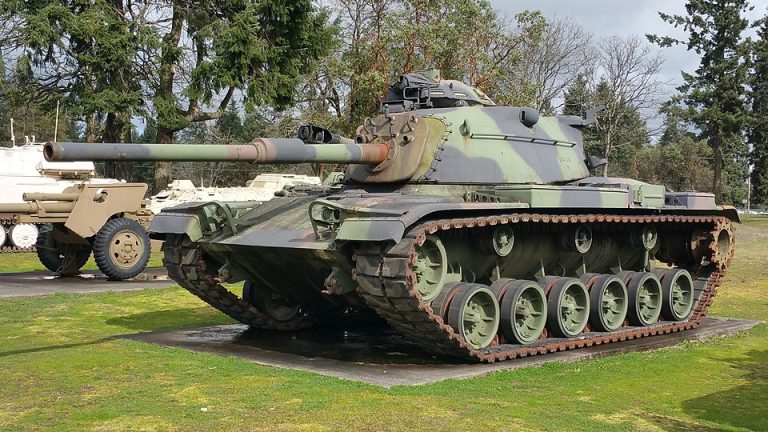
 

Or, The Great Game in the One-N-Twenty, as the Shade of Sykes-Picot Rears Its Ugly Head


rev·e·nant
‘rev??näN,-n?nt/
noun
noun: revenant; plural noun: revenants

    a person who has returned, especially supposedly from the dead.

Origin
early 19th century: French, literally ‘coming back,’ present participle (used as a noun) of revenir .

[Source – Google]

A walk down Memory Lane, because even with all eyes focused on Ukraine, China and the multiple, deepening scandals in the United States, there are other enemies who are still out there, enemies thought dead…but who are very much alive.

In the week preceding January 10, 2016, the conflict in war-torn Iraq and Syria entered a new, and extremely dangerous phase. To understand why, we need to dial back, and quickly review the last few years of the regional conflict.

In 2003, the United States invaded the Iraq of Saddam Hussein. The why’s and wherefores of the US invasion and conquest of Iraq aside, this seminal event is what sparked the state of affairs.

The origins of the Islamic State of Iraq and the Levant (ISIL) are shrouded in confusion and rumor, but it is generally agreed that it accreted from several sources, including the Jordanian-born Salafist radical Abu Musab al-Zarqawi, survivors of US detention camps, including their nominal leader Abu Bakr al-Baghdadi at the time, and a group of surviving officers of the disbanded Iraqi Army and the Iraqi Republican Guard Corps, with at least some funding, advice and moral support from the remnants of the Al-Qaeda organization.

However, it is vital to remember that ISIL’s initial wave of success, riding on the back of the confusion caused by the fallout of the so-called ‘Arab Spring’ uprisings, petered out in early 2013, and was only revived by under-the-table assistance from Turkey:

This allowed ISIL to operate from its territory, under the guise of supporting the anti-Assad “Free Syrian Army”. In looking over the date-progression in the animated map, above, it is absolutely clear that ISIL was using base areas in southern Turkey, unfettered by Turkish security forces.

Then, as Russian and Syrian government forces closed in on the FSA- and ISIL-controlled city of Aleppo, in the north of Syria, Turkey doubled down, intervening directly in the conflict, while chastising the US over its refusal to designate various factions of Kurdish ground forces as “terrorist organizations” – primarily because even the Presidential administration of Barack Obama had finally accepted that the Kurds were the one group that it could fully rely upon in the area, within their limits. As well, several Gulf Arab States, led by a Saudi Arabia currently eye-deep in a vicious ground war on its own southern border with Yemen, hinted that they, too, might attempt to intervene to prevent the total collapse of anti-Assad resistance.

For Turkey’s part, this is easy to understand. Turkey desires a much greater role in directing regional affairs, as was demonstrated in their active support for pro-Palestinian activists in the “Freedom Flotilla’s” of 2010 and 2014. Where Turkey erred was in assuming that it could secure its southern borders, as well as play ‘kingmaker’ in both Iraq and Syria, by supporting – however tacitly – groups such as the FSA, ISIL and the Al-Nusra Front, while ignoring its own Kurdish problem.

This, more than anything, is what undermined Turkey’s position: ethnic Kurdish areas comprise the southeastern one-third of Turkey’s territory, as Kurdish forces have coalesced over the last twenty-five or so years, and become far more professional militarily. Turkey’s adamant refusal to even consider negotiation with the Kurds brought it to the brink of war with Vladimir Putin’s Russia, as the Russian colossus ground away at the groups Turkey was supporting, and the US and Russia no longer simply provided aid to the Kurds, but are coordinating operations with them at some level.

The danger for Turkey, at this point, was abundantly clear: acknowledgement of Kurdish autonomy in Iraq or Syria would put pressure on Ankara to do likewise, and end its ongoing internal campaign against the Kurdish PKK in its southern region…in effect, this would severely weaken Turkey and ultimately result in its partition.

In threatening to intervene significantly in Syria – an intervention that, although left unspoken, would certainly bring Turkish and Russian military forces into direct conflict with each other – Turkey banked on its membership in NATO to deter Russia from taking any substantive military action against Turkey directly.

This was whistling past the graveyard, as Russia had already invested far too much to simply back away. That, in turn, left NATO, and the US, with the stark choice of abandoning a member-state, which risked destroying the alliance wholesale, or in actively aiding Turkey militarily, an action which would certainly lead to a general war — in other words, with no hyperbole, World War III.

This was headed off by cooler heads in NATO, who told Turkey flatly that Article V did not apply if Turkey was the original aggressor, which it most certainly was.

But what of the other players involved in this? Why are they rattling their sabres?

Saudi Arabia is divided. Internally, there are certainly factions within the Saudi power structure who actively support ISIL, as much as there are others who are adamantly opposed to the terrorist regime. However, Saudi Arabia is tasting, for the first time in a very long time, the addictive drug of military power with its intervention in Yemen. Appearing as a strong and powerful champion of Sunni Islam is seen as a vital necessity, due to the internal divisions within Saudi Arabia.

In the case of Iran, they have been at the “war thing” for several thousand years, and are quite competent, militarily speaking, when its ‘government du jour’ gives its military the chance to actually do the tasks that they are armed and uniformed to carry out. This is clear in Iran’s response to the threat to their fellow Shiites in Iraq.

In the map video above, ISIL’s strategic intent in Iraq can be discerned by watching the area around Baghdad: ISIL wisely did not attempt to actually storm the mega-city [1], but neither did they attempt to cut its road access. That it could have done so at any time should be painfully clear, but yet that did no act to do so. The reason for this seemingly-puzzling action – or lack of it – as the Iraqi Army was collapsing before the ISIL juggernaut.

[1] — Megacities In Future Operations

Iran saw that one of ISIL’s primary strategic goals was to goad them into sending in the Iranian army, the “Artesh”, to save Shia Iraq from ISIL. This would have resulted in ISIL calling on the wider Sunni world to wage its version of “jihad” against a group it hates worse than any other, as it views Shia Islam as a terrible heresy to its own beliefs, a heresy far more terrible and threatening to itself than other nations or religious faiths.

Instead, Iran sent the Quds Force, Iran’s “special operationsforce. Sending in this very capable unit demonstrated Iran’s resolve, bolstered the flagging Iraqi Army, and required only a very tiny “footprint” on the ground.

This caught ISIL flat-footed, and at the end of its initial supply chain. At this point, ISIL fatally turned inward, trying to organize its rear areas, while getting as much equipment as possible from its suppliers, including Turkey.

This was an inevitably fatal move, because ISIL could not create the necessary internal infrastructure to support a modern military force in the absence of massive external aid – neither Iraq nor Syria were ever very heavily industrialized, and ISIL combat forces destroyed much of what heavy industries were present. Similarly, like the Taliban in Afghanistan, ISIL’s religious dogma severely limits its ability to create the vibrant defense industrial base without which it cannot win, in the absence of massive supply from a friendly foreign government.

Thus, the minute Russia injected itself into the conflict, essentially replicating what the US did in the early phases of its invasion of Afghanistan in 2001, ISIL and its allies – “moderate” and otherwise – appeared doomed, as there was no way that they could respond to precision Russian airstrikes.

Unless Turkey tried to intervene to aid them directly – and that was “a bridge too far” for Ankara.

The days of ISIL and its allies seemed to be numbered, as late as 2018…but, the Islamic State – like a poorly-treated cancerous growth – did not die out. Frayed nerves, along with poor decision-making and thought processes have allowed this regional conflict to metastasize into a world-spanning war, as happened almost exactly one hundred years ago.

Or, Professionals Are Predictable, But The World Is Full Of Amateurs


Any reader of this publication is almost certainly familiar with any number of terrorist and/or guerilla groups. Indeed, we see their depredations on an almost daily basis — depending on where the reader lives in the world, terror group news may be the only news available.


But, from a purely psychological point, knowledge of the various terror groups around the world is comforting: with relative ease, the inquisitive person can find out the basics on virtually any group with perhaps an hour or two of research online. “Google Fu” is a working verb, now. In that sense, groups like the so-called “Islamic State“, Al Qaeda, Boko Haram and any other “dead-enders” around the world are not really all that scary — when you learn about your enemy, you steal some of their power, and make them that much less, in your mind.


But — what about the group you’ve never heard of?


What I mean, here, is that unknown group — the group on no one’s radar. The group that sits quietly, like a spider at the center of its web, waiting for a hapless fly to get stuck. The group that explodes (sometimes, literally) onto the world scene: Who are these people? What do they want? How many of them are there? And so on…


The cold facts of life are that, for all the uncountable billions of dollars spent on the kaleidoscope of intelligence disciplines by various countries, there are well in excess of seven billion people in the world, currently. No matter how much intelligence agencies may desire it to be otherwise, there is simply no way to monitor every individual in a meaningful, timely manner.


Case in point – David Coleman Headley.


Headley (a committed member of the Lashkar-e-Taiba terror group) was that group’s principle reconnaissance operative that they used to scout the city of Mumbai, prior to the group’s bloody attack on the city in 2008. Headley might have been many things…James Bond, he was not. He made mistake after mistake, “bush-league” errors in tradecraft that no operator with the slightest pretense to competence would have made.


And he still got away with it.


Although he did not actually take part in the attacks in India, Headley continued his career as the “perfect” terror scout (a consequence of his United States citizenship, and his West European features – inherited from his American mother, a daughter of the Philadelphia Society) Headley was able to move freely around the world, scouting multiple potential attack locations for the LeT. It was not until he turned up on the United States’ Department of Homeland Security’s (DHS) radar (when he attempted to scout out an attack location in Denmark for Al Qaeda) that the DHS agents who intercepted him in Chicago, Illinois in 2009, began seriously questioning him. Headley, assuming that DHS knew all about his Mumbai scouting work as well, confessed without prompting.


Intelligence agencies throughout the West had absolutely no inkling of the scale of Headley’s connection with terror groups prior to his “on loan” work for Al Qaeda.


But Headley was, indeed, ultimately working for well-known terrorist groups, most of whom were under some level of surveillance; Headly was not an “independent operator”. The same rules applying to Headley, applied equally to the U.S. Central Intelligence Agency, Britain’s MI6 and the old Soviet KGB, as well as its replacement, the Russian Federal Security Bureau (FSB).


What follows is a cautionary tale, one that explains why eternal vigilance at the individual level is the price we all pay for the benefits of globalization and a much smaller world than existed a hundred years ago.


When examining the structure of any group, whatever its aim, the following five archetypal people must exist to make the organization work:

  1. The People Person. This is the person who recruits people to whatever the group’s stated cause is. How public that statement of purpose is, directly affects how quickly a group can expand its numbers with “spear carriers”.
  2. The Banker. This is the fund-raiser, the person who obtains money for the Cause, whoever that is. The Banker is the person who finds the money necessary to make the group function externally — it’s one thing to gripe in private. To act outside the status of a discussion group, money – a lot of money – is required.
  3. The Support Person. This is the person who makes the drudgery work: they take the money provided by the Banker, and use it to purchase all the “stuff” that the Cause needs, whether that is buildings, office supplies, advertising space, food, medical supplies, etc. They might use the people recruited by the People Person, but this is not strictly necessary.
  4. The Idea Person. This is the person who can form and articulate the Big Idea, both to the core group and the recruits, but also to the outside world. This person is sometimes the Leader, but not always.
  5. The Leader. The Leader is the “front man”. They may also be the Idea Person, but not always. This is the person who can be held up as the prime example of the goals of the organization; this can, obviously assume messianic proportions.


Aside from the possible overlap between the Idea Person and the Leader, these people are mutually exclusive of each other — it is virtually impossible for a single person to perform even two of these functions, far less, all five. This is a very good thing, as it becomes increasingly more difficult to assemble more or less complete strangers into a functioning group.


However, if three of these archetypal people do assemble, with some form of malicious intent, the potential scale of destruction becomes terrifying. Below we’ll look at a “near-miss”…a near miss incidentally, that led – in a peripheral way – to this author joining The Freedomist.


(NB: This specific incident ultimately led to the author’s joining the old MilitaryGazette blog, because while I had joked for years that I could equip an army out of an Army-Navy store, I had never actually tried to price it out…but that’s another story, entirely.)


Many years ago, this author was contacted by a friend on Facebook, who sent a link to a story at Cracked! magazine. The story was exactly the kind of thing I love to read. But it was just one entry in an article full of similar entries. So, I read on. That led me to the first part of this cautionary tale: the story of David Deng.


David Deng (real name: Yupeng Deng), a Chinese national, walked into an Army-Navy surplus store in Southern California in 2008, bought a used uniform, and put together enough patches to look believable (to those with no experience to speak of) as a colonel in the US Army Special Forces, styling himself as something that translates into English as the “Supreme Commander, U.S. Army/Military Special Forces Reserve“.


He then opened what he termed an “Army recruiting office” in Temple City…but he only recruited people just arriving in the United States from the People’s Republic of China (PRC), people who did not speak very good English, and had very little real knowledge of the United States, or of its military. Deng presented the US Army as if it were a ‘tong‘, in which a person had to pay a fee to join, along with monthly dues, and would have their citizenship “fast-tracked”. Additionally, they would receive uniforms and military identification cards that would give them some level of immunity for minor offenses, like traffic tickets. Of course, the uniforms came from Army-Navy surplus stores, and the identification cards came off of Deng’s printer…but his “recruits” didn’t know that.


Deng managed to get his private “army” into various parades and celebrations in Los Angeles County’s Chinese community, including photo-ops with local political figures. Although people thought this “unit” to be rather strange, and somewhat sloppy (Deng, not being military himself, had no real idea of what or “how” to teach his “troops”), no serious questions were raised…


For nearly four years.


It was not until 2011 that Deng’s scam was blown, when some of his recruits tried to pay their monthly dues at real Army recruiting offices, that David Deng’s army appeared on the radar of the real US Army…and the Federal Bureau of Investigation (FBI). The FBI then swiftly moved in, and rounded up Deng and his hapless recruits. The FBI quickly determined that his recruits actually thought that they really were in the US Army, and that they really had “enlisted” to serve the United States, and earn their citizenship. US courts declined to prosecute Deng’s recruits, as a result – no wrongdoing on their part, just falling for a vicious, narcissistic crook.


What was shocking, however, were the numbers involved.


The FBI knows for certain that Deng had recruited about one-hundred and fifty people…but they believe the actual numbers could be far higher — on the order of eight hundred individuals. For anyone who knows anything about armies, that’s enough people for anything from an infantry company (the number the FBI knows about for certain), up to a battalion (for the larger number).


To give you an idea of what eight hundred armed men can do, eight hundred ISIL fighters, riding in Toyota pickup trucks, captured the city of Mosul, Iraq in 2014.


It is a good thing that Deng never had weapons to hand out to his army, along with any sort of real training and/or lethal intent for them…


…Which brings us to our next person: Jeffery Alan Lash.


Pacific Palisades is a quiet, upscale suburb of Los Angeles, California. One sunny day, someone walking along the street became curious about an SUV that had been parked in the same spot for almost two weeks. Peering in, they saw a figure that appeared to be dead, and immediately called police…who were already en route to the scene, summoned by another phone call.


When the police arrived, they knew they had an unusual scene: the vehicle and the identification on the remains identified a local man, who lived just a few doors down the street. When they received no answer to a knock at the door, the police obtained a warrant to enter…and just as quickly backed out, and called in the police department’s EOD unit.


It took hours to empty the residence. Within, police found over 1,200 firearms of various types, piles of miscellaneous gear and equipment..and so much ammunition that they stopped counting it early on, and simply weighed it for the evidence locker — ultimately, between five and six tons of ammunition, in various calibers, were recovered.


While the specific details of the story – strange as they are – make for an interesting read, the takeaway for this article is that this one man had managed to somehow put the money together to assemble a large enough quantity of small arms to outfit a battalions-worth of people, of eight hundred to one-thousand troops…and did it without appearing on anyone’s radar, until he apparently died of natural causes.


Now, I want to be clear, here: there is absolutely no evidence that has come to light, to indicate that David Deng and Jeffery Alan Lash ever knew each other, or were in any way insipired by one or the other. However, in these two stories, we have two of the five archetypes: the People Person (Deng) and the Banker (Lash) who tried to be the Support Person.


Lash’s arms buying – whatever he was buying weapons for – could have equipped some kind of military force. Not very well, but those hypothetical troops would have been armed with real weapons, and would have been capable of executing some level of military mission…again, not very well, but far better than most guerilla armies are capable of doing, especially when they start out.


Likewise, Deng’s recruits were never given any kind of real training that would have allowed them to carry out any kind of realistic mission…but they could have been given that training.


Aside from them not knowing each other, what Deng and Lash lacked was an Idea Person and a Leader. In effect, the two were, hypothetically speaking, just two steps away from creating a real, functional military unit: they needed to have known each other, and needed someone to give them direction on what to do. Speaking as someone who has managed battalion-scale Issue Points and Warehousing operations in a military context, the author is left somewhat breathless at the potential these two men represent — although the days of Bannerman’s are long gone, and while these men – primarily Lash, in this instance – didn’t assemble the kind of gear or carry out the training for Deng’s recruits that I would have, they did far better than they had any right to.


At the end of the day, though, what does the foregoing actually mean?


In a word (okay, three words), globalization and mass production – whatever their very real benefits might be – have also brought into sharp focus the fact it is relatively easy to assemble a force that can function as a military unit, in a relatively short period of time…given more money, it is equally possible to assemble and train that force to some level of competence above that of a street gang, using materials freely available online.


You, the Reader of this piece, need to remain vigilant — there are plenty of David Deng’s and Jeffery Alan Lash’s out there in the world. Do not assume that because it looks complicated, it can’t be done.


Find a way to get inside the enemy’s OODA Loop.


Forewarned, is forearmed.

Welcome to the World Situation Report For March 23rd, 2022

The goal of this column is to present news from around the world that is not often – if ever – covered by more mainstream entities, using local sources wherever possible, but occasionally using news aggregators not used, again, by the mainstream media. Also, please note that we do use links to Wikipedia; while Wikipedia is well-known as a largely-useless site for any kind of serious research, it does serve as a launch-pad for further inquiry, in addition to being generally free of malicious ads. As with anything from Wikipedia, always verify their sources before making any conclusions based on their pages.

This column will cover the preceding week of news.


North America

Beginning in North America, a wide array of bomb threats continue to spread across the country, mostly targeting schools, but also businesses and shopping centers. While various individuals with certain mental or emotional issues are typically responsible for these events, the possibility exists that these are efforts to monitor emergency response procedures by law enforcement and other emergency services.

As well, a bomb, threat was made against a synagogue in Highland Park, Illinois, some 25 miles north of Chicago on the 18th, while the next day, worshipers at a mosque in Montreal Canada were attacked by an assailant identified as as 24-year-old Mohammad Moiz Omar, who walked into the Dar Al-Tawheed Islamic Centre in Mississauga, Ontario, about 15 miles from Toronto, and began spraying “bear mace” at the congregation. Worshipers subdued the assailant, who was arrested by Canadian police, was also armed with a hand ax. Authorities are claiming that the attack was a case of “Islamophobia“.

[Source 1] – [Source 2] – [Source 3] – [Source 4] – [Source 5] – [Source 6] – [Source 7] – [Source 8] – [Source 9]


Africa

Turning to Africa, the Algerian Army arrested seven suspected “militants” in its ongoing, low-level guerilla war against the remnants of Al Qaeda [https://en.wikipedia.org/wiki/Al-Qaeda]-aligned groups in the North African nation, following the end of its civil war in 2002.

[Source]


Meanwhile, thirteen soldiers were killed in the eastern region of Burkina Faso, in an ambush by unidentified gunmen, while eight more soldiers were wounded. This comes a week after over a dozen police officers were killed in a similar ambush in the landlocked nation’s central-north region, as we reported last week.

[Source]


In Nigeria, gunmen abducted over sixty people during the week. Most of these abductees are usually released after ransoms are paid, but many are either sold into human trafficking rings or forced to join armed groups, such as Boko Haram.

Speaking of Boko Haram, demining and cleanup operations continue in the Shiroro Local Government region, in the country’s central region, where the terrorist group laid numerous IED’s to deny residents access to their homes as a part of the group’s ongoing guerilla war throughout the region.

In the nation’s far northeastern Borno State, an airstrike by Nigerian Air Force Super Tucano light strike aircraft has reportedly killed Sani Shuwaram, the “Commander In Chief” of the “Islamic State – West Africa Province” (ISWAP). Details remain sketchy, although intelligence reports indicate that he may have been replaced by one Mallam Bako Gorgore, although few details of this individual are available at this writing.

[Source 1] – [Source 2] – [Source 3] – [Source 4] – [Source 5]

 

In the Central African nation of the Democratic Republic of the Congo (DRC), horrific levels of violence continues in the Ituri region of the country’s northeast, as fourteen people were hacked to death in a “displaced persons camp” in the province. According to local officials the attack was carried out by an armed faction of the “CODECO” group, a formerly peaceful agricultural cooperative organization, which returned to violence in 2017 after a ceasefire following the Ituri Conflict of 1999-2003.

[Source 1]
[Source 2]

In Sudan, continuing protests against the military junta of General Abdel Fattah Burhan, which has been ruling the country since its October, 2021 coup d’état have killed a thirteen year-old boy in the city of Omdurman, bringing the reported death toll to 88.


[Source]


In the continually strife-torn nation of Somalia, the Somali National Army reportedly killed seven terrorists belonging to the Al Shabaab terror group, while two other militants surrendered in the central region of the county.

At the same time, three persons were reportedly injured by a car bomb in the Hodan district of the capital city of Mogadishu. Accoding to police sources, the attack was aimed at Turkish engineers working in the country. Turkey has been quietly expanding into the African state since 2010, opening a basic military training facility in their own encampment to train a new army for the country, as well as a formal school for officer training.

[Source 1] – [Source 2] – [Source 3]


The Arabian Peninsula

In the Arabian Peninsula, the seemingly never-ending, multi-sided war between various Yemeni factions, and a Saudi-led Coalition grinds onward, with Houthi forces continuing a relentless campaign against Saudi oil facilities, further destabilizing world oil prices.

[Source 1] – [Source 2] – [Source 3] – [Source 4] – [Source 5]



The Middle East

Elsewhere in the Middle East, four Israeli civilians were killed in the town of Be’er Sheva/Beersheba and one remains in critial condition, following a ram-and-stab attack by an attacker identified as 34-year-old Muhammad Aleb Ahmad Abu Alkyan, a Bedoiun Israeli who was previously convicted and served three years in prison for supporting and promoting ISIS. This comes at the same time as continued protests on the West Bank, and threats by Iran’s IRGC commander to launch a missile attack on the Jewish state.

In Syria, a US base near the Deir Ez-Zor oil field was reportedly struck by several missiles, and reportedly by drones. No casualties were reported, but independent confirmation is not available at press time.

Elsewhere in Deir ez-Zor, a tribal elder was assassinated by IS, while in the north of the country, Russian Air Force jets struck reported IS targets on the 20th.

In the northern town of Ayn Issa, two children were wouded by Turkish artillery, while Turkish artillery struck targets near Tell Tamer, and four Syrian Army soldiers were reportedly killed in an IS attack near Resafa.

[Source 1] – [Source 2] – [Source 3] – [Source 4] – [Source 5] – [Source 6] – [Source 7] – [Source 8]



South Asia

In the South Asian nation of Pakistan, the driver of a water tanker truck was killed when his truck struck a landmine. The deceased, identified as Mohammad Bahadur Khan Pathan, was delivering water to a the Notal-Gandhwah road construction project in the southern part of the country, when his vehicle struck the landmine. No word was available on which group may have planted the device at press time.

In the northwestern city of Sari Naurang, a police officer was assasinated in a driveby shooting by members of an unidentified terrorist group, while a shootout in the Bajur District killed two soldiers, three civilians and four insurgents from an undentified group. Additionally, five people associated with “Al-Qaeda in Indian Subcontinent (AQIS)” and the “Tehreek-i-Taliban Pakistan (TTP)” were arrested by Pakistani police in Punjab Province.

[Source 1] – [Source 2] – [Source 3] – [Source 4]


In India, Jammu & Kashmir saw three terror attacks in 24 hours, while a member of the “Lashkar-e-Taiba (LeT)” terror group – responsible for the terror attack on Mumbai, India in 2008 – was arrested in the region’s Baramulla district. In the Shopian district, meanwhile, a grenade attack on a Central Reserve Police Force (CRPF) station injured one police officer.

In the central state of Odisha, a man was arrested for “providing logistical support” to Maoist insurgents, in the town of Kalahandi. In the neighboring state of Chhattisgarh, Maoist’s attacked a CRPF camp in the Sukma district, injuring three police officers.

Finally, in India’s far northeastern state of Arunachal Pradesh, police and units of the Assam Rifles killed two insurgents from the “National Socialist Council of Nagaland-Isak Muivah (NSCN-IM)” in a raid on a safe house in the Tirap district, recovering military weapons (including a US M4A1 rifle), ammunition and other military-type equipment. The presence of a late-model M4A1 in far eastern India may indicate a case of fallout from the collapse of the US and Coalition efforts in Afghanistan, in August of 2021, potentially confirming the fears of analysts that the equipment left behind may be making its way into the wider terrorist community.

[Source 1] – [Source 2] – [Source 3] – [Source 4] – [Source 5] – [Source 6] – [Source 7]

World Situation Report – March 18th, 2022

Welcome to the World Situation Report For March 18th, 2022


The goal of this column is to present news from around the world that is not often – if ever – covered by more mainstream entities, using local sources wherever possible, but occasionally using news aggregators not used, again, by the mainstream media. Also, please note that we do use links to Wikipedia; while Wikipedia is well-known as a largely-useless site for any kind of serious research, it does serve as a launch-pad for further inquiry, in addition to being generally free of malicious ads. As with anything from Wikipedia, always verify their sources before making any conclusions based on their pages.

This column will cover the preceding week of news.


North America


Starting off in the United States, a wave of bomb threats were called in across the country, to everything from junior and high schools, to grocery stores, a YMCA, a comedy club and even to facilitate a back robbery. Just a short sample of stories are under the links below:

[Source 1] – [Source 2] – [Source 3] – [Source 4] – [Source 5] – [Source 6] – [Source 7]


Meanwhile, 21 year/old Elvin Hunter Bgorn Williams pleaded guilty to attempting to join the Islamic State in May of 2021. Williams was arrested by FBI agents as he attempted to board a flight bound for Cairo, Egypt. Williams had come to the attention of Federal law enforcement some five years ago, when he was reportedly kicked off of social media for expressing his opinion that the 2017 suicide attack on the Manchester, England Arena following a concert headlined by singer Ariana Grande was justified because of how she dressed on stage. The Seattle-area mosque Williams attended attempted to de-radicalize him, even obtaining a laptop and cellphone for him, to help him find a job; however, after finding him using the devices to view extremist content online, the mosque demanded the devices be returned and contacted the FBI. The mosque was not named in court documents. Williams was arrested after contacting what he believed to be Islamic State recruiters.

[Source 1] – [Source 2] – [Source 3]


Finally, the US Consulate in Nueva Laredo, in Mexico’s Tamaulipas State, announced that it will be temporarily closed to the public, after being hit by gunfire from suspected gangs on the night of March 13-14, following the arrest of Juan Gerardo Trevino, or “El Huevo,” the purported leader of the Cartel of the Northeast, a breakaway group that calved off of the Los Zetas criminal syndicate.

There was no word on when full operations at the consulate might resume.

[Source 1] – [Source 2]


Europe


Turning to Europe, in a disturbing possible expansion of the current war in the Ukraine, a pair of drone aircraft, reported to be a Tu-141 dating from the Soviet era, in current use by Ukrainian forces, crashed near the outskirts of the capital city of Zagreb, Croatia, while a current-model Orlan-10 scouting drone, believed to be in exclusive use by Russian forces, was discovered crashed in a field northern Romania, signalling a possible spill-over in the on-going fighting.

Both vehicles were reported to have contained traces of explosive material, although investigations by local authorities continue.

NATO officials confirmed that NATO air defense units had tracked the Tu-141 as it flew through the airspace of member-states Hungary and Croatia, but made no effort to intercept the drone. Croatia and Hungary have both raised protests with NATO, as well as launching investigations within their own air defense forces as to why the six-ton, forty-seven foot long was not intercepted before crashing near a large dormitory of an unnamed university, reportedly damaging some 40 vehicles.

The Tu-141 was long ago replaced in the Russian inventory by newer designs, but numerous examples are known to be operated by Ukraine, leading to speculation that some may have been armed by the Ukrainian Armed Forces as long-range strike weapons

Although the Orlan-10 is normally unarmed, the small Russian drones are known to be capable of carrying small ordnance of c.15lbs.

[Source 1] – [Source 2]


In the southern port city of Marseilles, France, meanwhile one police officer was hospitalized and two others injured after a man attacked the officers with a knife, according to reports, on March 12. The reason for the attack remains unclear. The perpetrator, who apparently was unknown to police for any prior offenses, was killed by other offices after “warning shots” were fired. An investigation is underway in an attempt to determine if the attack has any terrorist connections.

[Source 1] – [Source 2]


Africa


Turning to Africa, Moroccan police arrested five suspects on the 16th, on suspicion of being affiliated with the Islamic State, and plotting attacks throughout Morocco.

[Source 1] – [Source 2]


Further south, the West Africa region, thirteen gendarmes were killed by unidentified gunmen in the northern region of Burkina Faso.


In northwestern Nigeria, meanwhile, a wave of kidnappings is sparking fears of a return to “forced recruitment” by terror groups such as Boko Haram, although the kidnappings could be related to “forced labor human-trafficking groups” (i.e., slavers).

In Central Africa, the so-called “Allied Democratic Forces”, an Islamist terror group operating in Uganda and the Democratic Republic of the Congo (DRC) with ties to ISCAP, continued their offensive in the northeastern DRC province of Ituri, killing as many as fifty-two civilians in attacks on four villages. This comes as one of the ADF’s main leaders, Kabanda Abdulla Musa, was arrested by Ugandan authorities following a series of surprise raids in that country’s border region with the DRC.

In the nation of Sudan, at least 133 pro-democracy demonstrators were injured in crackdowns against protests against the October 25, 2021 coup d’état in the African nation that placed General Abdel Fattah al-Burhan at the head of a military junta.

[Source 1] – [Source 2] – [Source 3] – [Source 4] – [Source 5] – [Source 6] – [Source 7] – [Source 8] – [Source 9]


Arabia


Moving to the Arabian Peninsula, the war in Yemen grinds on, with near-continuous air strikes by Saudi-led coalition jets being countered by Houthi strikes against oil refineries by bomb-carrying drones attacking the vulnerable facilities. The confusing, multi-sided conflict – part of the 40+ year-old Saudi-Iranian Proxy War – is now in its seventh year, with no end in sight.

[Source 1] – [Source 2] – [Source 3] – [Source 4] – [Source 5] – [Source 6]


Middle East

In the Middle East, proper, Israeli government websites were targeted in a large-scale cyber attack on the 14th, as Palestinian confrontations with Israeli security forces in the West Bank killed two, with three more being arrested.

Throughout Iraq and Syria, sporadic, low-level fighting continues, including attacks on US logistics convoys rolling north into Iraq from Kuwait, as well as attacks on Iraqi Army commanders by numerous groups.

This comes as Iran’s Islamic Revolutionary Guard Corps (IRGC) fired a series of twelve ballistic missiles into the Kurdish city of Erbil on the 13th. The IRGC claimed the attacks were in response to purported attacks on an Iranian drone factory by Israel’s Mossad intelligence service, in February and March of this year.

[Source 1] – [Source 2] – [Source 3] – [Source 4] – [Source 5] – [Source 6] -[Source 7] – [Source 8] – [Source 9] – [Source 10]


South Asia


In South Asia, Pakistani security forces reportedly killed one of the architects of the March 4th attack on a Peshawar mosque that killed 64 and wounded 190.

To the south, in Balochistan, 4 gendarmes of the Frontier Corps (FC) were killed and eight wounded in an IED attack on an FC convoy on the 15th. Elsewhere, in North Waziristan, security forces killed four suspected terrorists in a pair of gun battles, after acting on tips.

[Source 1] – [Source 2] – [Source 3]


Turning to India, Indian security forces have reportedly killed 39 terrorists in Jammu & Kashmir, so far this year, although continual skirmishing with Islamic terror groups continues.

Meanwhile, four terrorists from Bangladesh, from the Jamaat-ul-Mujahideen Bangladesh (JMB) group, were captured in the northern city of Bhopal, along with laptops and explosives.

Finally, in Central India’s “Red Corridor”, several Communist guerilla’s were killed in encounters with various security forces, while others planted a crude IED at a train station in the northern city of Bihar. The device was discovered and disarmed by police, disrupting rail operations for over three hours.

[Source 1] – [Source 2] – [Source 3] – [Source 4] – [Source 5] – [Source 6] – [Source 7] – [Source 8] – [Source 9]


Welcome to the World Situation Report For March 10th, 2022


This is a new column for the Freedomist. I am delighted to be able to join the Freedomist team, and to once again work with William Collier, my long-time friend and editor. For those who may have followed my work at the Military Gazette, this column is a version of MilitaryGazette’s “World SITREP” column. The goal of this column is to present news from around the world that is not often – if ever – covered by more mainstream entities, using local sources wherever possible, but occasionally using news aggregators not used, again, by the mainstream media. Also, please note that I do use links to Wikipedia; while Wikipedia is well-known as a largely-useless site for any kind of serious research, it does serve as an introductory launch-pad for further study, in addition to being free of malicious ads. As with anything from Wikipedia, always verify their sources before making any conclusions based on their pages.

This column will cover the preceding week of news.

That said, let’s move on to the news…


Japan Moves Ahead with Plans to Deploy Automated Cargo Vessels

Japan has decided to proceed with automating sea-going cargo vessels, as falling numbers of skilled crews and the dream of increased profits tempt executives to give automation a chance.

The falling numbers of people willing to take the very real risks of a life working the sea is real. Despite the comparatively low crew requirements of modern ships, compared to older vessels, increasing traffic from more and more hulls in the water have balanced out the numbers. However, for some decades, fewer and fewer people sign up with merchant shipping academies, making qualified crew hires a priority. In such an environment, the allure of a completely automated cargo vessel, requiring no crew to pay or insure, is very real.

The problems, of course, are legion: many ports have strict rules concerning pilots coming aboard to conn ships, not least because channel conditions change, sometimes frequently; ships also require underway maintenance – engines are reliable, but issues frequently occur. The number of things that can go wrong on any seagoing ship are too numerous to go into in any detail here, but having crew aboard to address the problem as it occurs is a problem Japan will need to address, before most ports – and shipping companies – are going to accept completely robotic cargo ships…

…And that’s before we address pirates, and hacking.

TFI Global – Japan moving ahead with automating cargo vessels:


Source 1

Source 2

—————–

Merchant Ships Attacked In Ukrainian Waters, France Seizes Russian Freighter

As the war in Ukraine intensifies, cargo vessels are suddenly finding themselves in the midst of a deadly crossfire. As of 2/26/2022, the Moldovan-flagged chemical tanker “Millennial Spirit”, carrying 600 tonnes of diesel fuel (with a Russian crew), was apparently shelled by a Russian warship, seriously injuring two of the crew; the Turkish owned “Yasa Jupiter” was struck by a bomb (with no reported casualties, thankfully), and is limping towards Romanian waters; and the Panamanian-flagged bulk freighter “Namura Queen”, loaded with wheat, was struck by a rocket on her stern; she is currently underway, making for a safe port near Istanbul, Turkey.

A large number of non-combatant vessels remain tied to docks in harbors and estuaries as fighting continues to rage around them. These vessels will be hard-pressed to leave on their own, as Ukrainian harbor pilots are obviously occupied elsewhere.

Meanwhile, France has seized the Russian-owned vessel “Baltic Leader” in the English Channel, on suspicion of being on the list of sanctioned Russian companies black-listed by the European Union (EU), NATO and the United States.

Contrary to popular belief, wars are not “good” for business – preparing for war is good for business, not actually fighting it. With the world logistics system still reeling from Covid-related delays and the Ever Given accident that blocked the Suez Canal for almost a full week, delaying schedules and causing knock-on effects throughout the fragile global logistics network, it is hard to detail specifically what effects Putin’s War will have on the global shipping industry, but it is unlikely to be good.

Source 1

Source 2

https://www.youtube.com/watch?v=5KFPAOgCfGM

—————–

Turning to US national news…..

Bomb Threat Disrupts Ferry Operation

A bomb threat against the Bainbridge IslandBremerton disrupted ferry service on March 6th. Police explosive-sniffing K-9’s cleared the ferry “Tacoma” to return to service by 1pmPST…

[Source]

Also on the 6th, two persons attempted to rush the main gate at Joint Base Andrews (JBA) – home of the Presidential transport squadrons – at approximately 9pm, but were stopped by alert guards and automated barricades. One of the individuals (a 17-year old male) was captured, and the other is being sought. Although reports remain foggy, at least one of the persons (the individual captured by security) was armed. No shots were fired, despite initial reports of an “active shooter”.

As of this writing, the other individual remains at large. No information has been released on either individual involved in the incident, although the 316th Security Forces Group and local authorities have stated that the at-large individual is not on the base.

Vice President Harris and various other members of the cabinet had been aboard JBS earlier in the evening, boarding a flight to Selma, Alabama, but were not present at the time of the incident.

[Source 1]

[Source 2]

—————–

While, in international news….

Europe & Australia

Proving that some people just want to act out, thus making martyrs where they don’t need to, a makeshift “bomb” was thrown onto the ground of the Russian diplomatic mission to The Hague, in the Netherlands, while an envelop containing an unspecified “white powder” was mailed to the Russian embassy in Canberra, the Australian capitol, this week….

[Source 1]

[Source 2]

In Sweden, meanwhile, it seems that the so-called “Islamic State” – still extant – will take anyone, as a 49-year old woman was convicted of not preventing her then 12-year old son from being recruited to fight for the terror group in 2013. The child, along with his father and an older brother, were all subsequently killed fighting for the IS. The mother denied any wrongdoing, saying that she had been “lured” to Syria in 2013 by her husband…no word on what she thought was happening in Syria at that time.

[Source]


In Turkey, riot police celebrated International Women’s Day by firing tear gas at demonstrators attempting to join a women’s march. The demonstrators are engaged in protests against the Erdogan government’s withdrawal from a European treaty on combating violence against women last year.

[Source]

Meanwhile, Turkey has also arrested or is seeking to arrest over one hundred individuals that the government claims were involved in the attempted coups-de-tat against the Erdogan government in July of 2016.

[Source]

Turning to Africa…

Major fighting continues in the West African nations of Mali, Niger and Nigeria, as local security forces battle on against the Boko Haram, the “Islamic State in the Greater Sahara” and the “Islamic State/West Africa Province (ISWAP)” terror groups.

Malian Army (FAMa) forces beat back an attack by ISWAP on an outpost in Mondoro, in the central part of the country, on March 4th, reportedly killing at least 70 terrorists, while suffering at least 27 troops dead, 33 injured, and 7 missing. The attack was described as “complex”, and involved the use of “vehicle bombs”.

To understand the scale of this fighting, the numbers being reported by FAMa are essentially two full platoons of infantry, or about two-fifths of an infantry company (generally, about 180 personnel). And this is not the first action of its kind, in this country of barely 20million people; actions on this scale have happened more than a few times. This kind of loss rate in action is rather rare, these days; to give an idea of scale, the United States lost a total of 258 personnel in the Gulf War of 1990-1991, and in the entirety of what is known as the “War on Terror“, from 2001 to today (March, 2022), the US has lost a total of 7,074 dead.

[Source]

In neighboring Niger’s southwestern Torodi region, five soldiers were killed and three more were wounded on March 6th, when their vehicle rolled over an “improvised explosive device” (IED) laid by the “Islamic State in the Greater Sahara”. Niger has approximately 12,000 troops deployed full-time in its interior, trying to fend off terror groups that have been operating in earnest in the region since early 2017.

Niger was also the scene of the October, 2017 ambush of a US Army Special Forces team and their Niger partner-forces at the village of Tongo-Tongo which killed four of the ten-man US team, and four Niger troops.

[Source]

In Nigeria’s far-northeastern region, Boko Haram terrorists attacked a Nigerian Army Forward Operating Base (FOB) near the town of Damasak, and were repelled with the loss of seventeen dead and three captured, along with several vehicles and weapons.

Boko Haram made its name when it appeared several years ago, by kidnapping hundreds of elementary- and middle-school children to use as either child-soldier “recruits” (for the boys) or as “wives” (for the girls) for their “troops”.

[Source]

Meanwhile, Nigeria’s “Department of State Services” (DSS) security service has reported that the “Islamic State/West Africa Province (ISWAP)” has been training suicide-bombers in the northeast of the country, as well.

[Source]


In the Middle East…

The “Middle East” remains unstable in the extreme. A small sample of the past week:

*The so-called Islamic State claimed responsibility for a suicide-bomb attack in Pakistan, that killed five security force troops when the attacker detonated their vest as a convoy rolled past in the Pakistani state of Baluchistan. This comes on the heels of the suicide attack on March 4th, in Peshawar that killed 63 and wounded nearly 200.

[Source]

*In Syria, Russian air force planes launched a series of attacks on March 4 and 5, targeting Islamic State forces in the central Resafa region of Syria’s Raqqa Governate, scene of the Islamic State’s Pyrrhic defeat and loss of their “capital” in October of 2017. While cheered at the time as signalling the “end of ISIS”, intense fighting has continued in Syria ever since, with Russian air forces launching over 900 sorties in February, alone.

[Source]

*Elsewhere in Syria, 13 Syrian Army troops were killed and 18 wounded, when the bus they were traveling in was ambushed near the ancient city of Palmyra on March 6th.

[Source]


India, for a change, was largely quiet this week. Aside from security forces being on “high alert” following the Peshawar attack, police in Assam arrested five people linked to Al-Qaeda in the Indian Subcontinent (AQIS), while arresting a Maoist leader in the city of Gaya, in the northern state of Bihar, the country was largely quiet, this week. Given the normal news cycle in India, this is a welcome change.

[Source 1]

[Source 2]


Finally, the South Korean Navy fired warning shots to ward off a North Korean patrol boat that strayed too close to Baekryeong Island, near the Northern Limit Line on the 8th. The North Korean craft was chasing an unarmed North Korean vessel, whose crew is being questioned by South Korean authorities.

[Source]


Main

Back FREEDOM for only $4.95/month and help the Freedomist to fight the ongoing war on liberty and defeat the establishment's SHILL press!!

Are you enjoying our content? Help support our mission to reach every American with a message of freedom through virtue, liberty, and independence! Support our team of dedicated freedom builders for as little as $4.95/month! Back the Freedomist now! Click here