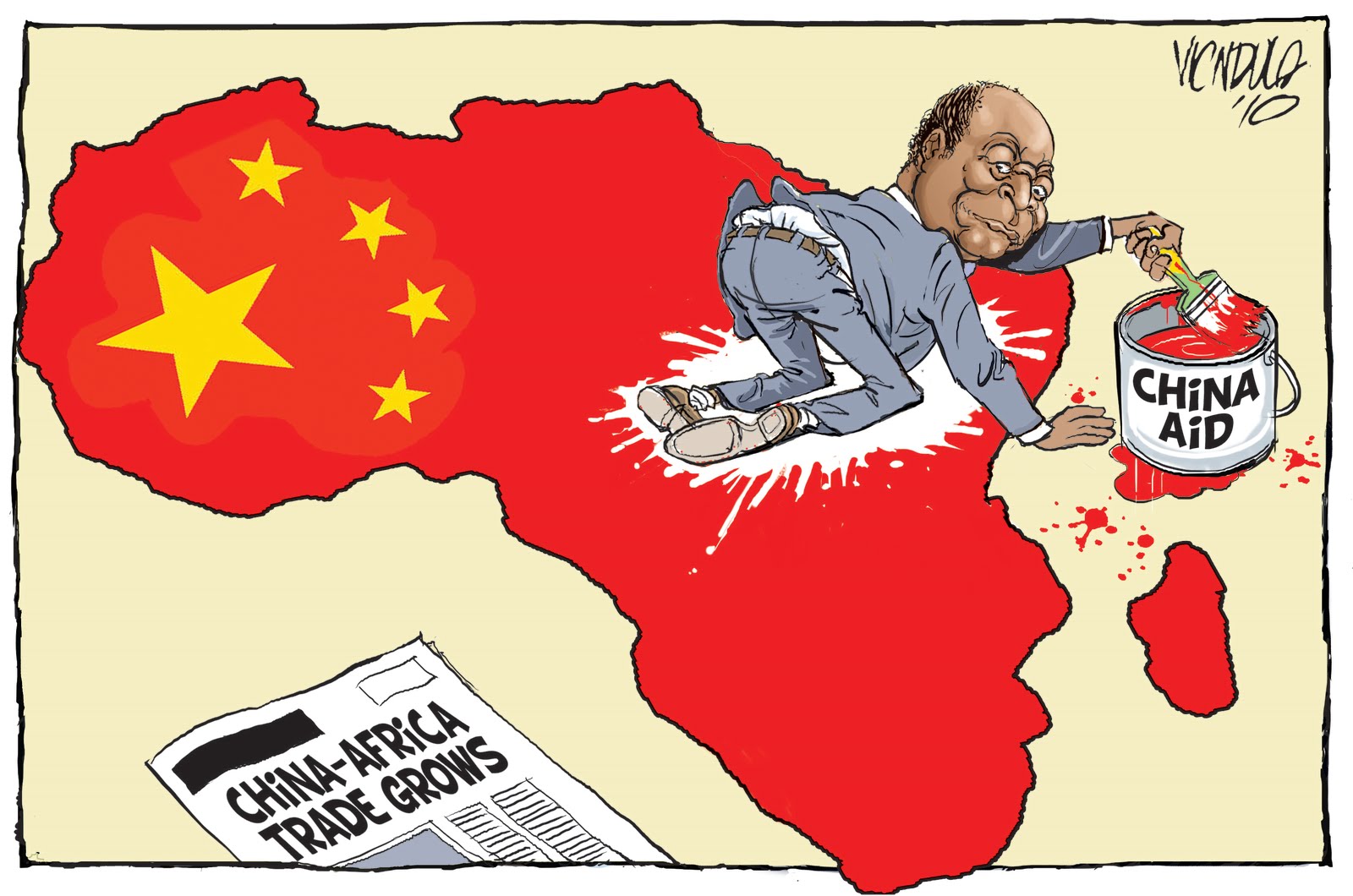
PGC – China might end up suffering to some degree the fate of early 20th century Germany, a Johnnie-come-lately to a particular brand of colonization that left the nation-state unable to effectively build its own colonial Empire like England, France, and Spain had done.

In may ways, this latest iteration of what might be called colonialization was created by the United States, or at least perfected by it, and other nation-states followed suit, building commercial empires that had the same net effect of having an Empire without nearly the cost of actually sustaining one on the ground.
Since that time, however, nation-states around the world have all gotten a lot more sophisticated at recognizing these tactics of exploitation that leave the poorer nation-states getting less from their resources than the ones who extract them would get.
In Africa, the mineworkers are now ready to challenge their new potential colonial overlords, China, who have been working them too hard with too little pay and benefits, and China, we don’t live in 2006 anymore, ain’t nobody got time for that no more.
So China might very well be arriving too late, like Germany in the late 1800s, early 1900s. It never came close to building a colonial empire using the old model of Western Europe.
It might very well be that China will never be able to build her American-like Empire of Commerce, soft power, because the locals around the world know what that is before it even arrives, and not many are in the mood to surrender their sovereignty to distant corpo-state agents thousands of miles away.
Pressure grows between African mineworkers and their Chinese bosses

From www.scmp.com
2021-08-03 06:19:32
Jevans Nyabiage
Excerpt:
A global rush for cobalt – an essential component in the lithium-ion batteries which power smartphones, laptops and electric cars – has seen a growing number of Chinese companies enter the southern Democratic Republic of Congo (DRC), holder of the world’s largest reserves of the metal.The Central African nation has an estimated 3.4 million tonnes of cobalt, almost half the world’s known supply. But in a country where the World Bank estimates three-quarters of the population live on…